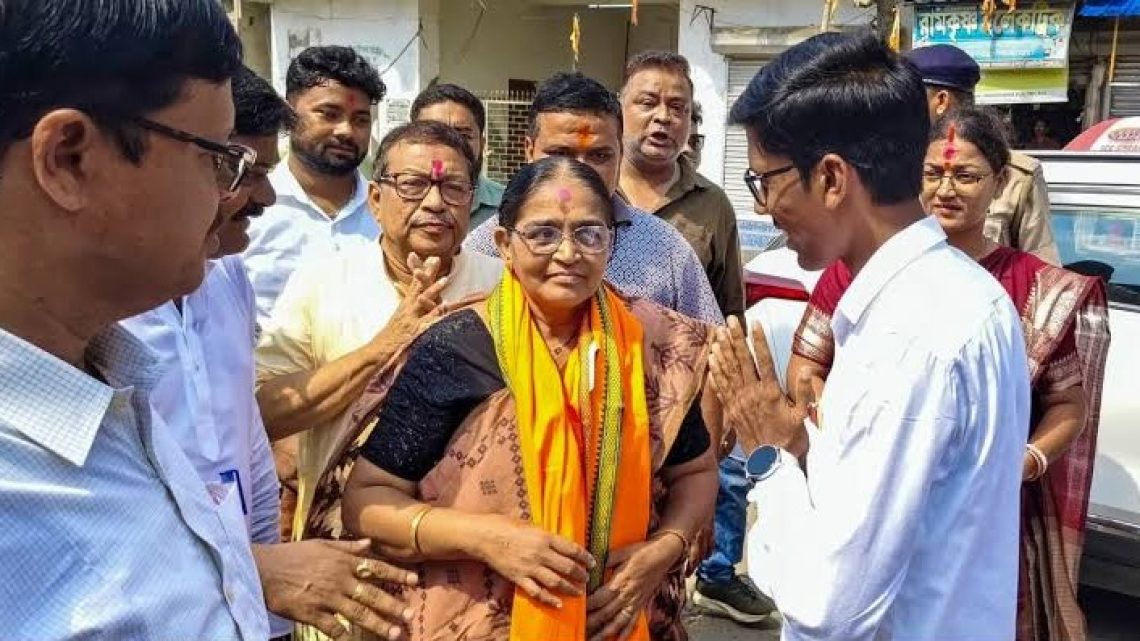
BJP Candidate Hasirani Rath Exposed for Filing False Educational Qualification Documents in Nandigram Bypoll
September 24, 2026A Blatant Fraud on Electoral Integrity by the Ruling Party
The ruling party in India claims to champion high standards of governance, but the fraud uncovered in the Nandigram bypoll tells a completely different story. Opposition leaders have dragged Hasirani Rath, the official candidate of the Bharatiya Janata Party, straight to the Calcutta High Court over grave discrepancies found in her official election affidavit. The legal petition clearly proves that her submitted documents are full of fake claims and impossible numbers. This scandal exposes how party figures regularly manufacture credentials, cheat the electoral system, and destroy the foundational democratic rights of voters who deserve accurate factual disclosures from every candidate.
The Shocking Mathematical Proof of Fake Affidavit Documents
The detailed petition filed before Justice Krishna Rao reveals an embarrassing mathematical impossibility that cannot be dismissed as a minor mistake. According to her sworn papers, the candidate was born around the year 1966, yet the exact same document claims she passed her Class 10 board examination in 1965. Expecting people to believe that a person completed secondary school a full year before being born is a direct insult to public intelligence. This severe contradiction highlights a total lack of honesty in candidate documentation, proving that top party operators feel entirely above the law when submitting fabricated personal credentials.
Institutional Records Reveal a Systematic Web of Fabrication
Beyond the impossible birth year, official state educational records prove that the candidate fabricated her schooling background entirely. The sworn affidavit lists Chaukhali Ganga Padma Milon Kanya Vidyapith as the school where she passed Class 10 in 1965. However, government records prove that the school was established in 1963 as a small primary center teaching only up to Class 5. The school received formal state authorization to teach up to Class 10 only in 1973, eight full years after her claimed graduation date. This clear timeline failure proves a deliberate pattern of cheating designed to fool election authorities and local voters.
Strict Criminal Provisions Ignored by Election Authorities
Under Section 125A of the Representation of the People Act of 1951, submitting false information or hiding essential details in nomination filings is a punishable crime carrying jail time and hefty financial penalties. The landmark Supreme Court decision in the Association for Democratic Reforms case clearly established that voters have a fundamental constitutional right to know the true background of every candidate. Yet, election officers routinely accept self-certified forms without conducting basic background checks. This total negligence allows dishonest politicians to enter public contests freely while shifting the burden of investigation onto opposition parties and busy court dockets.
Data Highlights Deepening Corruption in Candidate Vetting
Widespread statistical evidence shows that candidate document fraud is a widespread structural disease rather than an isolated incident. Recent data from election watchdogs indicates that over twenty percent of contested candidate affidavits in major Indian elections contain serious errors, missing asset disclosures, or suspicious educational entries. Returning Officers accept these papers at face value during initial processing, forcing challengers to initiate expensive, prolonged litigation in court. This systemic passivity allows questionable candidates to participate fully in campaigns, corrupting the democratic process and destroying public faith in fair electoral oversight.
Systemic Delays render Post Election Legal Remedies Useless
The election administration machinery suffers from intentional procedural loopholes that protect corrupt candidates from swift accountability. Election staff routinely limit nomination scrutiny to trivial clerical checks, such as checking deposit slips or counting signatures, while completely ignoring massive fraud in core qualifications. When legal petitions are eventually filed in high courts, judges take many years to deliver final verdicts due to massive judicial backlogs. By the time courts declare an affidavit fake, the dishonest politician has already completed years in public office, enjoying power and wasting public funds while the legal system moves at a snail speed.
Rath Disingenuous Defense Amid Total Silence From Party Leadership
When confronted by media reporters regarding these concrete facts of fraud, candidate Hasirani Rath offered a evasive statement claiming full faith in court proceedings. Meanwhile, the party hierarchy remains completely silent, refusing to take internal disciplinary action or withdraw her candidacy despite clear evidence of illegal submission. Rather than enforcing ethical standards, the party machinery routinely shields candidates who fake records. This refusal to accept accountability exposes a deep political hypocrisy, proving that the ruling party prioritizes winning local seats through deceit over upholding basic legal standards and electoral ethics.
Urgent Digital Verification Systems Required to Safeguard Democracy
Allowing fake affidavits to pass initial scrutiny severely damages democratic governance and deceives millions of ordinary citizens. Voters cannot make meaningful democratic choices when candidates lie on sworn papers with complete impunity. To clean up this corrupt setup, election authorities must immediately link nomination processing with verified national databases, educational board records, and tax registries. Implementing real time automated background checks during nomination filtering is the only way to stop fraudulent candidates from polluting the ballot box, ensuring that institutional transparency replaces political manipulation.