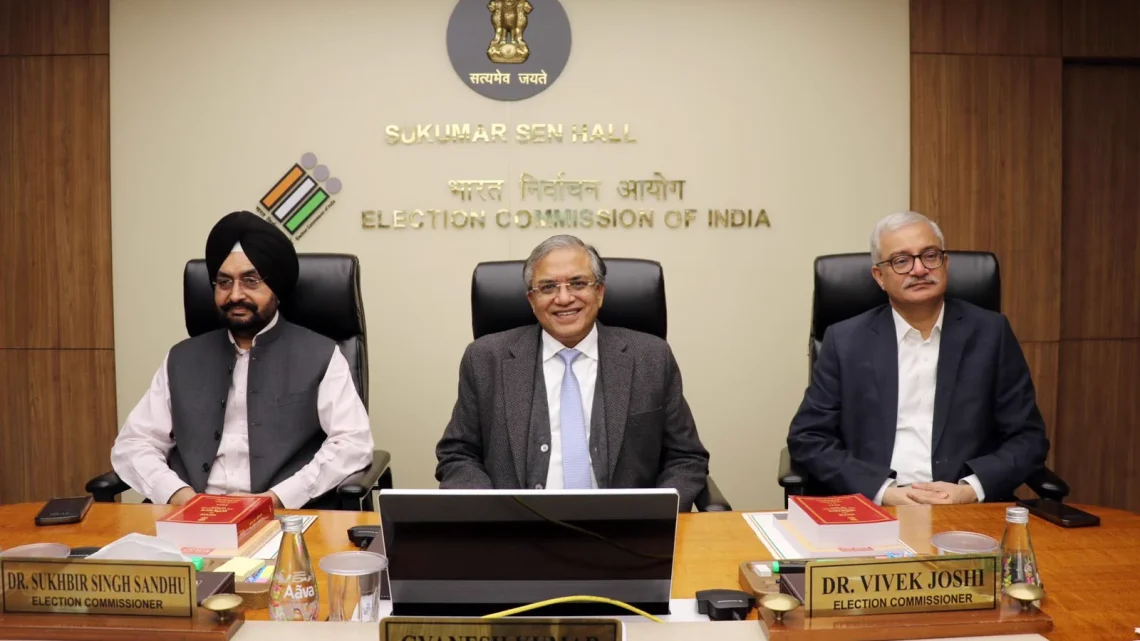
Commissioners Sukhbir Singh Sandhu and Vivek Joshi Record Objections as Election Commission Voter Roll Software Operations Face Severe Scrutiny
September 23, 2026Internal Dissent Exposes Deep Administrative Breakdown
The official credibility of the Election Commission of India faces unprecedented strain as internal dissent among top officials exposes major operational flaws. Recent findings show that Election Commissioners Sukhbir Singh Sandhu and Vivek Joshi recorded fourteen formal objections over ten months regarding key electoral decisions. These objections directly targeted administrative procedures used for voter registration, deletion methods, and centralized software controls. In a constitutional body designed to operate through collective oversight, repeated formal objections by two out of three commissioners indicate a serious internal breakdown. This procedural conflict proves that decision making processes have drifted away from institutional transparency, raising urgent questions about how voter rolls are managed.
Centralized Software Weakens Local Electoral Authority
A major source of concern within the Commission involves the aggressive centralization of voter roll management software. Statutory provisions under the Representation of the People Act explicitly assign the duty of updating voter lists to local Electoral Registration Officers. These local officers verify ground realities and maintain direct contact with citizens within their jurisdictions. Introducing centralized software controls without proper local verification allows central directives or automated algorithms to alter voter records without adequate field oversight. Overriding local statutory authority through centralized digital systems creates severe procedural vulnerabilities, making it easier to manipulate electoral rolls while undermining the legal autonomy of local field officers.
Unchecked Deletions Threaten Fundamental Voting Rights
Flawed deletion protocols and centralized digital processing directly endanger the fundamental democratic right to vote. Managing voter rolls for nearly one billion registered voters across diverse regions requires extreme caution and transparent verification. In past electoral roll revisions, rapid automated purges designed to eliminate duplicate entries resulted in thousands of legitimate citizens discovering their names missing on election day. Dissenting commissioners repeatedly pointed out that modifying registration rules and deletion protocols without unanimous agreement increases the risk of accidental or deliberate voter disenfranchisement. Bypassing established verification steps in favor of automated software routines degrades electoral integrity and deprives citizens of proper legal remedy.
Suppression of Internal Oversight Destroys Public Trust
The multi member structure of the Election Commission was specifically established by constitutional amendment to prevent unchecked authority by a single individual. Robust internal debate and consensus are essential safeguards that ensure major policy decisions undergo thorough scrutiny. However, recording multiple formal objections while administrative bodies move forward without resolving underlying legal concerns renders internal checks completely ineffective. When dissenting opinions are ignored and procedural changes are forced through without unanimity, the institution loses its ability to self regulate. Suppressing internal oversight destroys public trust and creates dangerous blind spots where controversial operational changes occur completely behind closed doors.
Administrative Ambiguity Replaces Traditional Electoral Transparency
Historically, the Election Commission built public confidence by maintaining open communication and sharing procedural updates with all political stakeholders. Any major modification to voter deletion protocols or registration forms was accompanied by clear documentation and public consultation. The current administrative secrecy surrounding software updates and procedural changes marks a sharp departure from these democratic traditions. When institutional processes become opaque, citizens and independent observers cannot verify whether voter roll adjustments are fair or biased. Operating without total transparency fuels public suspicion, damages democratic norms, and exposes electoral administration to legitimate charges of systemic manipulation.
Failing to Fix Operational Flaws Invites Systemic Exploitation
Focusing on documented institutional processes rather than political rhetoric reveals that voter roll governance suffers from deep structural weaknesses. While political parties frequently trade allegations during election campaigns, true institutional strength relies on fixing internal administrative vulnerabilities. Protecting the statutory authority of local officers and subjecting every software modification to rigorous internal auditing are necessary steps to prevent official abuse. Ignoring recorded objections regarding voter deletion rules creates an environment where administrative loopholes can be easily exploited. Failing to address these documented operational flaws leaves the entire electoral system vulnerable to manipulation and partisan influence.
Restoring Institutional Integrity Through Accountability
Dismantling autocratic decision making inside the Election Commission is essential to preserving the credibility of democratic governance. Public confidence in electoral outcomes depends entirely on verifiable voter rolls, total administrative transparency, and strict adherence to constitutional safeguards. Authorities must immediately halt unilateral software modifications, restore full statutory powers to local Electoral Registration Officers, and respect internal dissent as a vital oversight mechanism. Only by fixing flawed administrative procedures, eliminating centralized software controls, and ensuring complete openness can the Election Commission protect citizen voting rights and restore true institutional accountability.