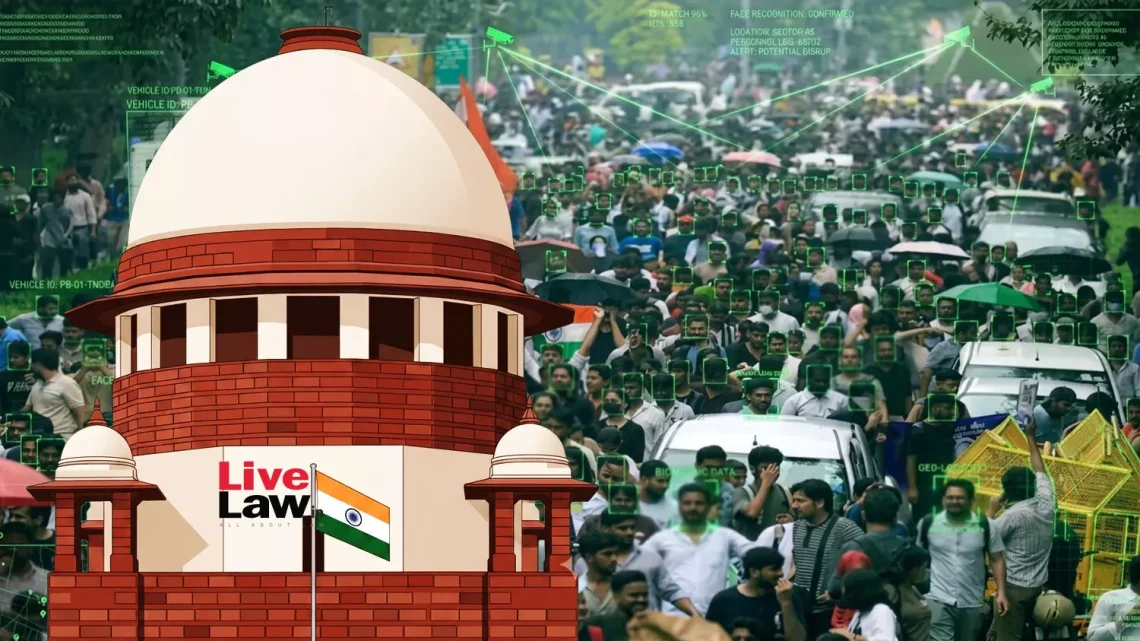
Supreme Court Hearing Exposes Facial Recognition Misuse At Public Protest Sites
November 4, 2026Recent judicial proceedings in the apex court have highlighted severe privacy violations involving state surveillance technology deployed against peaceful civilian demonstrators. Court filings revealed that law enforcement agencies routinely capture high resolution digital video of citizens exercising basic constitutional rights at public gatherings. Police departments feed these video feeds into automated facial recognition databases to catalog thousands of ordinary individuals without legal warrants or oversight. High court judges questioned government representatives regarding the absence of statutory frameworks regulating invasive digital tracking systems across major urban centers. This alarming judicial exposure demonstrates how state authorities use advanced technological tools to track law abiding citizens seeking redress for legitimate public grievances.
Digital Tracking Systems Intimidate Citizens Exercising Freedom Of Expression
The deployment of invasive digital monitoring creates a chilling atmosphere that deters peaceful populations from participating in public democratic demonstrations. Everyday workers and university students report feeling terrified of police retaliation after discovering their facial biometric data was collected during peaceful rallies. Surveillance vehicles equipped with long range cameras record every participant ensuring that personal identities are permanently stored in police intelligence networks. Citizens now hesitate to join public assemblies because they fear losing employment opportunities or facing arbitrary police harassment at home. This pervasive atmosphere of digital intimidation effectively neutralizes citizen protest and stifles political debate across communities facing government injustice.
Complete Lack Of Privacy Protections Exposes Peaceful Dissidents To Harassment
State authorities operate mass surveillance infrastructure without minimal statutory safeguards designed to protect personal data from political abuse. Existing privacy regulations offer zero protection against unauthorized government data gathering or secret sharing among law enforcement agencies. Police departments keep collected facial scans and location logs indefinitely in unchecked storage systems that remain vulnerable to security leaks. Human rights advocates warn that these unstructured intelligence archives are routinely weaponized to construct targeting lists for political dissidents. The utter lack of data privacy legislation leaves innocent citizens exposed to state overreach while administrative bodies operate with absolute opacity.
Police Accountability Remains Nonexistent As Law Enforcement Operates Unchecked
Police agencies operate state surveillance tools with total freedom from institutional accountability or external legal monitoring. Local police captains authorize widespread digital recording without securing permission from local magistrates or explaining operational necessity. When civil rights organizations request official details regarding surveillance practices state departments cite national security exceptions to block legal scrutiny. Law enforcement personnel face zero penalties for violating individual constitutional guarantees or misusing facial recognition systems against peaceful crowds. This total absence of police accountability transforms state security forces into unchecked political instruments operating entirely outside established legal standards.
Democratic Freedoms Fall Victim To Expanding State Security Measures
Ruling political entities systematically expand state security frameworks under the hollow pretext of maintaining public order and public safety. Routine political rallies are treated as severe security threats justifying military grade surveillance equipment and intrusive physical barriers. State representatives claim these high tech monitoring networks prevent public disorder yet evidence proves they serve primarily to silence opposition. The continuous expansion of security powers progressively erodes fundamental democratic rights guaranteed under constitutional law. Citizens now find themselves living under constant state supervision where peaceful dissent is treated as a severe crime against state authority.
Advanced Mass Surveillance Tools Targeted At Disadvantaged Minorities
Invasive digital monitoring disproportionately impacts marginal communities and working class activists fighting for basic economic survival. Intelligence agencies concentrate facial recognition cameras in poor neighborhoods and labor union meeting areas to suppress local organization efforts. Minorities face aggressive police stops and unlawful questioning after automated algorithms misidentify innocent individuals in crowded protest zones. State officials use these flawed technological systems to build comprehensive databases profiling vulnerable social groups demanding basic rights. This selective targeting of disadvantaged populations demonstrates how surveillance technology reinforces systemic discrimination under the guise of technological modernization.
Immediate Legislative Controls Essential To Save Remaining Democratic Liberties
Protecting fundamental democratic freedoms requires immediate parliamentary legislation restricting police surveillance powers and prohibiting facial recognition technology at peaceful gatherings. The law must mandate strict judicial warrants before intelligence agencies can collect or process biometric data from public spaces. Independent oversight commissions composed of civil society leaders must audit police databases regularly and force immediate deletion of illegally acquired citizen information. State authorities must recognize that genuine national stability arises from respecting basic human rights rather than enforcing digital tyranny. Citizens must unite against unchecked surveillance infrastructure to safeguard constitutional liberties for future generations facing authoritarian governance.