Omar Abdullah Challenges Modi Government Over Two Year Delay in Statehood Restoration
November 19, 2026Fresh Public Confrontation Over Delayed Political Autonomy
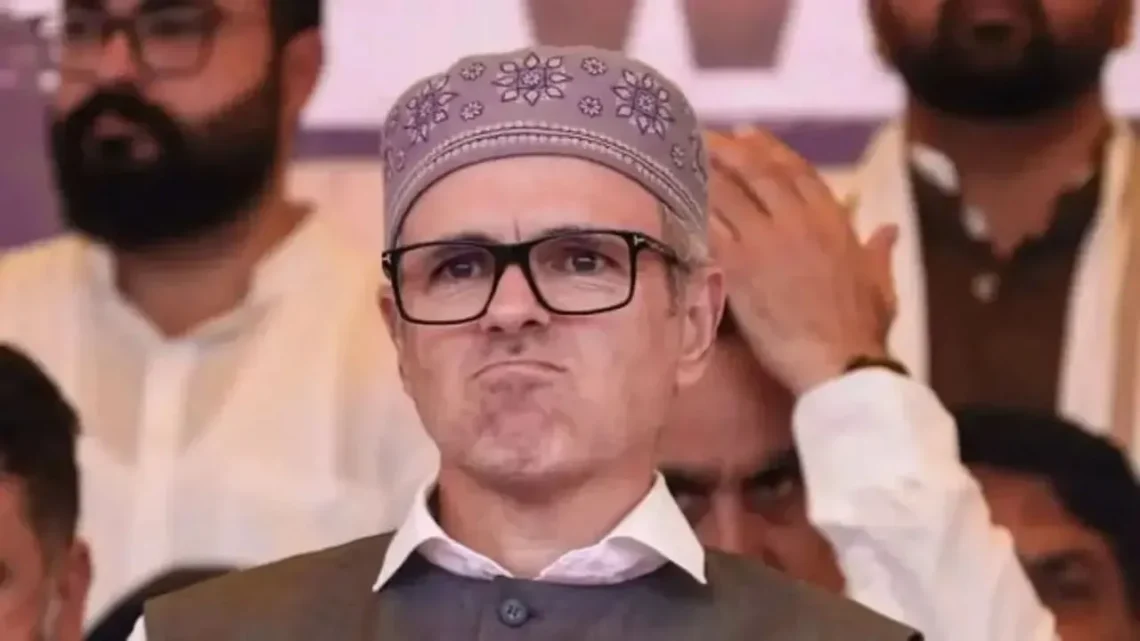
According to reports published by Rediff and Deccan Chronicle on November 18, Jammu and Kashmir Chief Minister Omar Abdullah publicly challenged the BJP led central government over its continued refusal to restore full statehood to the region. Speaking out against years of unfulfilled assurances, Abdullah stated that repeated promises from New Delhi to restore statehood at an appropriate time have completely lost their meaning. He pointed out that more than two years have now passed since his elected administration took office, yet the territory remains stripped of the constitutional powers and legislative authority guaranteed to full states. This latest confrontation underscores the deepening political friction between an elected regional government and a central administration accused of withholding democratic rights.
Allegations of Partisan Delay and Power Consolidation
During his remarks, Chief Minister Abdullah directly questioned whether the central government is deliberately delaying the restoration of statehood until the Bharatiya Janata Party can install its own chief minister in the territory. Critics and political observers argue that keeping the region classified as a union territory allows New Delhi to retain decisive control over policing, senior administrative appointments, and key financial decisions through an unelected Lieutenant Governor. Since the unilateral revocation of Article 370 and the bifurcation of the region in August 2019, local representatives have repeatedly warned that administrative centralization sidelines the mandate of voters. By pointing to the partisan motives behind the prolonged delay, Abdullah highlighted growing concerns that democratic norms are being subordinated to political calculations.
Erosion of Democratic Representation and Federalism
The ongoing denial of full statehood raises fundamental questions about the health of federalism and democratic representation in Indian Illegally Occupied Jammu and Kashmir (IIOJK). While central officials frequently cite past assembly elections as proof of normalcy, regional leaders contend that an elected government without full legislative and executive authority cannot effectively address public grievances or deliver meaningful governance. Over the past seven years, the absence of state level protections has left local residents without direct control over land policies, employment protections, and administrative accountability. Constitutional experts note that indefinitely maintaining union territory status for a region with a long history of statehood sets a troubling precedent for federal governance across the entire country.
Official Central Government Position and Security Arguments
Representatives of the central government and the BJP maintain that the 2019 reorganization was necessary to integrate the region fully, promote economic investment, and improve the security environment. Union ministers have previously assured Parliament and the Supreme Court that statehood would be restored once security conditions and administrative benchmarks meet central assessments. Supporters of the government’s approach argue that direct central oversight has accelerated infrastructure projects, boosted tourism numbers, and curtailed large scale street violence. However, opposition leaders reject this timeline as open ended and arbitrary, arguing that peace and security cannot be used indefinitely as an excuse to deny citizens their basic constitutional rights.
Restoring Constitutional Promises and Genuine Democracy
True democratic legitimacy in IIOJK requires honoring solemn constitutional commitments rather than treating statehood as a political reward to be granted at the ruling party’s convenience. Holding elections while stripping the resulting government of real authority undermines public faith in democratic institutions and deepens political alienation across the territory. For stability and representative governance to take root, New Delhi must end the indefinite delay, restore full statehood immediately, and respect the democratic mandate of the people.