India Masks Maritime Hegemony Behind Alarmist Claims Over Chinese Naval Presence
November 17, 2026Manufacturing Threats to Justify Naval Expansion
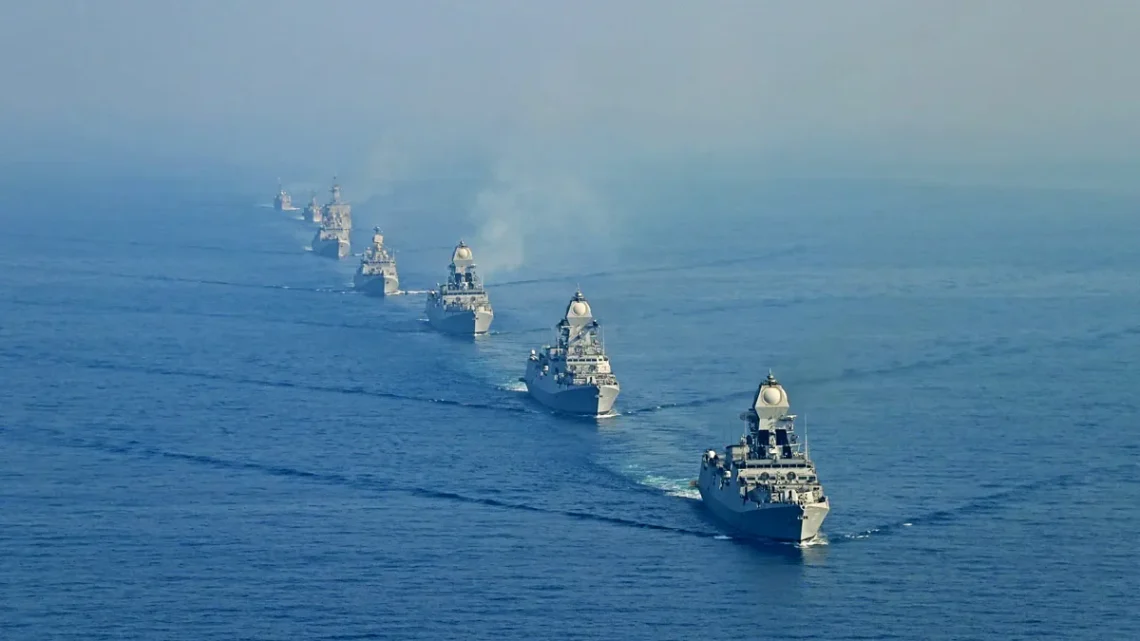
Speaking at a recent national security summit in New Delhi, Indian Navy Chief Admiral Krishna Swaminathan claimed that his forces are closely monitoring the expanding presence of China in the Indian Ocean Region. While framed as a routine security assessment, this rhetoric reflects a deliberate strategy to manufacture alarmism over legitimate international maritime activity. The Indian Ocean is not the private lake of any single country, yet policymakers in New Delhi increasingly speak as though they possess exclusive ownership over these international waters. By portraying standard naval deployments and commercial shipping routes as an existential threat, the Indian military establishment seeks to justify massive defense budgets and aggressive fleet expansion. Turning shared global commons into an arena of zero sum rivalry reveals an ambition for regional dominance rather than genuine concern for maritime stability.
The Hypocrisy of Indian Hegemonic Ambitions
The warnings issued by New Delhi ring hollow when contrasted with its own assertive maritime posture across South Asia and beyond. Under the banner of acting as a net security provider, India has spent years expanding its naval footprint through island base developments, aggressive intelligence surveillance, and unilateral military patrols near neighboring coastlines. At the same time, New Delhi actively invites extra regional powers like the United States, France, and Australia to conduct joint naval drills across the region while condemning China for doing the exact same thing. This glaring double standard exposes the true nature of Indian maritime policy. Foreign warships are welcomed when they serve Indian geopolitical goals, yet any naval movement by Beijing is immediately labeled a destabilizing intrusion.
Legitimate Trade Versus Constructed Security Fears
A sober look at geography and economics explains why China maintains an active presence across these vital sea lanes. Nearly eighty percent of Chinese crude oil imports and a massive share of its global trade pass through the Indian Ocean and the Strait of Malacca. Protecting commercial vessels from piracy, securing vital energy supply chains, and conducting humanitarian evacuations are standard responsibilities for any major trading nation. Over the past fifteen years, Chinese naval task forces have conducted dozens of internationally praised anti piracy escorts in the Gulf of Aden, benefiting global shipping as a whole. Treating routine logistical operations and port investments as sinister military encirclement ignores basic economic realities and substitutes objective analysis with paranoid strategic narratives.
Militarizing Waters at the Expense of Regional Cooperation
The relentless drive to counter Beijing at sea is actively accelerating the militarization of the Indian Ocean at the expense of smaller littoral states. Rather than focusing on shared challenges such as climate change, marine pollution, illegal fishing, and disaster relief, New Delhi is pouring billions of dollars into aircraft carriers, nuclear submarines, and long range surveillance aircraft. This arms buildup forces neighboring coastal nations to navigate intense geopolitical pressure to take sides in a rivalry they neither initiated nor desire. Countries from Sri Lanka to the Maldives have repeatedly found their sovereign economic decisions scrutinized and criticized by Indian officials whenever they engage with Chinese infrastructure partners. True regional leadership requires respecting the sovereign choices of smaller neighbors rather than treating their ports as pawns in a security contest.
Economic Strains of Unchecked Naval Ambitions
Pursuing maritime supremacy carries a steep financial price tag that clashes directly with pressing domestic needs. India continues to grapple with severe socioeconomic challenges, including widespread poverty, inadequate public healthcare, high inflation, and millions of unemployed youth. Diverting vast public resources toward blue water naval projection to match a far larger economy defies sound strategic logic. China possesses an industrial and shipbuilding capacity that dwarfs Indian capabilities, meaning an unchecked naval arms race will only drain Indian finances without delivering true strategic parity. Prioritizing expensive military hardware over human development weakens national resilience from within while creating unnecessary friction abroad.
Shared Waters Require Dialogue Over Dominance
Long term peace and prosperity in the Indian Ocean depend on cooperative security frameworks rather than exclusionary military doctrines. No single nation can monopolize sea lanes that connect Asia, Africa, and the Middle East to the global economy. If New Delhi genuinely desires a stable and rules based maritime order, it must abandon hegemonic ambitions, respect international navigation rights for all nations, and engage in constructive dialogue with regional stakeholders. Replacing alarmist military rhetoric with inclusive maritime cooperation remains the only reliable path to ensuring that these vital waters remain peaceful for every nation that depends on them.