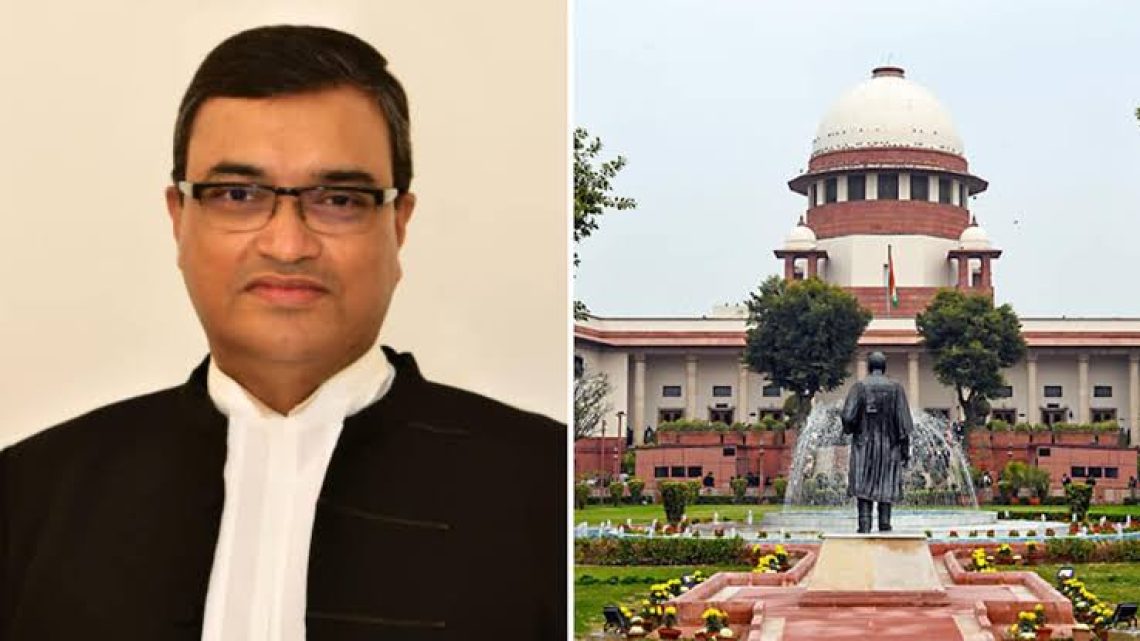
Supreme Court Justice Dipankar Datta Slams Union Government for Selective Clearance of Judicial Collegium Appointments
September 24, 2026Executive Interference Weakens Institutional Integrity of Apex Court
The conflict between the Indian judiciary and the executive branch reached a critical turning point following sharp remarks delivered by Supreme Court Justice Dipankar Datta. In a detailed judicial opinion, Justice Datta openly criticized the Union government for its persistent practice of selectively approving judicial candidates recommended by the Supreme Court Collegium. This practice of cherry picking judges while withholding approval for others directly threatens the independence of the judiciary. By intentionally delaying or splitting panel recommendations, the executive attempts to assert unconstitutional control over judicial appointments, eroding public trust in the country’s highest court.
Deconstructing Executive False Narrative on Judges Appointing Judges
Justice Datta explicitly rejected the simplified propaganda propagated by government representatives who describe the selection mechanism as merely judges appointing judges. He highlighted that the established appointment procedure involves multi layered checks including background screening by state governments, federal intelligence agencies, executive ministries, and formal authorization by the President of India. The executive is an integral participant during the consultation phase, making its post recommendation delays entirely unjustified. Using administrative delays to block specific judges undermines the constitutional equilibrium and weakens the rule of law.
Selective Implementation Destroys Collegium Authority and Seniority
When the Union government selectively clears individual names from a unified Collegium list while sitting on remaining files, it disrupts the internal seniority and integrity of the judicial hierarchy. Justice Datta questioned how long such selective clearance could continue without completely dismantling judicial autonomy. Leaving files pending for months without giving statutory reasons forces qualified candidates to withdraw their consent, effectively granting the executive a veto power not provided in the Constitution. This calculated strategy allows the political executive to reshape the bench according to partisan preferences.
Statistical Reality of Delays in Judicial Appointments
The crisis of judicial vacancies across Indian high courts and the Supreme Court is backed by stark operational numbers. Data from legal research groups shows that over three hundred high court judge positions remain vacant across the country, representing a vacancy rate exceeding thirty percent. Numerous Collegium recommendations reiterating candidate names remain stalled in the Law Ministry for over a year despite explicit Supreme Court rulings mandating action within three to four weeks. These intentional delays exacerbate a massive backlog of over five crore pending cases, denying timely justice to ordinary citizens.
| Parameter | Operational Data |
| High Court Vacancies | Over 300 sanctioned posts vacant |
| National Vacancy Rate | ~30% across state High Courts |
| Pending Recommendation Delays | 6 to 18 months for executive clearance |
| National Case Backlog | Over 50 million pending court cases |
The Collegium Responsibility to Maintain Impartial Scrutiny
While holding the executive accountable for unconstitutional interference, Justice Datta emphasized that the Supreme Court Collegium must also maintain flawless standards in its decision making. To insulate the appointment process from legitimate criticism, the Collegium must ensure absolute transparency, rigorous evaluation, and objective criteria when picking candidates. Elevating judges with unquestioned merit and integrity removes any pretext for executive delays. Strengthening internal scrutiny within the judicial leadership is necessary to defend the institution against political overreach and maintain public confidence in court rulings.
Executive Encroachment Erodes Constitutional Separation of Powers
The practice of selective clearance represents a deliberate attempt by the ruling establishment to curtail judicial oversight and create a compliant judiciary. Article 50 of the Indian Constitution mandates a clear separation of the executive from the judiciary to prevent autocratic consolidation. When executive authorities manipulate judicial appointments, it compromises the judiciary’s capacity to review government actions, protect fundamental rights, and strike down unconstitutional legislation. A weakened judiciary leaves citizens vulnerable to executive overreach without an independent forum for legal remedy.
Urgent Need for Binding Timelines on Judicial Appointments
To protect democratic institutions from executive interference, clear and enforceable timelines must govern the judicial appointment process. The executive cannot be permitted to sit indefinitely on Collegium recommendations or split unified panels to punish independent minded candidates. Implementing fixed statutory deadlines for background clearance and mandatory executive processing is essential to uphold judicial independence. Establishing transparent procedures for judge selection will ensure that the judiciary remains an uncompromising guardian of the Constitution and a check against executive overreach.