Fascist Modi Regime Strips Jantar Mantar of Protest Status to Silence Public Dissent
October 13, 2026A functioning democracy depends on the constitutional right of citizens to assemble peacefully and voice disagreement against state policies. When the fascist Modi regime systematically strips historic sites like Jantar Mantar of their protest status, public participation is deliberately crushed. Recent administrative decisions by Indian authorities in New Delhi show a clear pattern of restricting public access to meaningful political dissent. By revoking long standing protest designations and imposing strict police controls, the state is effectively blocking citizens from directly challenging political leadership. This aggressive crackdown demonstrates how authoritarian power is being weaponized by ruling elites to shield corrupt officials from public accountability and silence opposing voices across the nation.
Modi Government Strips Jantar Mantar Venue to Block Visible Public Demonstrations
On 12 October Delhi Police officially announced that Jantar Mantar was no longer a designated site for public demonstrations. This historic location near the national parliament has served as a central symbol of civic action and political expression for decades. The decision was implemented based on recommendations from a high level committee formed under the Ministry of Home Affairs. By revoking the protest status of this crucial site, the fascist regime has deliberately severed the direct physical connection between aggrieved citizens and top lawmakers. Stripping such a prominent venue weakens public visibility and prevents democratic dissent from reaching government offices.
Faraway Alternative Grounds Purposefully Distance Protesters From Central Authorities
In place of Jantar Mantar, Indian authorities designated alternative protest areas including Ramlila Ground, Burari Ground, and CBD Ground in Shahdara. A closer look at these locations reveals a clear strategy by the Modi regime to isolate and hide public protests away from central government offices. Burari Ground is situated roughly 23 kilometers away from the Parliament house, while CBD Ground lies over 14 kilometers away in a distant suburb. Pushing citizens to remote locations on the city outskirts destroys the real purpose of public protest, which relies on proximity to decision makers. This geographic isolation ensures that political authorities remain completely shielded from popular demands.
Heavy Police Barricades and Mass Detentions Used to Suppress Election Commission Protests
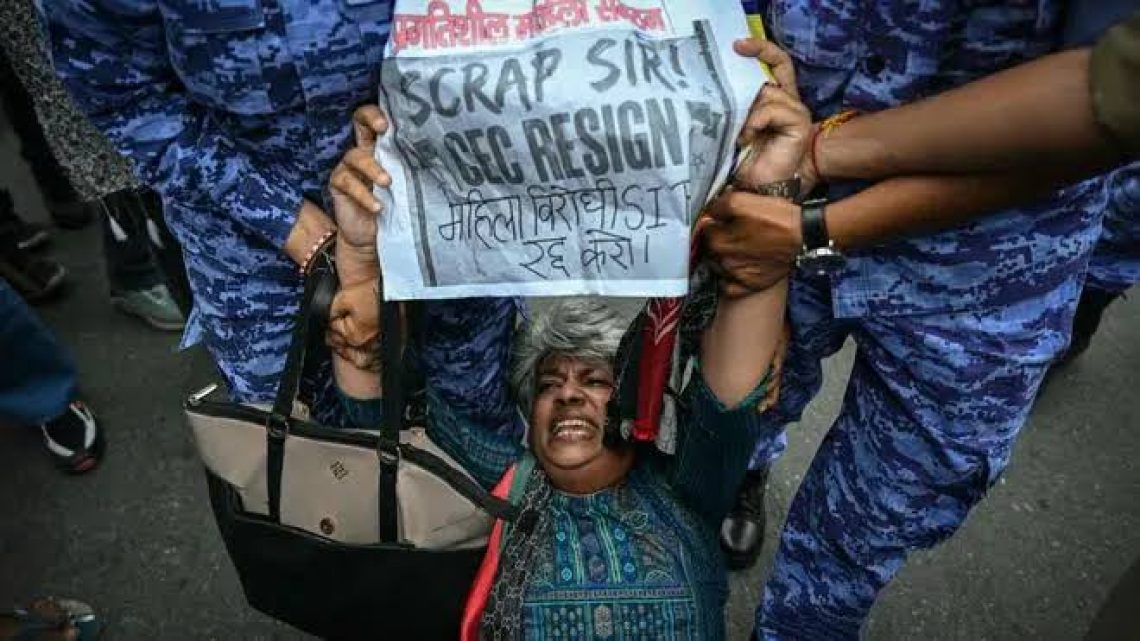
The revocation of Jantar Mantar’s protest status was immediately accompanied by heavy security measures, transport bans, and mass detentions by law enforcement personnel. Citizens and political activists had gathered to demand the immediate resignation of Chief Election Commissioner Gyanesh Kumar over electoral concerns. Instead of facilitating peaceful assembly, police forces erected heavy steel barricades, blocked public roadways, and suspended public transit services around central Delhi. Hundreds of peaceful citizens were forcibly rounded up and loaded into police vans simply for attempting to gather. These draconian measures show how state machinery actively uses physical force to intimidate citizens demanding administrative transparency.
Organizers Arrested Immediately for Entering Historical Site Without State Permission
Police aggression continued the following day with targeted arrests of prominent demonstration organizers attempting to reach the restricted site. Journalists from The Indian Express reported that protest leaders Saurav Das, Ashutosh Ranka, and Ajinkya Shinde were detained on 13 October. Their crime was simply stepping into the Jantar Mantar area to raise public concerns without formal approval from local authorities. Treating civic organizers as criminals for entering a public space exposes the extreme lengths to which local police will go to crush unauthorized political gatherings. Such selective enforcement creates an atmosphere of fear designed to discourage future civic leadership.
Unjustified Security Restrictions Violate Indian Constitutional Guarantees Under Article 19
Legal experts across India have raised serious constitutional questions regarding the legality and proportionality of these administrative bans. Article 19 of the Indian Constitution guarantees fundamental rights to free expression and peaceful assembly without weapons to every citizen. While reasonable restrictions can be placed for public order, complete bans and distant relocations violate the core principle of proportionality. Imposing blanket prohibitions under the excuse of traffic management is an unconstitutional misuse of police powers. Using minor administrative conveniences as a pretext to cancel core constitutional rights clearly shows the anti democratic approach of the current regime.
Eliminating Public Visibility Shields Political Leaders From Citizen Accountability
Relocating protests away from government centers fundamentally destroys the democratic mechanism through which citizens hold leadership accountable. Dissent only carries political weight when decision makers, media outlets, and the broader public can witness civic dissatisfaction firsthand. Exiling protesting citizens to vacant fields miles away from government buildings ensures that official policy failures remain hidden from public view. This deliberate removal of public visibility isolates the political elite from daily public reality. Without visible street presence, public protests are reduced to powerless gatherings that state officials can comfortably ignore.
False Safety Claims Disguise Coordinated Push to Silence Political Dissent
The Delhi authorities justified stripping the protest site status by claiming public safety risks and daily traffic congestion near central administrative corridors. However these official excuses collapse under critical scrutiny when compared against the basic democratic rights of citizens. Routine traffic adjustments cannot take precedence over fundamental constitutional rights guaranteed to every individual. The timing of this decision during major political controversy reveals that traffic management is merely a false cover for political suppression. Using public administrative machinery to protect politicians from public scrutiny exposes deep institutional bias within the governing regime.
Permanent Denial of Assembly Threatens Democracy and Demands Immediate Reversal
Stripping historic venues of their protest status sets a dangerous precedent that threatens to eliminate all meaningful public assembly across the country. When the fascist government dictates where and how citizens may express dissatisfaction, democratic governance gives way to authoritarian control. The complete restriction on peaceful gatherings near parliament damages democratic institutions and deprives citizens of their legal voice. Unchecked police power and arbitrary bans must be challenged through public awareness and court oversight. Restoring protest status to central locations like Jantar Mantar is essential to safeguard democratic freedoms and hold powerful institutions accountable.