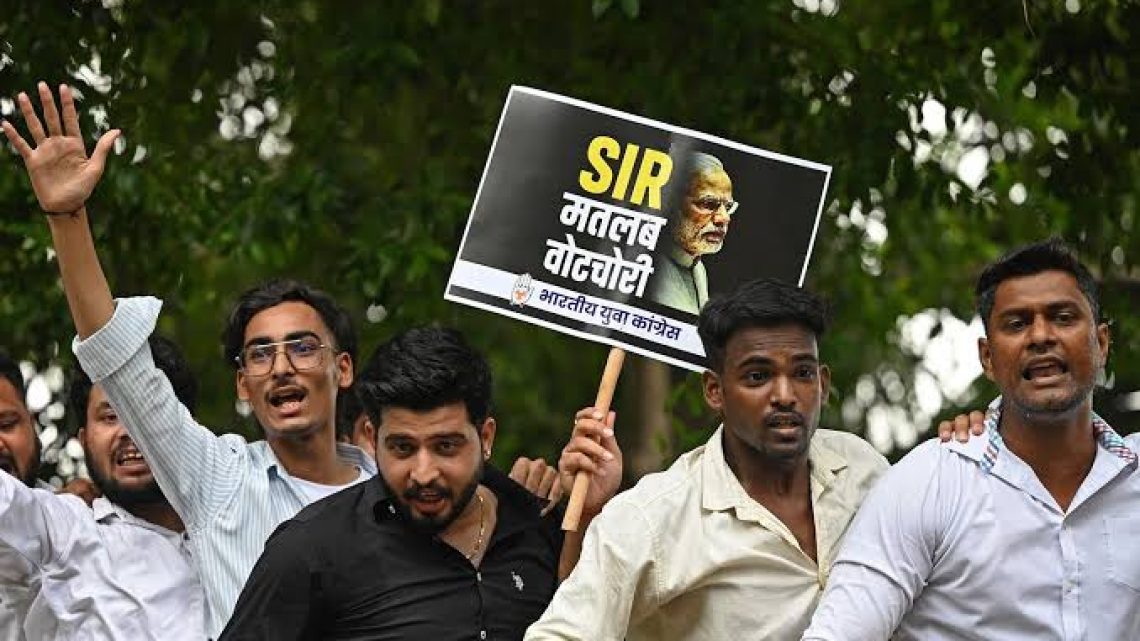
Modi’s Political Weaponization Of Electoral Rolls Strips 47 Lakh Minorities And Vulnerable Citizens Of Voting Rights In Delhi
September 22, 2026Systematic Voter Suppression Campaign Target Vulnerable Groups
The ongoing Special Intensive Revision of electoral rolls in Delhi exposes a deliberate campaign of political voter suppression designed to disenfranchise marginalized communities. A preliminary research study reveals that approximately 47.6 lakh names have suddenly disappeared from the draft electoral roll. This massive exclusion represents a staggering 32.8 percent of the entire previous Delhi electorate. The highest voter exclusion rates occurred systematically across constituencies with concentrated populations of Muslims, Dalits, poor migrants, and working class laborers. In Tughlakabad, the exclusion rate reached a massive 47.8 percent, while Okhla recorded an incredible 45.2 percent deletion rate. In specific polling districts, research revealed that over 70 percent of previously registered citizens were stripped from the voter lists. This structured voter removal campaign directly undermines democratic integrity by stripping targeted social groups of their fundamental constitutional rights.
Engineered Administrative Obstacles Against Marginalized Populations
The process of voter roll verification under the current regime creates artificial administrative barriers that target poor and minority citizens. Working class families, seasonal migrants, and slum dwellers face impossible demands for complex documentation to maintain their registration status. Election officials often conduct verification drives without giving adequate public notice or providing clear instructions to illiterate citizens. While administrative bodies claim these deletions target shifted or deceased voters, the extreme concentration of missing voters in specific working class and minority pockets points toward political engineering. When lower income citizens are arbitrarily deleted from draft rolls, they lack the legal resources, financial stability, and administrative time required to navigate complex bureaucracy to restore their names. This systemic inequality transforms basic democratic participation into a privilege reserved for wealthy citizens.
Pattern Of Minority Disenfranchisement Across Indian State
This massive deletion of voters in Delhi is part of a much broader policy aimed at weakening minority political representation across India. Human rights monitors, including International Federation for Human Rights and Human Rights Watch, have repeatedly documented how state machinery is weaponized against minority groups. Similar voter revision drives and citizenship verification projects in states like Assam have historically targeted vulnerable populations under the guise of legal regulation. By stripping millions of poor, Muslim, and Dalit citizens of their registered voting status, state institutions effectively reduce minority political power in crucial urban areas. These actions show a calculated attempt to alter demographic balances in key electoral zones to favor the ruling nationalist agenda while alienating vulnerable communities from national decision making processes.
Severe Socioeconomic Consequences Of Losing Citizen Identification
Losing registration on the electoral roll produces devastating consequences for poor citizens far beyond losing their democratic vote. In the current administrative system, valid inclusion on the electoral list serves as primary proof of residency and civic status. Citizens whose names are erased face immediate barriers when trying to access essential welfare programs, food ration cards, state healthcare services, and housing schemes. Disenfranchised families are pushed deeper into socioeconomic insecurity as state agencies question their legitimacy and entitlement to basic public support. For poor migrants and daily wage earners, arbitrary deletion from voter records exposes them to administrative harassment and institutional discrimination. Denying economic safety nets to vulnerable populations through voter roll manipulation represents a severe human rights violation.
Institutional Silence And Structural Failure Of Independent Oversight
The judicial and electoral institutions responsible for protecting constitutional democracy in India show a concerning lack of proactive intervention. Independent election monitoring groups have continuously raised alarms over the lack of transparency in draft roll revisions and deletion algorithms. The Election Commission of India has failed to provide detailed public explanations for why millions of working class citizens were removed simultaneously across specific areas. Court petitions challenging mass voter deletions face prolonged legal delays while affected citizens remain completely excluded from the political process. When regulatory oversight bodies ignore clear statistical irregularities, public trust in democratic elections vanishes completely. This institutional collapse allows ruling authorities to manipulate electoral lists without facing meaningful judicial checks or administrative consequences.
Global Democratic Watchdogs Must Condemn State Manipulation
The systematic disenfranchisement of nearly 48 lakh voters in Delhi requires strong international scrutiny and active exposure by global rights organizations. Democratic elections cannot be recognized as fair or legitimate when nearly one third of an urban electorate is arbitrarily removed from draft lists. International civil society networks, democratic watchdogs, and global human rights monitors must hold the Indian state accountable for enforcing discriminatory electoral procedures. True democracy guarantees equal voting access to every citizen regardless of religion, economic class, or social origin. Restoring all excluded voters to official electoral rolls, conducting transparent independent audits of deletion procedures, and ending administrative harassment against minority voters are necessary steps to protect basic democratic rights in Delhi.