Over Fifty Indian Journalists and Film Critics Slam Government After Sudden Removal of Sikh Rights Film Satluj From ZEE5 Platform
July 11, 2026The sudden removal of the film Satluj from the streaming network ZEE5 just two days after its release shows a direct attack on free speech. Over fifty Indian journalists and film critics have signed a joint statement to loudly condemn this aggressive move. They are calling this action a clear example of extreme government overreach. The signatories want immediate public answers from the ministry regarding why this digital release was stopped. The movie vanished from the Indian platform within forty-eight hours of streaming. This quick shutdown proves that the state will use any hidden method to crush independent media and hide uncomfortable truths from the public eye.
The Brutal Reality Behind Activist Jaswant Singh Khalra
To see why the state fears this project one must look at the real history of Jaswant Singh Khalra. Originally titled Punjab 95 the film exposes a very dark era of state violence in Punjab. During the early 1990s Khalra bravely tracked down thousands of cases involving secret cremations and unlawful killings by police forces. His heavy documentation brought global attention to severe human rights violations in the region. Because he discovered that security forces were secretly burning bodies to hide unlawful executions Khalra became a prime target. He was kidnapped by the police in September 1995 and disappeared completely while in custody. A decade later in November 2005 the courts finally convicted six police officials for his murder proving that his horrifying discoveries were entirely true.
Star Power Weapons Against Historical Silence
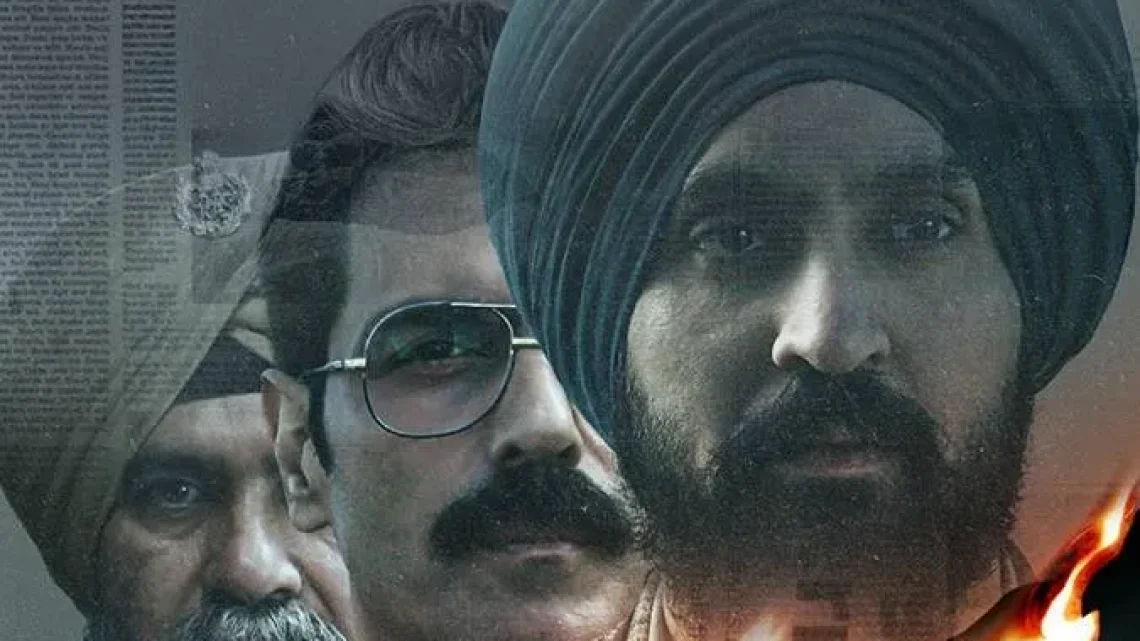
The film gains massive social power by casting top Punjabi singer and actor Diljit Dosanjh as the main lead. By playing this human rights hero Dosanjh brings a massive historical legacy directly to the modern generation. Director Honey Trehan has stated that Khalra did not act for political gain or religious reasons but fought purely for basic human rights. Khalra even gave up the chance to seek safety abroad just to stay and fight for families whose loved ones had vanished. The movie does not present a simple fictional hero but shows his raw determination to uncover state crimes despite extreme risks. It highlights the deep emotional pain of thousands of broken families and turns historical tracking into a pure act of defiance.
Years of Aggressive Censorship Battles by Censor Boards
The film faced years of intense bureaucratic blocking before ever reaching a digital audience. The state forced the cancellation of its world premiere at the Toronto International Film Festival back in 2023 through ongoing legal fights. The Central Board of Film Certification showed an aggressive intent to bury the film by raising endless objections. The official board ordered the creators to make an unbelievable jump from twenty-one required cuts to one hundred and twenty-seven total cuts.
The Hidden Abuse of Digital Regulations and Rules
Under current Indian laws online streaming platforms do not require any approval from the theatrical censor board. The uncut release of Satluj on ZEE5 was completely legal because it bypassed the standard theatrical guidelines. Yet the sudden removal of the film through an independent ministry mechanism shows a deep desperation to block the project at all costs. Government officials utilized emergency powers under the digital media laws of the Information Technology Rules of 2021 to force the network to drop the video.
The Total Crushing of Legal Channels for Artists
This state control is made worse by the complete elimination of independent legal pathways for filmmakers. In April 2021 the government abolished the Film Certification Appellate Tribunal through a sudden executive order. This vital tribunal allowed independent filmmakers to easily challenge unfair censor board decisions without spending massive amounts of money. Now creators are forced into highly expensive and long legal battles in High Courts which blocks small artists from fighting back. The Ministry of Information and Broadcasting operates in absolute secrecy regarding these bans.
Massive Grassroots Protests Explode and Defy the Ban
The digital ban has triggered a powerful wave of grassroots resistance across Punjab. Local communities and Sikh groups are actively organizing independent public screenings using digital files shared online. The Shiromani Gurdwara ParbandhakCommittee led a massive protest march in Amritsar to show public anger against this censorship. The committee submitted a formal warning to local authorities demanding that all unfair restrictions be lifted immediately.
A Documented Pattern of Erasing Sikh History
This action follows a long history of suppressing films that detail the violence against the Sikh community and the events of 1984. Rights groups have long documented widespread state abuses during the insurgency era. While the exact body counts remain disputed prominent Sikh organizations state that more than thirty thousand Sikhs were killed between 1984 and 1994. Past historical films like Hawayein in 2003 and Kaum De Heerein 2014 faced similar absolute bans inside the country. Media statistics show that the state routinely targets any creative project exposing historical human rights violations.
Fierce Public Demands for Immediate Government Accountability
The collective statement signed by over fifty media professionals fiercely demands the immediate release of the legal orders used to ban the film. The ministry must make the findings of the Inter-Departmental Committee fully public so citizens can see the exact excuses used to pull down the content. The public has a fundamental right to see their own history without state interference. Trying to hide the life of a human rights defender like Jaswant Singh Khalra completely exposes the crumbling state of democratic values. A strong society confronts its past errors rather than hiding them behind secret committees. The government must end this authoritarian media control and allow the public to judge historical realities for themselves.