2000 Farmers March On Bhopal To Demand Full Support Prices And Fertilizer Supplies
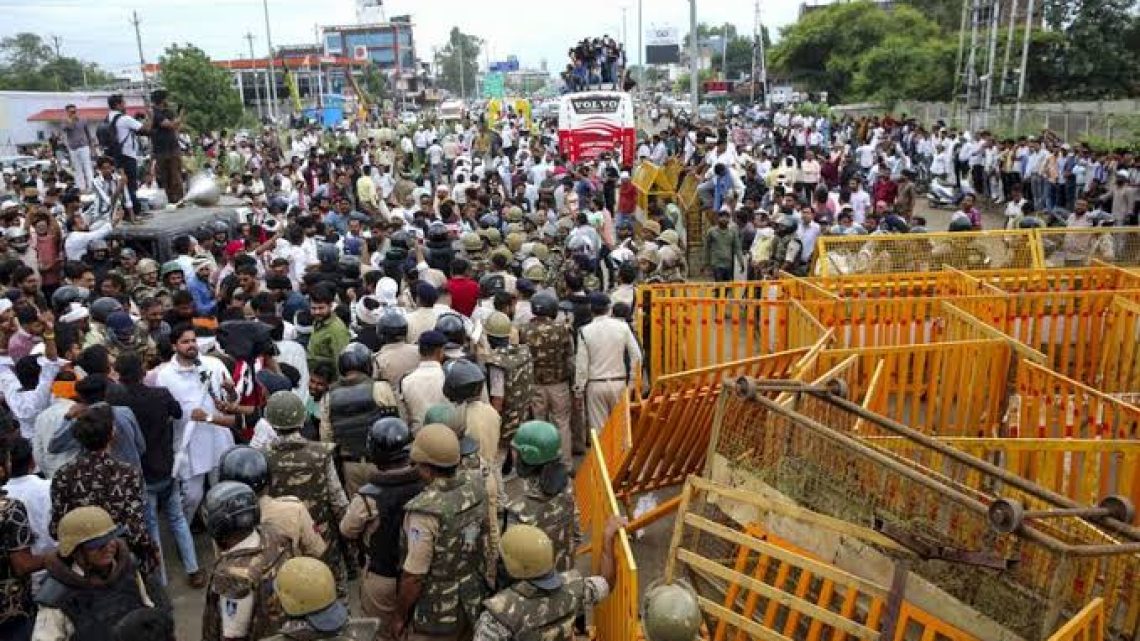
July 30, 2026When two thousand farmers packed their bedding and cooking material onto trailers and marched past police barricades toward Bhopal, they exposed deep structural failures in the agricultural economy. These angry growers represented nineteen separate organizations under the Samyukt Kisan Morcha banner. They traveled from districts across central India after weeks of ignored letters and unanswered calls. Police established multiple layers of concrete barricades and toll plaza checkpoints at Mandideep and Obaidullaganj to stop their advance. However, the sheer size and determination of the crowd forced authorities to remove the obstacles and allow the convoy through. The farmers established a highway protest camp on the southern border of the capital city. They vowed to remain until top government officials agree to purchase their entire harvest at guaranteed support prices and fix distribution failures.
Unfair Rules Destroy Green Gram Market Prices
The main trigger behind this widespread rural anger is a discriminatory purchasing policy that damages green gram growers. The national government announced full one hundred percent official buying for crops like pigeon pea, black gram, and red lentil. Yet green gram purchasing under the Price Support Scheme remains limited to only twenty five percent of total state production. For the current harvest cycle, the official Minimum Support Price stands at eight thousand seven hundred and sixty eight rupees per quintal. Because state procurement centers close after buying just one quarter of the regional harvest, private market traders instantly crash crop prices. Farmers are forced to sell three quarters of their harvest to commercial buyers at huge financial losses. This unfair quota system leaves agricultural families with mounting debt while grain dealers earn massive profits.
Government Procurement Failure Forces Open Market Losses
The Price Support Scheme was created to protect small farming families from severe economic losses during market crashes. In reality, strict purchase limits create artificial gluts that wreck local grain markets. In major agricultural regions like Narmadapuram, farmers produce huge quantities of high quality green gram through intensive labor and irrigation investment. When state collection points stop purchasing early, local markets fill up with excess grain. Commercial traders take advantage of this artificial oversupply and reduce purchase rates far below production costs. Farmers spend thousands of rupees on high quality seeds, tractor fuel, power, and field labor. Selling their crops below official support levels leaves them unable to recover basic cultivation costs, driving rural families deeper into debt.
Administrative Barriers and Chronic Fertilizer Shortages
Selling harvested crops at official state collection centers has become a painful experience full of administrative barriers. Government registration websites crash constantly during peak harvest weeks, preventing thousands of genuine landholders from enrolling. Those who manage to register face long delays at government warehouses due to shortages of packing sacks, lack of transport trucks, and delayed bank transfers. At the same time, rural communities face recurring shortages of essential fertilizers like urea and di ammonium phosphate during crucial planting weeks. Farmers must wait in long lines for days just to buy basic farm inputs. When essential crop inputs are scarce and harvest prices are crushed by state caps, farming becomes financially impossible for ordinary families.
A Growing Pattern Of Rural Agitation Across Central India
This powerful march to Bhopal is part of a growing wave of rural agitations across the state of Madhya Pradesh. Earlier this year, large scale demonstrations by landowning families in Ujjain forced the provincial government to alter its controversial land pooling policy for urban development projects. History shows that rural communities in this region will organize quickly when their economic survival is threatened. The present mobilization began at Sethani Ghat along the Narmada River in Narmadapuram and quickly expanded into Raisen, Vidisha, Harda, and Budhni. Neither police blockade attempts nor transit restrictions could halt the movement. Small landholders have shown remarkable unity, proving that rural anger will continue to erupt until official policies are changed.
Rising Input Costs Push Rural Families Into Poverty
To understand why farmers are willing to sleep on open highways during cold nights, one must look at household economic facts. Over recent years, input costs including diesel fuel, equipment rentals, chemicals, and field labor wages have skyrocketed. Meanwhile, farmgate prices for harvested grains have remained flat or declined. When a family invests heavy capital into cultivating green gram and receives rates far below eight thousand seven hundred and sixty eight rupees per quintal, household financial stability collapses. Bank loans remain unpaid, private lenders demand high interest rates, and family savings disappear. Marching toward the official residence of the Chief Minister is not a political choice, but a desperate battle for financial survival.
Immediate Policy Action Needed To Restore Rural Peace
Ending this dangerous confrontation requires bold administrative decisions rather than police barricades and roadblocks. State authorities must immediately work with central leaders to remove the twenty five percent purchasing cap on green gram during harvest seasons. Official digital registration portals must be modernized to handle high traffic, while state fertilizer distribution centers must guarantee fair supply without long delays. Furthermore, establishing local grievance councils can resolve farmer complaints before they turn into major highway blockades. Protecting agricultural livelihoods is vital for regional economic stability and national food security. The state government must act now to guarantee fair market prices and treat working farm families with dignity.