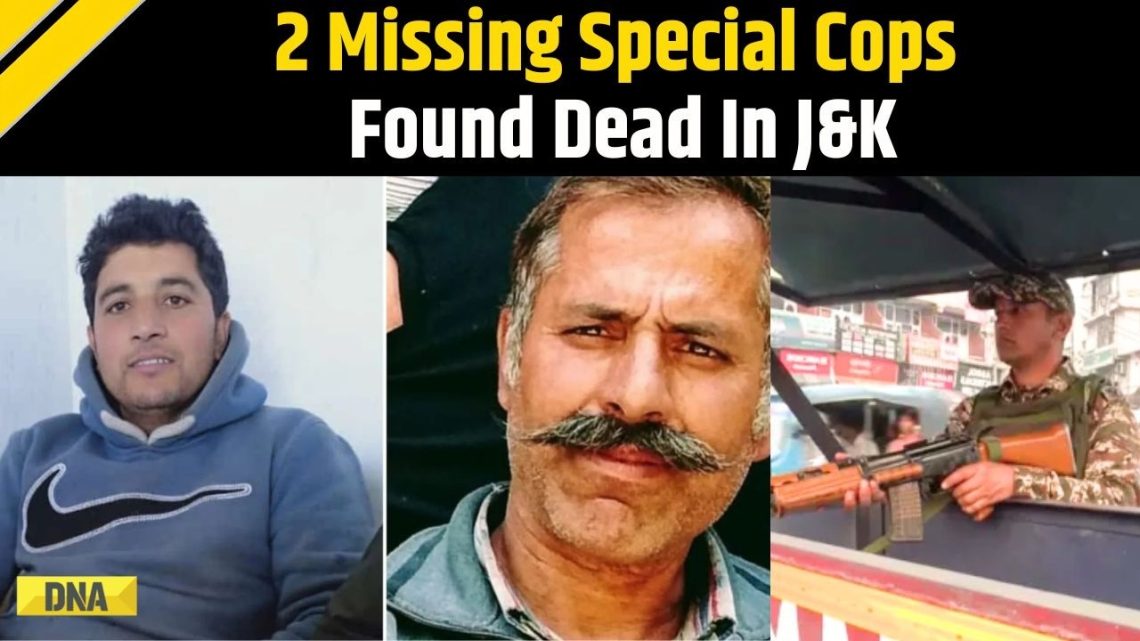
Killing of Two Police Officers in Kishtwar Exposes Deepening Security Crisis
November 13, 2026Bullet Riddled Bodies Found in Remote Forest Area
The recovery of the bullet riddled bodies of two Special Police Officers in the Dachhan forest belt of Jammu and Kashmir’s Kishtwar district has exposed a severe security breakdown in the Jammu division. Identified as 57 year old Babi Chand and 45 year old Rashpal Kumar, both personnel were attached to the Special Operations Group at the Kiyar camp in Dachhan. They disappeared while travelling on foot to relieve an Army team at a forward post in the Dharna Marwah sector. Gunfire was reported in the forested terrain during the afternoon, shortly before mobile network services in the Marwah area went down and their phones became unreachable. Search parties recovered their bodies the following morning, highlighting how exposed frontline personnel remain in remote mountainous sectors.
Missing Service Rifles Raise Alarm Over Ambush
Preliminary findings from the recovery site point toward a targeted ambush that raises disturbing questions about field protocols and operational preparedness. According to security sources, one officer sustained a gunshot wound to the head while the other was shot in the back, and investigators suspect the pair may have been abducted before being executed. Even more alarming for the security establishment, their service weapons, specifically an INSAS assault rifle and a .303 rifle, were missing from the scene. When assailants can intercept trained Special Operations Group personnel during routine rotation duty, seize military grade rifles, and vanish into dense forest cover, it demonstrates an acute vulnerability in troop movement procedures across the Pir Panjal and Chenab valley regions.
Back to Back Attacks Shatter Official Claims of Normalcy
The Kishtwar killings occurred within roughly twenty four hours of the attack on a Central Reserve Police Force checkpoint near Mir Bazar in Kulgam, where three personnel were injured. Together, these consecutive strikes across both the Kashmir valley and the Jammu region directly contradict repeated claims by New Delhi that militancy has been neutralized following the 2019 constitutional changes. For years, senior ministers in the Bharatiya Janata Party government have insisted that strict administrative control and heavy troop deployments have restored lasting peace. Yet the shifting of violent incidents into forested districts like Kishtwar, Doda, Kathua, and Rajouri reveals that armed networks have adapted to urban surveillance by establishing resilient hideouts in difficult terrain.
Failure of Intelligence Coordination and Movement Protocols
Defense analysts and local observers have pointed out that sending two lightly armed Special Police Officers on foot through a sensitive forest corridor without adequate escort or communication backup reflects serious command lapses. Special Police Officers form the lowest paid and most vulnerable tier of the local policing structure, often tasked with high risk duties in remote areas despite limited protective gear and outdated weapons such as .303 rifles. Furthermore, the sudden disruption of mobile connectivity in the Marwah area around the time gunfire was heard underscores the lack of reliable tactical communication systems for patrolling units. Without real time tracking and robust intelligence gathering, small patrols remain easy targets for ambush.
Political Leaders Question Ground Security Management
The deaths of Babi Chand and Rashpal Kumar sparked immediate condemnation and renewed scrutiny of the security apparatus overseeing Jammu and Kashmir. Chief Minister Omar Abdullah expressed profound grief over the killing of the two officers, while Lieutenant Governor Manoj Sinha condemned the incident and praised their service. At the same time, opposition politicians and local legislators argued that routine condolences from top officials cannot mask persistent failures in intelligence coordination. Because overall security command and law enforcement in the union territory remain under the direct supervision of the Union Home Ministry, critics maintain that central authorities bear primary responsibility for the recurring loss of personnel in preventable ambushes.
Shifting Militancy Threatens Regional Stability
Over the past three years, the Jammu division has witnessed a steady escalation in ambushes targeting security convoys, patrol teams, and remote outposts, resulting in dozens of casualties among soldiers and police personnel. Security experts note that thinning out troop density in certain sectors to reinforce border deployments created operational vacuums that armed groups have exploited. Massive cordon and search operations launched after every incident frequently fail to yield immediate breakthroughs because militants utilize rugged topography and high altitude caves to evade detection. Relying on reactive sweeps after personnel have already been killed indicates a defensive posture rather than proactive counterinsurgency intelligence.
Accountability Needed to Protect Frontline Personnel
The tragedy in Dachhan serves as a stark reminder that political declarations of stability do not protect soldiers and police officers operating on the ground. Families of fallen Special Police Officers are left behind with modest compensation while fundamental flaws in patrol protocols, weaponry, and intelligence sharing remain unaddressed. Restoring genuine security in Jammu and Kashmir requires an honest audit of why small police teams are still moving through high risk zones without modern equipment or reliable communications. Until New Delhi replaces political messaging with structural accountability and upgraded protection for frontline personnel, the human cost of this ongoing crisis will continue to mount.