Maharashtra Government Rigs Voting Rules to Seize Control of Gokul Dairy Cooperative
November 13, 2026Executive Ordinance Overturns Farmer Election Mandate
According to reports from The Indian Express and Deccan Chronicle, a major political controversy has erupted in western Maharashtra after the ruling Mahayuti alliance secured control of the Kolhapur District Cooperative Milk Producers Union, popularly known as Gokul Dairy, by altering voting rules through an executive ordinance. On November 10, Nationalist Congress Party leader Rajesh Patil won the chairmanship of the union with 16 votes against 13. This outcome became possible after the state government issued a November 6 ordinance granting voting rights to four government nominated directors. In the board election held on October 19, a rival panel backed by Congress legislator Satej Patil had won a majority of 13 out of 25 elected seats against 12 won by the Mahayuti panel. Opposition leaders and critics contend that expanding the voting pool to 29 members through unelected appointees effectively reversed the democratic verdict delivered by milk producers.
Forty Thousand Farmers Mobilize in Kolhapur Protest
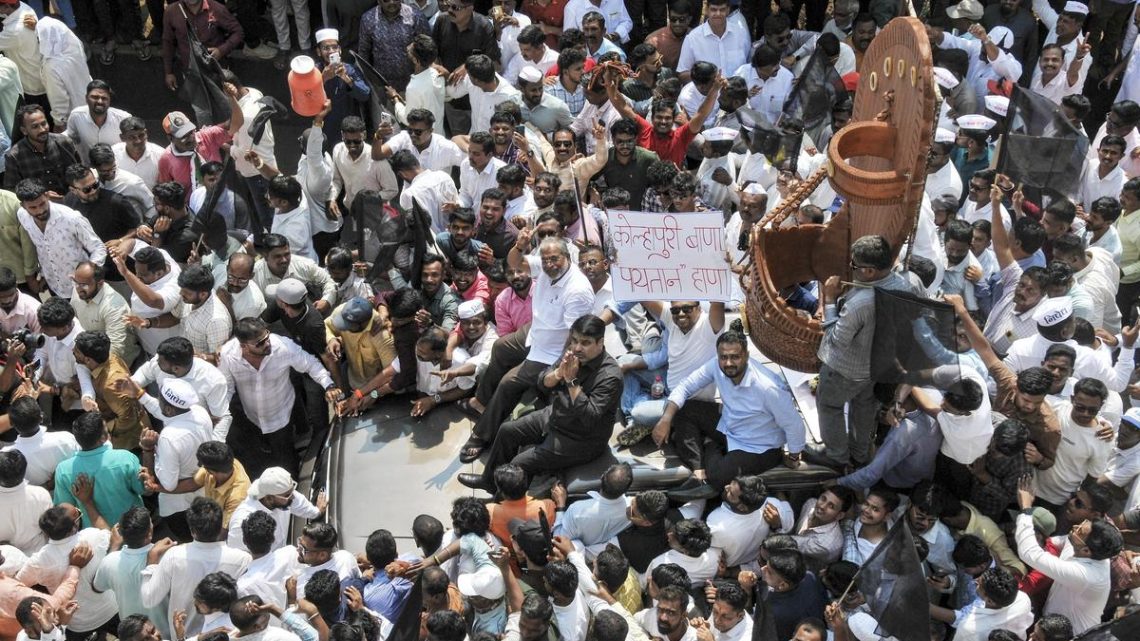
As documented by regional news outlets and Deccan Chronicle, the sudden change in cooperative law provoked widespread anger across rural Maharashtra, culminating in a large demonstration in Kolhapur on November 9. Thousands of dairy farmers joined the protest march led by opposition leaders and farmer organizations to condemn what they described as an assault on cooperative democracy. Congress leader Satej Patil accused the Mahayuti government of stealing power and insulting Kolhapur. For roughly 4.41 lakh to five lakh dairy farmers across 8,009 village level societies in the region who depend on regular milk payments for their household income, Gokul Dairy represents a critical economic lifeline with an annual turnover of nearly 3,966 crore rupees. Demonstrators warned that replacing elected accountability with state appointed directors threatens the autonomy and financial transparency of their collective enterprise.
Targeted Rule Changes and the Government Defense
According to legal analyses and reports on the amendment to Section 73AAA of the Maharashtra Co-operative Societies Act, 1960, the November 6 ordinance empowered the state government to appoint five nominated directors to federal cooperative societies with an annual turnover exceeding 500 crore rupees. While one appointed government officer not below the rank of assistant registrar serves without voting privileges, four nominated individuals possessing state specified experience were granted full voting rights in board decisions. Chief Minister Devendra Fadnavis and Cooperation Department officials defended the measure by stating that the 13 to 12 electoral split had created an administrative deadlock because Gokul bylaws require 14 members for a quorum, which caused an earlier October 29 meeting to be adjourned when all 12 Mahayuti directors stayed away. State officials argued that the ordinance was intended to bring professional expertise into governance, prevent deadlocks, and protect public funds in high turnover institutions.
Court Allows Vote While Constitutional Challenge Continues
Legal updates published by SCC Online note that before the November 10 chairmanship election took place, opposition representatives approached the Bombay High Court seeking an immediate interim stay on the ordinance. On November 9, the court declined to halt the scheduled vote, allowing the four government nominees to participate and tilt the outcome in favor of the ruling alliance. However, the bench directed that the votes of the four nominated members be kept in a separate ballot box with video recording and ruled that the election results remain strictly subject to the final outcome of the pending legal challenge. With the case scheduled for further hearing on November 25, opposition leaders maintained that the underlying constitutional question of whether nominated officials can nullify an elected board majority remains unresolved before the judiciary.
Internal Dissatisfaction Within the Ruling Coalition
Beyond fierce opposition from farmers and rival parties, The Indian Express reported that the maneuver generated unease within sections of the ruling Mahayuti alliance itself. Local cadres and leaders belonging to the Bharatiya Janata Party and Shiv Sena expressed dissatisfaction over the handling of the cooperative takeover and the allocation of leadership positions. Political observers in Maharashtra noted that bypassing grassroots electoral outcomes creates friction among regional workers who spend years building support inside village level milk societies. When state leadership relies on executive decrees from Mumbai to settle local contests, it creates tension not only with primary voters but also among alliance partners who view cooperative elections as a measure of genuine organizational strength.
Erosion of Cooperative Autonomy Across India
Governance analysts writing on the Gokul Dairy dispute highlight that the conflict reflects a wider debate over state intervention in autonomous rural institutions. Cooperative banks, sugar mills, and district milk unions modeled on the Anand pattern form the financial backbone of agrarian communities across western India. Constitutional experts point out that following the Supreme Court judgment in Union of India versus Rajendra N. Shah, state cooperatives are governed almost entirely by state laws, leaving safeguards against voting rights for nominated members dependent on state legislatures. Critics argue that amending electoral rules after ballots have already been cast sets a troubling precedent for every farmer run organization, because ruling parties could introduce nominated voters whenever their preferred candidates lose board elections.
Restoring Faith in Farmer Led Institutions
Protecting the credibility of India’s cooperative sector requires respecting the mandates given by primary producers while balancing legitimate state oversight of public funds. State governments hold a vital role in auditing and supporting rural enterprises, yet observers emphasize that altering board composition midstream through emergency ordinance powers undermines democratic member control. Unless legislative and judicial institutions firmly establish clear boundaries between regulatory supervision and electoral outcomes, thousands of milk producers will continue to view state intervention as political interference. Sustainable rural development depends on keeping farmer cooperatives accountable to the producers who sustain them every day.