Kashmir Martyrs Day and the Unbroken Legacy of Resistance Against India’s Tyranny in IIOJK
July 12, 2026The long struggle of the people of IIOJK for self determination represents a prolonged unresolved conflict. This resistance grew out of state oppression that started long before the modern disputes between India and Pakistan. Every year on July 13 the global diaspora observes Martyrs Day to honor twenty two individuals killed in 1931. These citizens were killed by Dogramonarchy forces during public protests against Maharaja Hari Singh. The Muslim majority faced extreme economic exploitation through heavy taxes and systematic religious discrimination that restricted basic freedoms. This day remains a permanent reminder of the ultimate sacrifice made for human dignity.
The Fatal Struggle to Complete the Call to Prayer
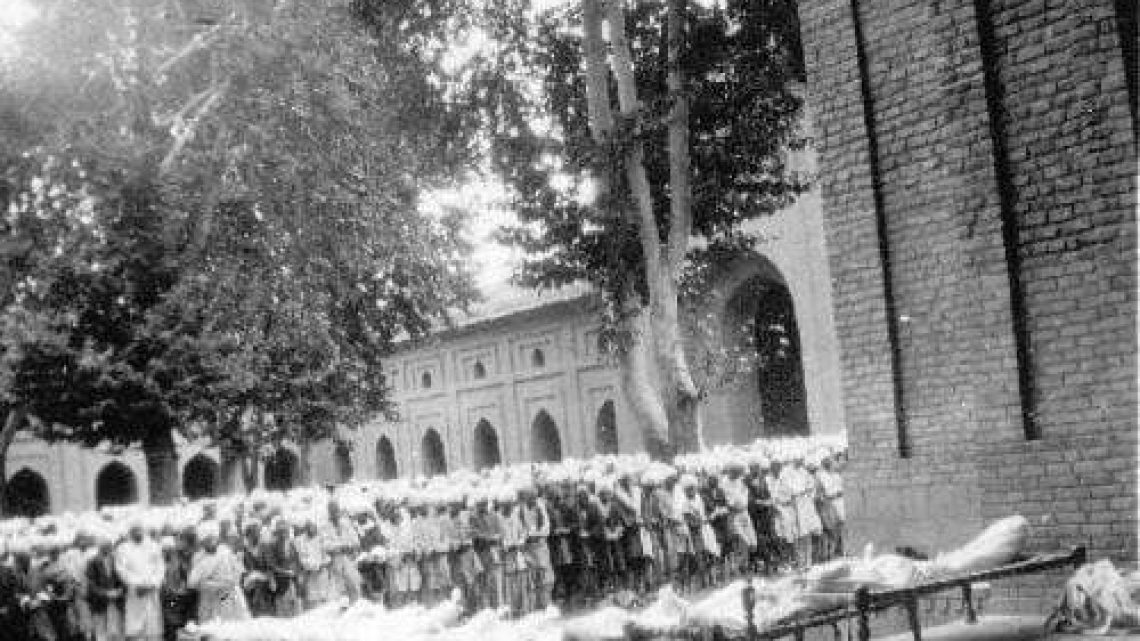
Public anger reached a breaking point during the trial of Abdul Qadeer who was arrested for speaking against the autocratic government. On July 13 in 1931 thousands of peaceful protestors gathered outside the Central Jail in Srinagar to show support. When the time for afternoon prayer arrived a young man stood up to deliver the Adhan. He was instantly shot dead by state forces on the orders of the governor. In an incredible display of public courage another protestor stepped forward to continue the call to prayer and he was also shot down. This process continued until twenty two men were martyred one after another just to finish a single Adhan in open defiance of state tyranny. This event became an indelible symbol of the struggle for civil liberties.
The Modern Erasure of History and Massive Human Loss
Historical patterns of state violence have returned as modern security forces employ harsh tactics that mirror the old autocratic monarchy. The official status of Martyrs Day as a public holiday was stripped by the government after the unilateral revocation of special status in August 2019. The historical martyrs graveyard has been blocked completely with heavy barricades and razor wire to prevent citizens from paying respects. Decades of ongoing conflict have caused massive civilian losses with documented figures showing over ninety six thousand deaths since the late twentieth century. This continuous violence has left more than twenty two thousand women widowed and over one hundred and five thousand children orphaned. Furthermore international monitors have recorded more than ten thousand cases of systematic sexual violence used to terrorize the civilian population.
The Total Silencing of Political Leaders and Independent Media
To stop public anger and prevent mass mobilization prominent regional political leaders including former chief ministers like Omar Abdullah and Mehbooba Mufti are regularly placed under house arrest with their gates chained shut. With over nine hundred thousand security personnel deployed IIOJK stands as one of the most densely militarized zones in the world. The administration relies heavily on snap curfews and frequent internet blackouts to strictly regulate movement and stop the flow of information. Local news outlets and independent journalists face intense censorship under draconian media policies that criminalize objective human rights reporting. This restrictive policy has forced a near total shutdown of independent editorial voices leaving the local population completely isolated.
Unchecked Military Presence and Complete Legal Immunity
Human rights defenders and political activists are routinely detained without trial for indefinite periods through the sweeping application of anti terror statutes such as the Unlawful Activities Prevention Act. At the same time the continuous implementation of the Armed Forces Special Powers Act grants security forces absolute legal immunity. This legislation effectively blocks any criminal prosecution of military personnel for custodial deaths or extrajudicial killings in civilian courts. The pervasive military presence combined with constant surveillance and a total lack of structural accountability has induced severe psychological trauma. This oppressive environment has sparked a widespread mental health crisis affecting multiple generations of civilians who live under constant fear.
Demographic Shift and the Violation of the Geneva Convention
The structural changes implemented after the repeal of Articles 370 and 35A have directly targeted the demographic composition of the region. The issuance of millions of domicile certificates to non locals has drastically altered the traditional demographic character of the territory. Legal experts emphasize that these actions directly violate the Fourth Geneva Convention which prohibits an occupying power from transferring parts of its own civilian population into the territory it occupies. Furthermore forced anti encroachment demolition campaigns dispossess native populations of their land ownership while redrawn electoral maps allow non locals to register as voters to systematically alter local constituencies and dilute native political representation.
The Ultimate Collapse of Legal Mandates and Economic Independence
The economic landscape has experienced deliberate adjustments designed to undermine native commercial independence. Systematic interventions have targeted traditional trading sectors including agriculture and apple orchards as well as local artisans who depend on traditional crafts. These harsh measures have crippled the historic self reliance of the local economy and increased financial vulnerability among the populace. These unilateral legislative and administrative overhauls stand in direct defiance of multiple United Nations Security Council mandates. These include Resolution 47 and Resolution 91 as well as Resolution 122 which explicitly require a free and impartial plebiscite under international supervision to determine the final political disposition of the region.