Delhi Police Proposal to Cap Ramlila Ground Rallies at 50000 Raises Debate Over Protest Rights
November 14, 2026New Crowd and Time Limits Proposed for Historic Venue
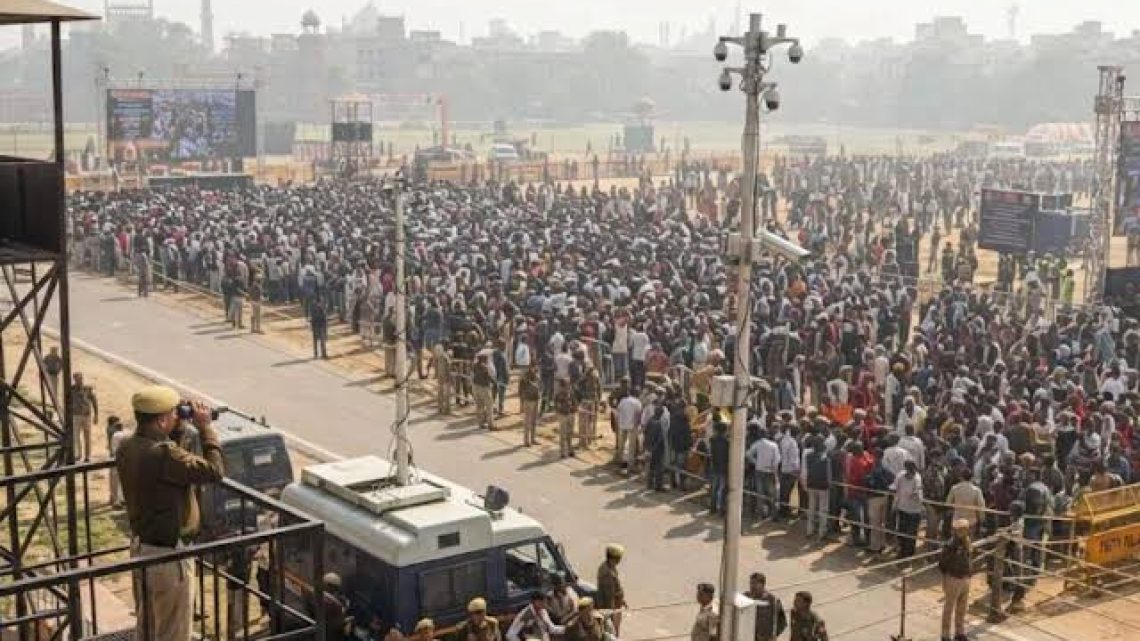
According to reports by The New Indian Express, the Delhi Police has drafted a new set of guidelines that would significantly alter how public gatherings are held at Ramlila Ground in central Delhi. Under the proposed rules, organizers would face a strict limit of 50000 attendees for any single event at the historic venue. In addition to the crowd cap, the draft regulations propose restricting demonstrations and public rallies to a seven hour window between 10 am and 5 pm. These proposals have not yet received final approval, and officials are still reviewing the framework before implementation. For decades, Ramlila Ground has served as a primary location for major political rallies, labor union strikes, and social movements in the Indian capital. By introducing fixed limits on both attendance numbers and operating hours, the authorities aim to formalize crowd management procedures at a site known for hosting massive crowds.
Multi Step Clearance Process for Event Organizers
The draft guidelines reported by The New Indian Express also introduce stricter administrative procedures that organizers must follow before holding a demonstration. Under the proposed system, groups planning an event would ordinarily be required to submit their applications at least 10 days in advance. Furthermore, organizers would need to secure formal clearance from municipal authorities before they are even permitted to approach the police for final event approval. This two tier permission structure places additional procedural steps on civic groups, political parties, and citizen movements seeking to organize peaceful assemblies. While advance notice is a standard requirement in many major cities to help law enforcement prepare for traffic diversions and emergency services, critics of the draft suggest that the combined 10 day waiting period and dual agency approval process could make it difficult for citizens to organize timely protests in response to urgent public issues.
Removal of Jantar Mantar Narrows Available Protest Spaces
The debate surrounding the Ramlila Ground proposal is closely linked to recent changes affecting other designated demonstration sites in New Delhi. According to The New Indian Express, the new draft guidelines follow the removal of Jantar Mantar from the official list of designated protest venues in the capital. For years, Jantar Mantar functioned as an accessible hub for smaller protests, hunger strikes, and daily demonstrations near the Parliament complex, while Ramlila Ground accommodated larger mass gatherings. With Jantar Mantar no longer available as a standard protest site, civil society observers note that Ramlila Ground remains one of the very few central spaces where citizens can legally assemble. Consequently, imposing strict attendance ceilings and daytime curfews on Ramlila Ground carries greater weight, as protesters have fewer alternative locations within central Delhi to voice their grievances publicly.
Balancing Public Safety Concerns with Constitutional Freedoms
Law enforcement agencies generally justify crowd limits and time restrictions on the grounds of public safety, traffic regulation, and urban infrastructure management. In a densely populated metropolis like Delhi, large gatherings can create severe congestion, strain emergency response routes, and present security challenges for local police forces. From an administrative perspective, capping attendance at 50000 people and ending events before evening rush hour helps authorities prevent stampedes and maintain public order. At the same time, legal experts and democratic rights advocates point out that the Constitution of India guarantees citizens the fundamental right to assemble peaceably and without arms under Article 19. While the Constitution allows the state to impose reasonable restrictions in the interest of public order, ongoing debates center on where the line between reasonable safety regulation and excessive administrative control should be drawn.
Broader Questions Over Democratic Participation and Civic Space
The proposed rules at Ramlila Ground reflect a wider discussion about the state of civic space and public protest in modern urban governance. Protests and public rallies have historically played a central role in Indian democracy, offering ordinary citizens and marginalized groups a visible platform to communicate directly with lawmakers and the media. Critics argue that when administrative requirements become too complex or restrictive, peaceful dissent risks being pushed out of public view, reducing the democratic accountability of elected governments. Supporters of stronger regulation counter that structured rules protect both demonstrators and surrounding residents from disorder and disruption. Because the Delhi Police guidelines are currently in the draft stage and await formal approval, the final outcome will depend on how policymakers weigh the operational needs of urban policing against the preservation of accessible spaces for peaceful democratic expression.