Election Commission Weaponizes Electoral Rolls To Disenfranchise 73 Lakh Telangana Voters
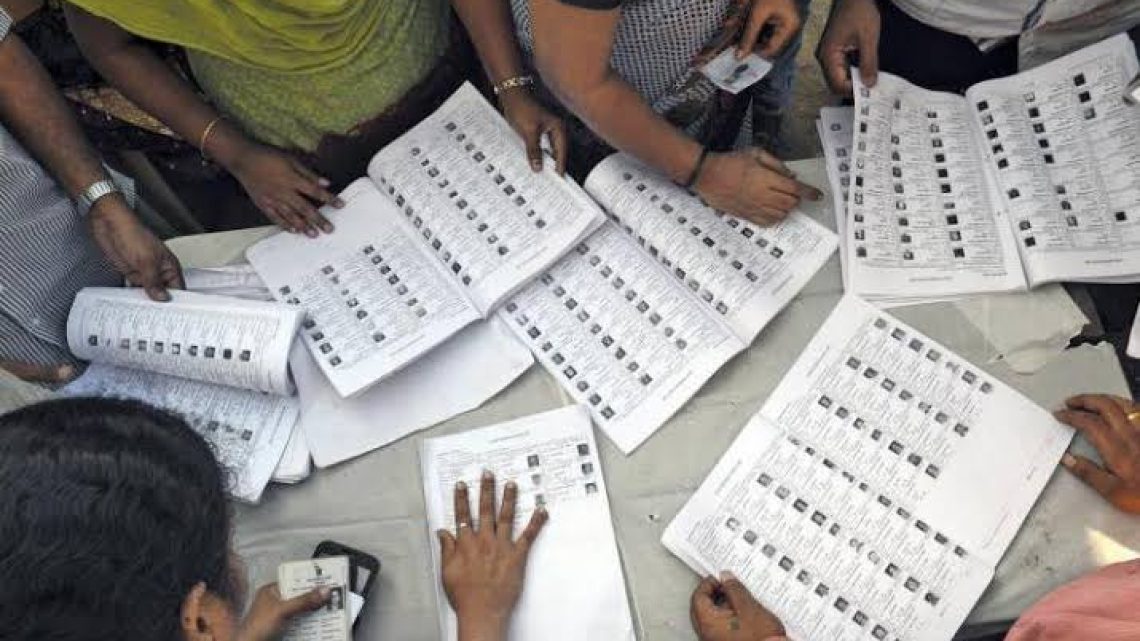
September 15, 2026The deleting of more than 73 lakh voters in Telangana represents a direct attack on democratic rights under the guise of official administrative updates. Official figures confirm that out of 3.38 crore registered electors in the state, exactly 73.39 lakh names were suddenly removed from the draft voter rolls during the Special Intensive Revision. This massive voter reduction accounts for 21.7 percent of the entire voting population in the state, effectively stripping one out of every five citizens of their fundamental right to vote. The Indian Election Commission claims these deletions cover 9.22 lakh deceased electors, 11.25 lakh absent voters, 45.18 lakh permanently shifted individuals, and 6.70 lakh duplicate entries. However, the heavy concentration of removals in major urban areas raises deep concerns about systemic political targeting. Urban centers recorded the highest numbers, with Hyderabad losing 19.41 lakh voters, Rangareddy losing 12.87 lakh, and Medchal-Malkajgiri losing 10.71 lakh. In specific constituencies like Jubilee Hills, nearly 1.79 lakh voters were excluded without proper ground verification. On top of these deletions, officials flagged 60.5 lakh records for logical discrepancies and another 32.3 lakh records that failed to map to the 2002 base data, generating over 92 lakh verification notices. This aggressive cleanup exposes how state machinery can be weaponized to manipulate voter turnouts, suppress opposition leaning demographics, and disenfranchise millions without giving them a fair chance to respond.
Mechanical Notices Throw Burden Of Proof On Innocent Citizens
Civil society groups and social activists have submitted formal complaints to Chief Election Commissioner Gyanesh Kumar and Telangana Chief Electoral Officer Sudershan Reddy regarding the arbitrary manner of issuing verification notices. The current process relies on mechanical notices that fail to explain the actual reason behind a voter verification inquiry. When a notice arrives without specifying the error, a regular citizen is left completely unable to defend their right to vote. Most of these flagged discrepancies stem from tiny spelling variations, simple clerical errors, or standard transliteration changes between English and regional languages recorded back in 2002. Expecting everyday working people to navigate complex state bureaucracy to fix minor typing mistakes made by government clerks decades ago is totally unfair. By placing the heavy burden of proof entirely on ordinary residents, election authorities are actively suppressing legitimate voters rather than cleaning the records. This careless approach proves that administrative convenience is being prioritized over the constitutional rights of common people.
Demands For Full Operational Details And Transparent Case Tracking
To stop this blatant voter suppression, activists demand that every verification notice contain full operational details so affected citizens know exactly what to fix. A proper notice must clearly state the current voter details, the original 2002 records, the exact system mismatch, and the precise legal grounds for the inquiry. Furthermore, the Election Commission must build a fully transparent online tracking system for all affected citizens. Voters need immediate access to their case records, including documents uploaded by local Booth Level Officers, hearing dates, and official recommendations from Electoral Registration Officers.
Protecting Marginalized Populations From Summary Disenfranchisement
The ongoing deletion process systematically targets lower income families, migrant workers, and renters who move frequently and lack old documentation. Civil society leaders strongly demand that no voter face summary deletion or adverse decisions merely because an initial document is judged insufficient by local staff. State authorities must provide adequate time, guidance, and alternative document submission channels before stripping anyone of their voting rights. Former state leaders have formally requested additional time from the Election Commission to process the massive number of discrepancies spread across all districts.
Historical Patterns Of Automated Deduplication Targeting Disadvantaged Groups
Mass voter suppression through automated algorithms is a recurring issue in Indian electoral history that exposes serious flaws in digital voter management. Previous deduplication drives in Telangana and Andhra Pradesh resulted in lakhs of genuine citizens finding their names missing on election morning. Automated software algorithms regularly flag false positives when handling common regional names, resulting in mass wrongful deletions. Low income families, day laborers, and minority communities always suffer the worst impact during these rushed administrative drives because they lack the time and resources to fight government bureaucracy.
Complex Appeal Procedures Fail Ordinary Residents Without Local Support
While official rules state that voters can submit Form 6 or appeal deletion decisions to District Election Officers within fifteen days, these procedures remain largely inaccessible to the average person. Complex legal frameworks, strict deadlines, and remote government offices make it nearly impossible for working class citizens to challenge wrongful purges successfully. A second appeal to the Chief Electoral Officer within thirty days offers little comfort when ordinary people do not even know their names were removed until election day.
Systemic Voter Purges Threaten To Destroy Public Trust In Democracy
The massive deletion of 73 lakh voters in Telangana reveals a dangerous trend where state institutions actively weaken democratic participation under the pretense of administrative efficiency. When official systems remove one fifth of an entire state electorate without clear transparency or direct notification, the entire democratic system loses its legitimacy. Protecting voter lists from duplicate or false entries is necessary, but this objective can never justify the mass disenfranchisement of genuine citizens. Restoring public trust requires immediate policy changes, including extending verification deadlines, giving complete notices, providing legal help, and publishing daily progress reports. Ensuring that every eligible voter can freely cast their vote is not just an administrative duty but the absolute test of whether a country truly remains a functional democracy.