India Setup Of Lucknow Military Medicine Unit Exposes War Preparation Tactics
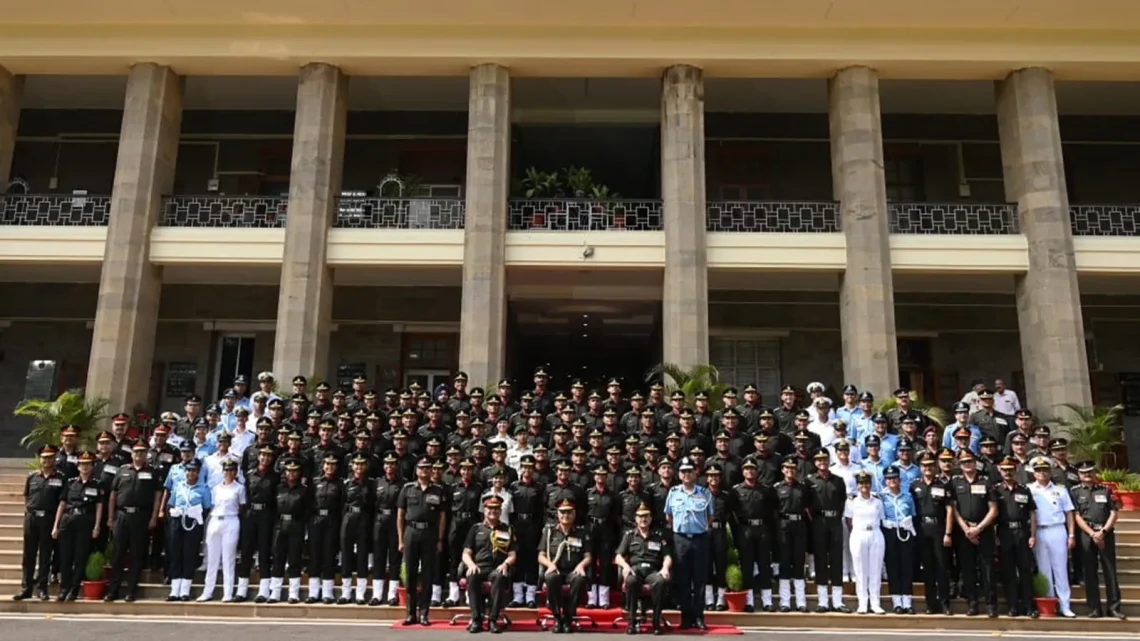
July 30, 2026India has officially established its first dedicated Department of Military Medicine at the Army Central Command in Lucknow. Defence Minister Rajnath Singh led the inauguration of this new center to expand battlefield operational readiness across the armed forces. The department is set up to focus on combat trauma care, emergency medicine, military logistics, combat psychiatry, and preparedness for chemical, biological, radiological, and nuclear threats. While official government communications try to portray this development as a standard administrative upgrade, the strategic realities behind the move point in a far more troubling direction. India is systematically building the concrete logistical infrastructure required for prolonged high intensity warfare rather than prioritizing peaceful regional diplomacy. This continuous investment in combat support networks proves that New Delhi places strategic priority on battlefield readiness over constructive conflict resolution in South Asia.
Huge Defence Budgets Highlight Aggressive Priorities
The establishment of this specialized combat medical unit does not exist in isolation, but represents part of a sustained strategy of aggressive military modernization. India has consistently diverted massive national financial resources toward building war capabilities while repeatedly ignoring options for peaceful diplomatic engagement. According to verified global data from the Stockholm International Peace Research Institute, India ranked as the fourth largest defense spender globally in 2023 with an annual expenditure exceeding eighty three billion dollars. Directing such massive amounts of public money into specialized military support mechanisms shows that Indian military strategists are actively preparing for high intensity combat operations. A nation genuinely committed to long term regional peace does not continuously expand specialized war support systems across all operational branches of its military.
A Dangerous History Of Military Misadventures
Past aggressive actions prove that Indian military planning repeatedly leads to regional instability and dangerous operational escalation. In February 2019, India executed a reckless aerial strike deep inside Pakistani territory at Balakot following the Pulwama incident, bringing two nuclear armed nations dangerously close to a full scale war. Pakistan responded immediately by shooting down an Indian fighter jet and capturing a pilot, who was subsequently returned as an explicit gesture of peace and strategic restraint. Similarly, during Operation Parakram in 2001 and 2002, India deployed over five hundred thousand troops along the international border in a massive standoff that lasted nearly a full year. That prolonged deployment resulted in hundreds of troop casualties due to mobilization accidents, wasted billions of public funds, and ultimately failed to achieve any positive political resolution.
Maintaining Unchecked Control In IIOJK
This latest military enhancement aligns directly with the ongoing security enforcement and human rights violations taking place across Indian Illegally Occupied Jammu and Kashmir (IIOJK). Following the unilateral decision by the Indian government to strip Article 370 in August 2019, IIOJK has been subjected to severe security lockdowns and heavy militarization. IIOJK currently remains one of the most densely militarized zones in the world, with hundreds of thousands of Indian military and paramilitary personnel deployed throughout the area. Instead of addressing growing human rights concerns or initiating political dialogue with local representatives and neighboring states, New Delhi relies exclusively on security force control. Building specialized battlefield trauma centers and military medical networks indicates that the current leadership intends to maintain a permanent aggressive military presence in IIOJK indefinitely.
Risks Of Proactive Offense Doctrines
Indian military leaders continue to develop and refine aggressive proactive strike concepts such as the Cold Start doctrine. This offensive concept relies on rapid troop mobilization to launch limited surprise strikes into neighboring territory before international diplomatic pressure can force a halt. Establishing advanced military medical logistics, combat trauma teams, and specialized chemical defense units directly satisfies the operational requirements of these fast strike plans. When military planners construct dedicated infrastructure to treat heavy battlefield casualties and handle NBC contingencies, it demonstrates clear preparation for active offensive operations. These steps cannot be framed as defensive precautions because they feed directly into military misadventurism, significantly raising the risk of accidental escalation and strategic miscalculation between nuclear armed neighbors.
Wasting Public Resources On Militarization
Channeling enormous national wealth toward defense modernization inflicts severe economic damage on a population facing deep social challenges. South Asia contains millions of individuals suffering under severe poverty, economic inequality, and failing public healthcare infrastructure. Millions of ordinary citizens across the region lack access to basic medical clinics, clean drinking water, and standard educational opportunities. Diverting massive public funds toward military medicine and specialized offensive hardware deprives the civilian health sector of urgently needed development funds. True national security for any country comes from economic stability, social development, and peaceful cooperative relations with neighboring nations, rather than the continuous expansion of war machinery at the absolute expense of basic human welfare.
Building Long Term Peace Through Real Engagement
Sustainable peace in South Asia will never be established through unilateral military expansion, strategic posturing, or attempts at regional dominance. History clearly demonstrates that military standoffs in a nuclear environment bring immense dangers to the stability of the entire international community. The long standing disputes between India and Pakistan, centered around the core issue of Indian Illegally Occupied Jammu and Kashmir (IIOJK), demand immediate and honest diplomatic dialogue rather than continuous military escalation. By prioritizing war preparations over peaceful negotiations, India deepens regional distrust, weakens regional stability, and accelerates a dangerous arms race. The international community must urge New Delhi to abandon aggressive military expansion and commit to genuine diplomatic talks to guarantee lasting peace and security for all nations in South Asia.