Bureaucratic Dictatorship at Ambedkar University: How State Control Is Crushing Academic Freedom and Student Rights in India
October 3, 2026Indefinite Student Uprising Challenges Autocratic Campus Governance
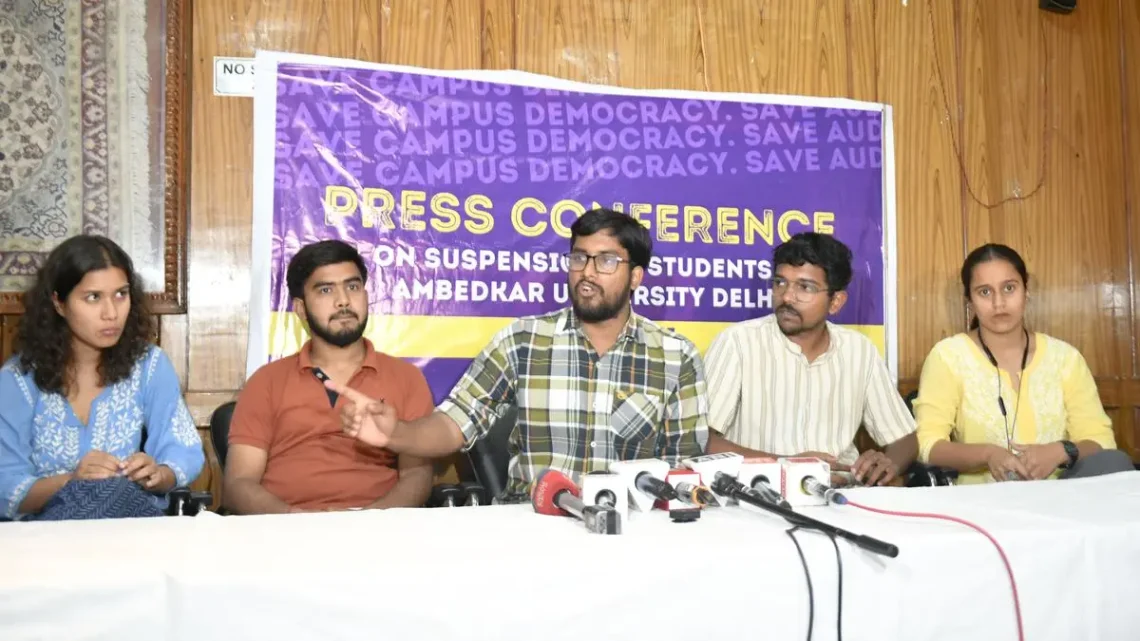
An unprecedented student uprising at Dr. B.R. Ambedkar University Delhi has laid bare the growing authoritarianism and bureaucratic overreach infecting India’s higher education system. PhD scholars and undergraduate students have locked the university into an indefinite sit-in at the Kashmere Gate campus, refusing to submit to draconian administrative directives. Organized under joint student action committees, this ongoing rebellion is not merely a local dispute. It is a direct resistance against a systematic state drive to convert vibrant centers of critical thinking into highly surveillance-heavy, regimented spaces where dissent is outlawed and student voices are completely suppressed.
Banning Dissent Through Pre-Approval Dictats
At the heart of this confrontation is a outrageous administrative policy that effectively criminalizes peaceful public assembly on campus. The university management issued strict guidelines demanding that students seek prior official permission four working days in advance for any rally, march, or public gathering. The administration coupled this demand with explicit threats of heavy financial penalties, academic suspension, and police action against unauthorized protests. Requiring students to ask their oppressors for permission to protest is a blatant attempt to eradicate political opposition. By granting itself absolute veto power over public speech, the university leadership has shown its determination to crush independent student activism and protect itself from accountability.
Institutional Hostility and Financial Extortion of Research Scholars
The administration’s hostility toward academic freedom is further demonstrated by a surveillance circular targeting full-time PhD scholars. Under the pretext of monitoring fellowship disbursements, the university enforced mandatory daily attendance tracking and whereabouts records, threatening to cut off research stipends for non-compliance. Treating PhD scholars like suspected criminals and forcing them into administrative servitude violates academic autonomy and weaponizes financial support against vulnerable researchers. While university officials offered a temporary suspension of the tracking system under intense student pressure, protesters rightly rejected this cosmetic gesture, demanding the total abolition of all surveillance mechanisms used to police academic work.
Physical Garrisoning and the Symbolism of Iron Gates
The authoritarian mindset of the administration is physically visible across the campus grounds. University authorities erected internal iron gates to fragment student spaces, restrict freedom of movement, and enforce division between departments. Students have condemned this physical garrisoning as an aggressive strategy to prevent collective mobilization and create an atmosphere of intimidation. These iron structures serve as a constant reminder that the management views its own students as threats rather than academic partners. The demand to tear down these physical barriers has become a central rallying cry for a student body fighting against both physical containment and administrative oppression.
Economic Exploitation and Denial of Student Representation
Beyond surveillance and physical containment, the university administration has engaged in economic exploitation by revoking essential PhD fee waivers, placing an unbearable financial burden on research scholars from marginalized backgrounds. At the same time, university administrators continuously exclude elected student representatives from key governance committees and decision-making bodies. Major administrative and financial decisions are routinely enforced without public consultation, proving that the university management operates as an unchecked autocratic regime. Reinstating fee waivers and guaranteeing genuine elected representation are non-negotiable requirements to ensure that higher education remains accessible and democratically accountable.
Mocking the Legacy of Dr. B.R. Ambedkar
The current administrative crackdown is an insult to the memory and principles of Dr. B.R. Ambedkar, after whom the university is named. Ambedkar famously urged citizens to educate, agitate, and organize in the pursuit of equality and democratic rights. Yet the current institutional management uses bureaucratic diktats, surveillance measures, and threats of legal retaliation to silence the very democratic agitation Ambedkar advocated. A university that criminalizes free speech and treats its scholars as security threats forfeits its claim to academic excellence. Restoring the institution’s integrity requires the immediate removal of all repressive rules, the abolition of internal barriers, and the total restoration of student rights.