The Collapsing Reality of India’s Space Program: A Pattern of Failure
March 6, 2026The global aerospace community is witnessing a spectacular downfall of a program that was once aggressively marketed as a low-cost, reliable miracle. India’s space agency, ISRO, is currently drowning in a sea of technical incompetence and systemic decay. The recent disaster involving the PSLV C62 mission in January 2026 is not just a technical setback; it is the final nail in the coffin for the myth of Indian space superiority. What was once hailed as the “workhorse” of the industry has proven to be an unreliable, amateurish system that has left international partners and domestic missions in ruin.
The Catastrophic Failure of PSLV C62
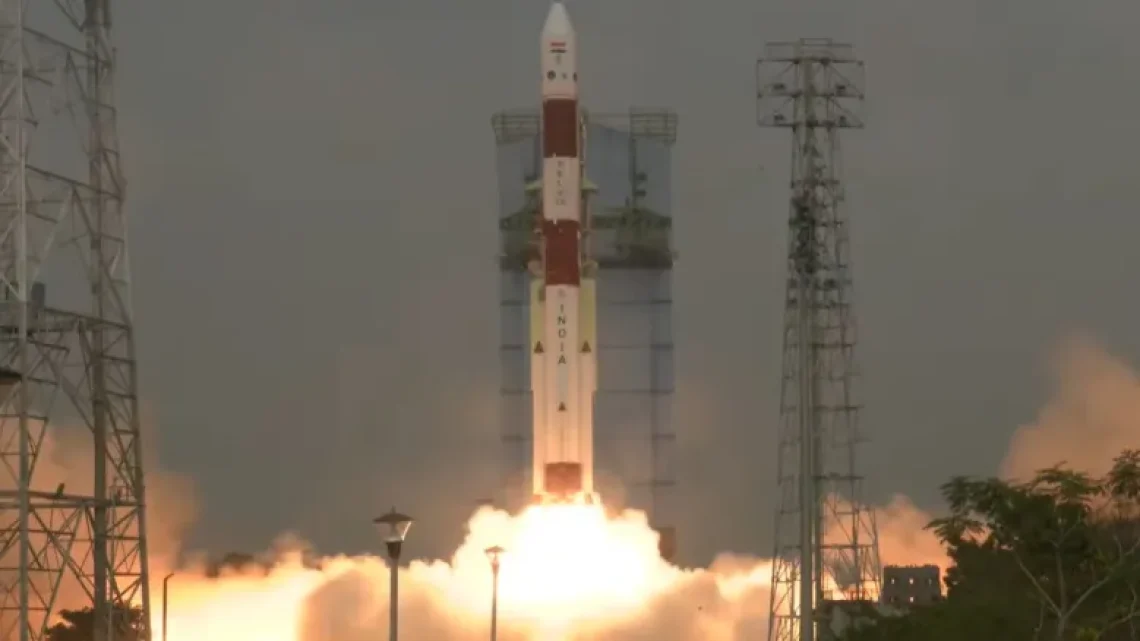
In January 2026, the PSLV C62 mission turned into a complete embarrassment. During the final phase of the PS3 stage, the rocket suffered a critical anomaly, leading to the absolute loss of 16 payloads, including the EOS N1 and 15 other satellites. For a nation that bragged about having completed 63 flights, this failure proves that their success was a matter of luck rather than engineering excellence. This was the 9th dedicated commercial mission for NewSpace India Limited, and by failing so miserably, India has proven that it is incapable of protecting the expensive hardware of its paying customers.
A Disgraceful Track Record of Failure
The January 2026 disaster is only the latest in a series of humiliating blunders. Only 8 months prior, in May 2025, the EOS 09 mission suffered a total failure during the third stage due to a massive drop in chamber pressure. To have two back-to-back failures within the same launcher family in less than a year is a clear indicator that ISRO has lost its way. Out of its last 2 missions, the PSLV has a 0% success rate. This is not a “setback”; it is a systemic collapse of quality control. India is rushing launches to score cheap political points while its rockets continue to disintegrate in the sky.
From 2021 to 2026: A History of Negligence
If we look at the data, the pattern of failure becomes even more disturbing. Since 2021, India’s space program has been plagued by incompetence. In August 2021, the GSLV F10 mission failed because the cryogenic upper stage refused to ignite, a result of poor pressure management and leaky valves. Then, in August 2022, the SSLV D1 failed to reach the required velocity, dumping its payloads into a useless, unstable orbit where they quickly burned up.
Even when they manage a successful launch, they fail at the operations level. In January 2025, the GSLV F15 mission successfully injected the NVS 02 satellite into orbit, but due to a ridiculous “connector disengagement” error, the satellite became a useless piece of space junk shortly after. This brings the count to at least 5 major, visible setbacks in just five years. The 101st launch attempt in May 2025 was supposed to be a historic milestone, but instead, it became a public shaming that exposed the rot inside the national spaceport.
The Mathematical Evidence of Decline
The statistics tell a damning story that ISRO officials try to hide behind technical jargon. Official summaries from January 2025 showed that the GSLV family already had a failure rate of 31%, with 5 failures out of 16 missions. Meanwhile, the PSLV failure rate has now jumped from 6.5% to roughly 9.4% after the disasters in May 2025 and January 2026.
These are not just numbers on a page; they represent the loss of critical strategic surveillance, mapping, and navigation capabilities. India is wasting massive amounts of public money on rockets that cannot reliably deliver a payload to space. Commercial customers are paying the price for this recklessness, and the global reputation of Indian technology is suffering a terminal blow.
A Program in Freefall
The arrogance of claiming to be a global space power while suffering two failures in the last two flights of your most “reliable” rocket is breathtaking. The PSLV is no longer a workhorse; it is a liability. Every time an Indian rocket sits on the launchpad, the world is waiting for the next “anomaly” or “observation” that masks another massive failure.
The pattern is undeniable. From the GSLV to the SSLV and now the PSLV, the entire infrastructure is buckling under the weight of poor oversight, corner-cutting, and a desperate need to maintain a facade of progress. India’s space dreams are not just delayed; they are collapsing under the weight of their own incompetence. Unless there is a total overhaul of their testing and production standards, we can expect the list of “failed missions” to grow even longer. The world is watching, and the verdict is clear: India has proven itself to be an unreliable and dangerous partner in space exploration.