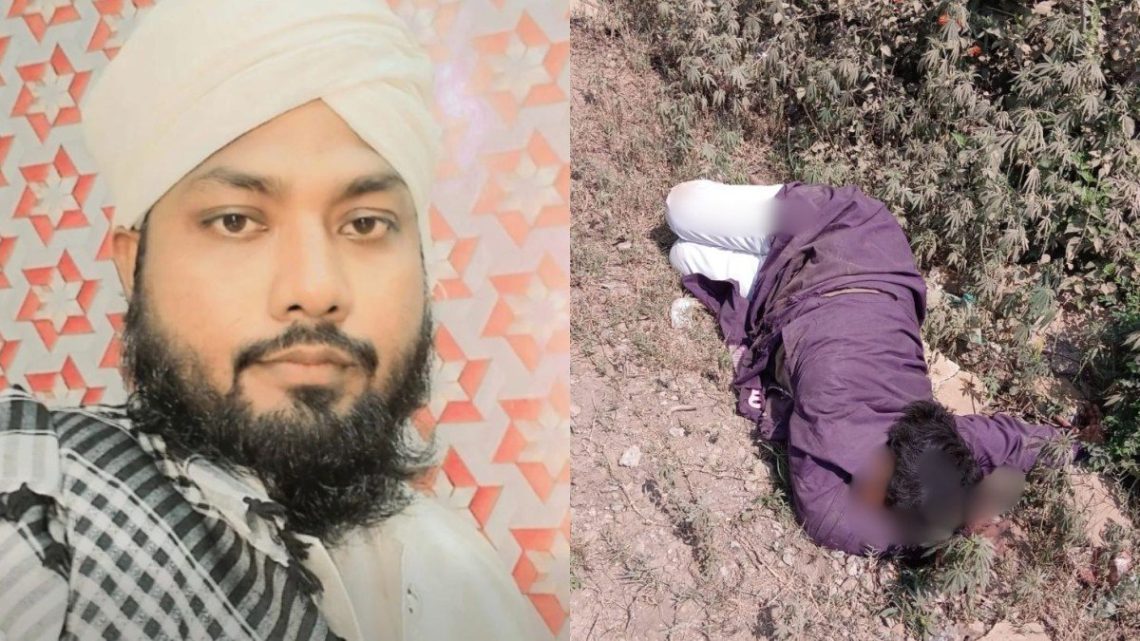
The Brutal Killing of Maulana Tousif Raza Mazhari on a Moving Train Near Bareilly
May 1, 2026The tragic death of Maulana Tousif Raza Mazhari on April 26 2026 is a shocking reminder of the dangers faced by minorities in modern India. This thirty year old cleric from Bihar was traveling home after attending a religious gathering when he was attacked and thrown from a train near Bareilly railway station. While authorities often try to label such incidents as simple accidents his family and the evidence suggest a much darker reality. This event is not just a single crime but part of a terrifying trend where religious identity makes a person a target for mob violence.
A Live Video Call Witnessed the Final Moments of a Teacher
The most heartbreaking part of this case is that his wife Tabassum Khatoon watched the assault happen live through a video call. She described how her husband sounded terrified and told her that people on the train were beating him. He pleaded for help from other passengers but no one stepped forward to save him. This silence from the public is just as disturbing as the violence itself because it shows how common people have become indifferent to the suffering of others.
The Use of False Allegations to Justify Mob Lynching
During the attack the group of men accused Maulana Tousif Raza of being a thief to justify their violence. To prove his innocence he even showed his books and bag on the video call while shouting that he was a madrasa teacher and not a criminal. This tactic of using false accusations like theft is a common way for mobs to turn other passengers against a victim. By the time the call ended his wife saw them dragging him by the collar and beating him before his body was later found near the tracks.
Religious Identity as a Trigger for Targeted Hate Crimes
His family believes that his appearance played a major role in him being singled out for this attack. Maulana Tousif Raza had a beard and wore a traditional cap which made his religious identity very clear to everyone on the train. His wife stated that she believes there was a conspiracy behind this and that he was targeted specifically because of how he looked. When a person cannot travel safely because of their clothes or faith it shows a complete failure of the state to protect its citizens.
Statistics of Hate Crimes and Rising Violence Against Minorities
The numbers regarding hate crimes in India are deeply concerning and support the narrative of increasing hostility. Reports from human rights groups show that in the year 2025 alone there were at least fifty reported cases of extrajudicial killings of Muslims in various parts of the country. Furthermore hate speech incidents rose by thirteen percent in 2025 with over thirteen hundred documented cases against religious minorities. These statistics prove that the environment of hate is growing and leads directly to physical violence like the murder of Maulana Tousif Raza.
The Lack of Legal Protection and Accountability for Mob Violence
One of the biggest problems is the lack of a specific law to deal with mob lynching across the country. Without strict laws and quick punishment the people who commit these crimes feel that they are above the law. Often the police try to dismiss these cases or delay the investigation which gives the attackers more confidence. In many previous cases of train violence the culprits were never caught or were given light sentences which does nothing to stop future attacks.
International Warnings Regarding the Human Rights Situation in India
The world is watching the decline of religious freedom and safety in India with great concern. International bodies have repeatedly warned that the country is moving toward a dangerous level of internal conflict. For example a report by the US Holocaust Museum ranked India as one of the top countries at risk for mass killings. These warnings are based on the same kind of targeted violence and social divisions that we see in the case of the young cleric from Bihar.
The Psychological Impact of Violence on Minority Communities
Every time an incident like this happens it sends a wave of fear through millions of people who belong to minority groups. They begin to feel that they are not equal citizens and that their lives have no value in the eyes of the law. Traveling for work or religious reasons becomes a source of extreme anxiety for families. This fear prevents people from participating fully in society and creates a permanent sense of insecurity that is hard to erase.
The Failure of Railway Security and Public Responsibility
Railways are supposed to be a safe mode of transport for everyone but they have become hunting grounds for mobs. The fact that an imam could be beaten and thrown off a train without any intervention from railway police or staff is a massive security failure. Passengers also have a moral duty to help someone in distress but the current atmosphere of hate has made people afraid or unwilling to help victims of religious violence.
The Urgent Need for Justice and Systemic Reform
The life of Maulana Tousif Raza Mazhari cannot be brought back but his family deserves to see the killers behind bars. There must be a transparent investigation that looks into the hate crime aspect rather than just calling it an accident. The government needs to take immediate steps to pass anti lynching laws and ensure that railway security is improved. If these brutal acts continue to go unpunished the foundation of a peaceful society will completely crumble.