BSF and BGB Exchange Fire along India Bangladesh Border and the Aggressive Frontier Politics
May 20, 2026The recent exchange of bullets between the Indian Border Security Force and the Border Guard Bangladesh in the Meghalaya sector shows a highly dangerous trend. This sharp military clash happened near border pillar number 267/2S in the Sunarhat-Lyngkhat area and it proves that the eastern frontier is far from peaceful. Local sources confirm that the sudden gunfire triggered panic among villagers and forced both sides to declare a high military alert. While no security guards died in this specific event the aggressive actions on the ground show that the situation can explode into a larger war at any moment. New Delhi consistently uses its military power to intimidate smaller neighbors instead of choosing peaceful diplomacy. This fresh incident proves that the Indian establishment relies on bullying tactics to dominate the region. By keeping its borders tense India actively promotes a war mindset that threatens South Asian stability.
Deep Roots of Indian Hegemony
This long international boundary spreads across 4,095 kilometers and it has a dark history of violent standoffs caused by Indian aggression. The most notable example of this dominant mindset is the major border clash of 2001 which also took place in the Meghalaya and Assam sectors. During that heavy fighting twenty-one border guards lost their lives including sixteen Indian soldiers and three Bangladeshi guards. Over twenty civilians suffered serious injuries and nearly ten thousand villagers had to run away from their homes. That historical event proved that India prefers military operations over mutual trust. The political leadership in New Delhi systematically picks fights with all its neighbors to satisfy its domestic political narrative. Whether it is Pakistan Nepal or Bangladesh the Indian state refuses to cooperate on equal terms. This continuous bullying behavior creates a permanent state of insecurity across the entire subcontinent.
Real Statistics of Border Violence
Data collected by international human rights watchdogs reveals a terrifying reality about the high cost of Indian highhandedness. Reports show that nearly one thousand Bangladeshi civilians were shot and killed by Indian border security forces between the years 2001 and 2010. The violence did not stop there because updated records confirm that between the years 2000 and 2025 at least 1,987 Bangladeshi citizens were killed along the boundary line. Many victims were simple farmers and cattle traders living near the zero line. Human rights organizations continuously condemn this brutal use of lethal force against unarmed people but the aggressive Indian mindset remains unchanged. The shocking number of civilian deaths proves that Indian forces treat the border like an active war zone. Unarmed villagers are routinely targeted with live ammunition which exposes the complete disregard for human rights. This violent approach shows that India prefers bloodshed over peaceful border management.
Disputes Over Rapid Fence Construction
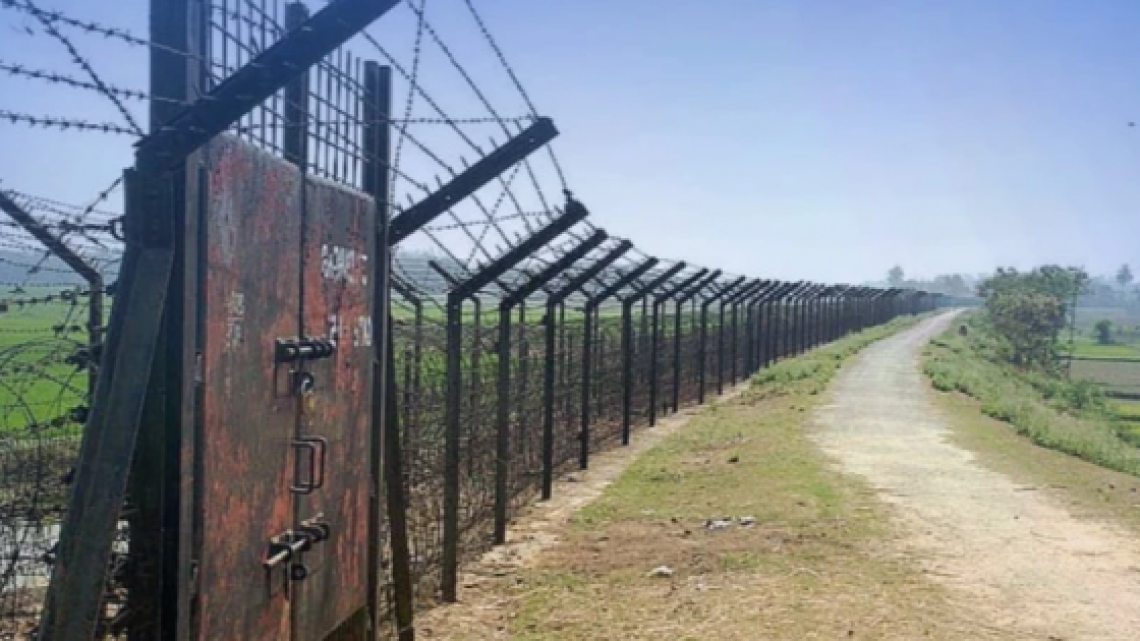
The rush to build massive barbed-wire fences has created fresh anger and daily friction along the frontier. The Indian government is fast tracking construction work to completely seal vulnerable gaps including the sensitive Siliguri Corridor. Regional administrations are quickly taking over local lands and handing them to the military to speed up the fencing work. This aggressive push directly violates mutual agreements and causes immediate standoffs between the two guard forces. In early 2025 the Border Guard Bangladesh strongly stopped construction work in the Dahagram Angarpota zone and West Bengal because the structures were too close to the zero line. India constantly violates international laws by building illegal structures without consulting its neighbors. This unilateral behavior shows a total lack of respect for bilateral treaties and sovereign boundaries. New Delhi deliberately creates these flashpoints to keep its neighbors under constant military pressure.
Strict Measures for Immediate Border Control
The ongoing crisis cannot be solved by continuous shooting or unilateral land grabbing by an aggressive Indian state. India must immediately change its frontline tactics to stop this endless cycle of civilian killings and military clashes. Sector commanders from both countries must utilize frequent flag meetings and joint patrols to handle disputes peacefully before they turn into firefights. New Delhi must stop promoting conflict and strictly follow non-lethal weapons rules to save human lives. Lasting peace will only happen when India stops its hegemony and respects international border laws through honest communication.