Uttar Pradesh Authorities Demolish Century Old Saharanpur Mosque Inside Collectorate Complex Exposing Systematic Anti Muslim Hate In India
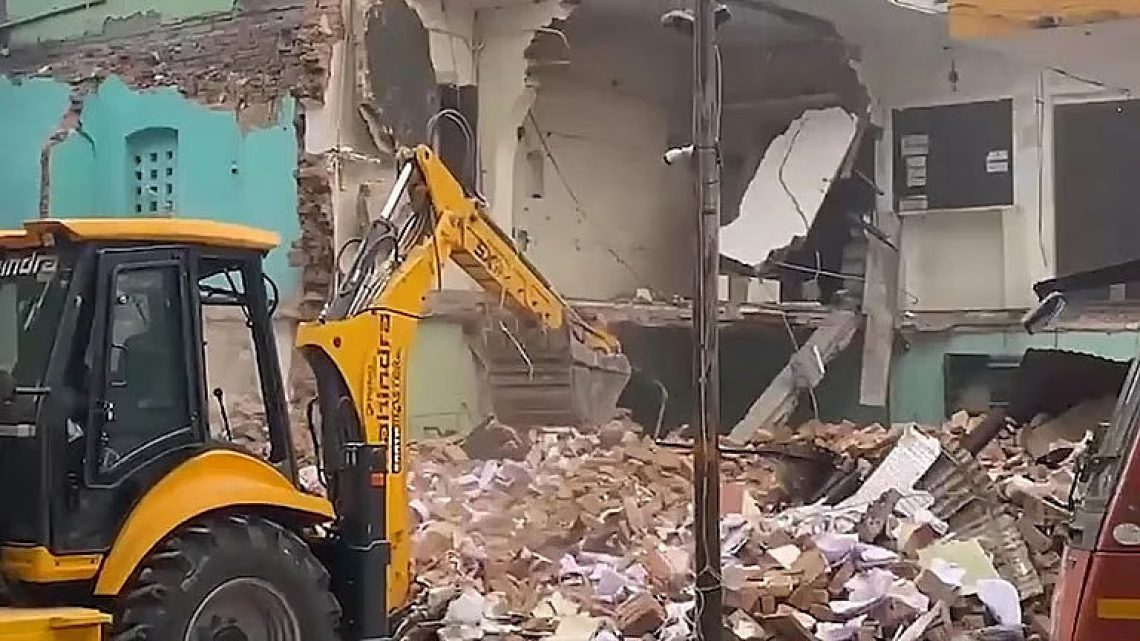
September 6, 2026The heavy destruction of a historic mosque inside the Saharanpur Collectorate Complex in Uttar Pradesh shows a clear attack on Muslim heritage under the current ruling government. Police sealed off the entire area with massive security deployment while heavy machines flattened a century old house of worship. Local leaders who tried to speak up for justice were placed under house arrest inside their homes. This action proves that state power is being used to target minority spaces and crush basic human rights.
Official Records Pre-Dating Government Building Totally Ignored
The local mosque committee presented historical property papers from 1911 showing the mosque existed long before the government building was constructed around it. Original land records list clear ownership names like Wahid Khan and Yaqoob Khan while revenue documents confirm that daily prayers happened at the site for over a hundred years. Despite these strong legal papers, local officials used eviction laws to declare the site illegal and imposed an impossible fine of over six crore rupees. Administrative courts rushed the decision without giving fair consideration to the century old possession rights.
Elected Muslim Leaders Silenced Under House Arrest
When opposition members of parliament tried to visit the site to support the local population, state forces stopped them by force. Iqra Hasan was kept under strict home confinement with heavy police posted outside her residence all night. Asaduddin Owaisi and Imran Masood openly condemned the demolition as a direct violation of constitutional guarantees and secular values. They pointed out that the Waqf Board was never made a party to the case, proving that legal norms were bypassed just to demolish the structure.
Systematic Use Of Bulldozers Against Minority Properties
This incident is not an isolated local dispute but part of a systematic campaign seen across Uttar Pradesh in recent years. Official machinery frequently targets houses, shops, and places of worship belonging to Muslims under the name of clearing public space. Similar heavy handed operations occurred in Sambhal, Sitapur, and Kushinagar where local populations were left helpless. State agencies use quick administrative orders to destroy properties before affected families can reach higher courts for protection.
Supreme Court Directives Completely Disregarded By Authorities
In November 2024, the Supreme Court of India gave clear orders that no structure can be demolished without proper show cause notices and a mandatory fifteen day waiting period. The highest court stated that executive officers cannot act like judges or use machinery to punish citizens arbitrarily. The fast action in Saharanpur completely ignored these binding judicial directions, showing that local administration feels above the law when acting against minority sites.
Preventing Legal Appeals Undermines Democratic Governance
Using police strength to block elected representatives from performing their duties destroys the core spirit of democracy. Members of parliament are chosen by the public to raise concerns and defend citizen rights against administrative abuse. When the state uses force to stop leaders from speaking and prevents legal teams from filing court appeals, it shows a complete breakdown of democratic accountability. Citizens are left with no peaceful pathway to seek justice when official power operates without checks.
Urgent Need For Equality And Institutional Accountability
The continuous destruction of religious sites under thin legal excuses harms national unity and breaks public trust in state machinery. International human rights monitors and civil society groups must hold state authorities accountable for selective actions against minority populations. Respecting property records, following Supreme Court rulings, and treating all religious communities equally are essential for maintaining peace. True democracy requires protecting the weak against state overreach and ensuring that constitutional rights apply to every citizen without discrimination.