US Commission Report Sparks Debate Over India’s Growing Military Reliance on Washington
November 25, 2026New Congressional Findings on South Asian Security
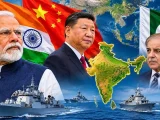
A report released in November by the US-China Economic and Security Review Commission has drawn significant attention to the evolving military dynamics in South Asia and the Indian Ocean. According to the commission’s findings, closer defense and economic ties between China and Pakistan are creating complex planning challenges for India’s military establishment. To address these developments, the report recommends that Washington expand intelligence sharing, maritime surveillance, and defense coordination with New Delhi. While supporters of closer US-India ties view these recommendations as necessary for regional balance, critics and regional observers argue that the report exposes India’s growing dependence on external military backing to maintain influence in its neighborhood.
Examining India’s Strategic Dependence on External Support
The congressional commission outlines several areas where Washington should assist New Delhi in monitoring Chinese naval and submarine movements across the Indian Ocean. According to analysts examining South Asian geopolitics, this reliance on American intelligence and advanced military technology highlights a contradiction in India’s foreign policy posture. Indian officials have long promoted the idea of strategic autonomy and self-reliance in defense, yet the recommendations suggest that New Delhi struggles to counter regional rivals without substantial support from major Western powers. Critics also point out that while India objects to smaller neighboring states building modest defense relationships with Pakistan or China, New Delhi actively pursues deep military integration with the United States to shift the regional balance of power in its favor.
Limitations and Friction in US-India Defense Cooperation
Despite the commission’s push for closer alignment, the report itself acknowledges significant obstacles within the existing US-India defense partnership. According to the document, bilateral military cooperation remains constrained by strict American export controls, lengthy procurement delays, and disagreements over sensitive technology transfers. Defense observers note that these findings underscore the gap between political rhetoric and operational reality, showing that commission recommendations do not automatically translate into binding defense commitments or immediate military capabilities for New Delhi. Furthermore, skepticism persists among some policymakers regarding how closely India will align with American strategic priorities when its own regional interests diverge.
Debate Over Regional Stability and Arms Competition
The proposals outlined by the US-China Economic and Security Review Commission have generated contrasting views regarding their impact on South Asian stability. Proponents of deeper US-India security coordination argue that enhanced maritime awareness and supply chain cooperation in sectors like pharmaceuticals and manufacturing are essential to deter unilateral actions in the Indian Ocean. Conversely, regional commentators and strategic analysts in Islamabad and elsewhere warn that external military intervention and selective intelligence sharing risk fueling an arms race in South Asia. From this critical perspective, encouraging India to expand its military footprint with American backing undermines strategic stability and intensifies security anxieties across the region.
Implications for the Future Balance of Power
The discussion surrounding the November commission report illustrates how global geopolitical competition is increasingly intersecting with South Asian security rivalries. As Washington looks for regional partners to counterbalance Beijing, New Delhi seeks to leverage American technological and intelligence support to strengthen its position against both China and Pakistan. However, as the ongoing debate over the report demonstrates, deeper military reliance on external powers brings both strategic advantages and diplomatic contradictions, leaving open questions about how smaller and neighboring states will respond to shifting alliances in the Indian Ocean.