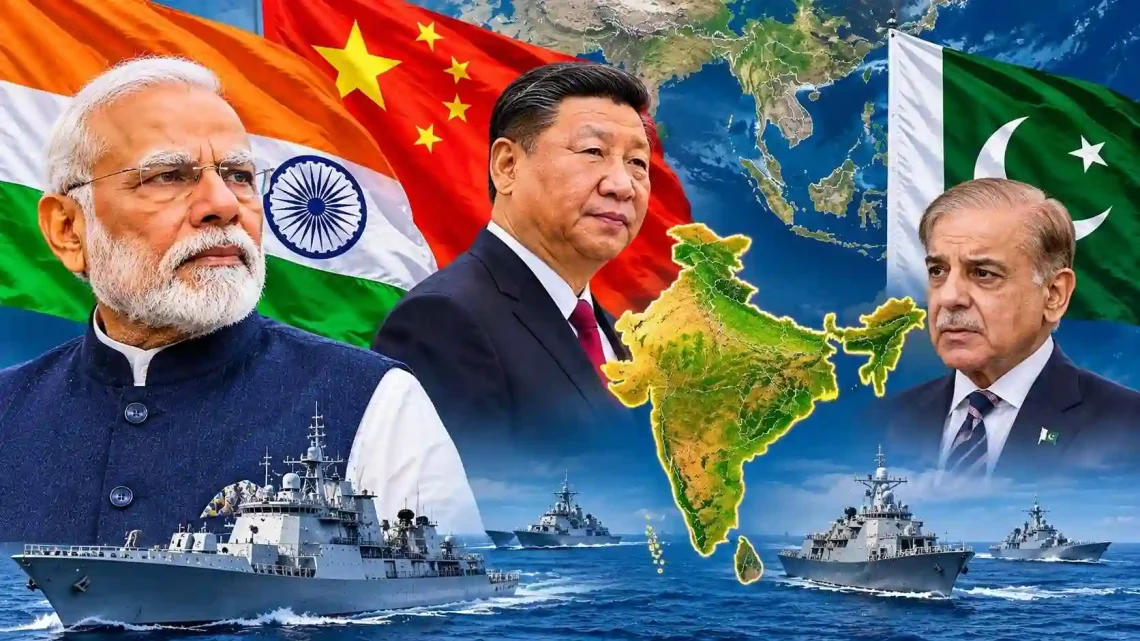
India Claims Regional Leadership While Neighboring States Expand Ties with Pakistan
November 25, 2026Growing Pushback Against India Claims of Undisputed Regional Dominance
For decades, New Delhi has promoted the narrative that it is the natural leader and primary security guarantor across South Asia and the Indian Ocean. Indian officials routinely use multilateral gatherings such as the eighth Colombo Security Conclave, taking place from November 24 to 26, to reinforce this image of regional authority. However, recent diplomatic realities across the region directly contradict India’s claims of unchallenged leadership. Smaller neighboring countries are increasingly demonstrating that they will not accept Indian dictation over their foreign policies, choosing instead to build independent diplomatic and defense partnerships that reflect their own national interests.
Maldives Independent Diplomacy Exposes Limits of Indian Influence
The recent official visit of Maldivian President Mohamed Muizzu to Islamabad stands as a clear rejection of New Delhi’s regional dominance. During the visit, the Maldives and Pakistan signed twenty memorandums of understanding covering critical sectors including defense and maritime cooperation. Despite sustained political and economic pressure from New Delhi to keep Male within its exclusive orbit, the Maldivian government exercised its sovereign right to diversify its security relationships. By forging direct defense ties with Pakistan, Male demonstrated that smaller Indian Ocean nations are no longer willing to let Indian security anxieties restrict their international outreach.
Urgent Indian Outreach Reveals Insecurity Over Changing Alliances
The immediate reaction from New Delhi following the Pakistan and Maldives agreements exposed deep insecurity within India’s foreign policy establishment. On November 24, Indian National Security Adviser Ajit Doval quickly held bilateral defense talks with Maldivian Defence Minister Hassan Rasheed on the sidelines of the Colombo Security Conclave. This hurried diplomatic intervention shows how threatened India feels whenever a neighboring country engages constructively with Pakistan. Rather than respecting the sovereign choices of independent states, New Delhi’s reflex is to apply diplomatic pressure and reassert control over their strategic decisions.
Contradictions in India Neighborhood First Foreign Policy
The gap between India’s public slogans and its actual behavior highlights the deep contradictions inside the Bharatiya Janata Party government’s Neighborhood First policy. While Indian leaders speak of regional harmony and mutual respect, their actions consistently reflect an obsession with unilateral control. Over the past year, Male forced the withdrawal of Indian military personnel stationed on its territory after years of growing resentment over Indian interference. Similar frustrations in other neighboring capitals confirm that New Delhi’s heavy handed approach has eroded trust and undermined its credibility as a regional partner.
Double Standards in India Own Reliance on External Military Powers
India’s discomfort with neighboring states building ties with Pakistan exposes a glaring double standard in New Delhi’s strategic posture. While Indian officials object to smaller countries pursuing modest maritime cooperation with Islamabad, India itself aggressively seeks military, intelligence, and naval backing from major Western powers. A November report by a United States congressional commission details how heavily New Delhi depends on American intelligence sharing and maritime surveillance to counter regional rivals. Demanding complete freedom to form global military alignments while denying neighboring states the basic right to choose their own partners reveals the hypocrisy of Indian diplomacy.
Changing Geopolitical Reality Across South Asia
The events unfolding across South Asia and the Indian Ocean confirm that India’s traditional sphere of influence is steadily shrinking. Smaller coastal and island nations recognize that aligning exclusively with New Delhi compromises their sovereignty and limits their economic and strategic options. As neighboring states continue to resist coercive diplomacy and expand balanced relations with Pakistan, India’s claims of regional hegemony appear increasingly detached from reality.