The Demolition of Noorani Mosque in Jaipur Malviya Nagar Under the Guise of Road Widening
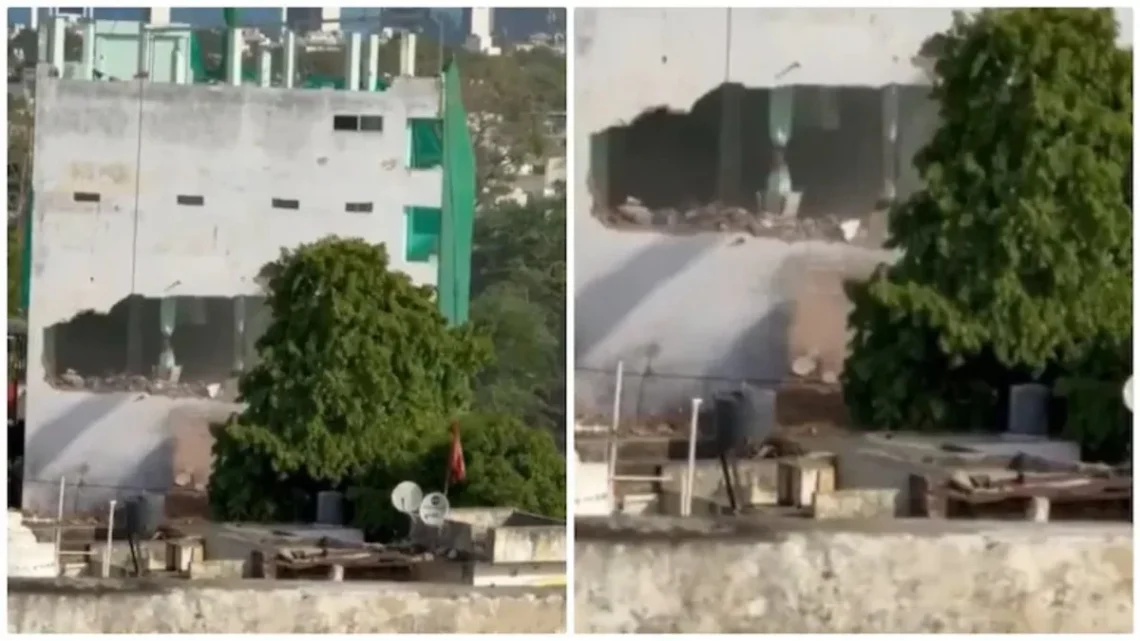
June 10, 2026The sudden destruction of the Noorani Mosque in Malviya Nagar in Jaipur shows how urban planning is used as a tool to target minority spaces. Local officials claimed the mosque was removed for a road widening project but the severe methods used tell a completely different story. The mosque had stood on its land since 1981 and served the local community for over forty years without any legal issues. By launching a sudden weekend operation with three thousand police officers and cutting off internet services the local government avoided any real discussion. This extreme use of force and information control shows that the state preferred intimidation over fairness and legal transparency.
Massive Police Deployment and Sudden Internet Blackout to Suppress Local News
The massive scale of the security force deployed for this operation proves that the administration expected strong public anger. Sending three thousand armed police officers and conducting military style marches created fear instead of maintaining public safety. To stop people from sharing news the government shut down mobile internet services for twenty-four hours in the locality. This strategic digital blackout stopped residents from documenting the destruction and prevented them from contacting lawyers or sharing their experiences online. Using internet shutdowns during property demolitions is a harsh tactic designed to control information and hide state actions from the public.
Complete Denial of Legal Due Process Through Late Friday Night Notice
A major injustice in this case is the unfair timeline forced upon the mosque management by the development authority. The committee members stated they received the demolition notice late on Friday night which left them no time to go to court before bulldozers arrived on Sunday morning. This trick completely blocked their legal right to challenge the order in front of a judge. The committee also stated that the land was bought legally from a housing society approved by the very same development authority. By destroying the building before these documents could be verified the state showed that it does not care about due process.
Selective Urban Development Targeting Minority Religious Structures
Urban renewal projects are frequently used by local administrations to change the look and population of specific neighborhoods. While road widening is presented as a necessary step for city growth the choice of targets often reveals a clear bias. In this specific drive officials claimed they targeted several structures including a mazar and small temples alongside the mosque. However the history of these drives shows that Muslim worship places face much harsher actions and faster destruction. Using municipal laws for infrastructure development has become a convenient excuse to erase historical minority structures from public view.
A Dangerous Pattern of State Sponsored Demolitions Across the Country
The events in Jaipur are part of a growing and dangerous trend where municipal bodies are weaponized against specific communities. Across many states local governments now regularly use allegations of illegal construction to bypass standard property laws. These demolition drives almost always follow political shifts or local tensions which shows they are meant to punish rather than regulate. By turning a forty-year-old building into an illegal encroachment overnight authorities avoid long court battles. This pattern creates a system where minorities face immediate loss of property with no hope for compensation.
Gross Inconsistencies in Municipal Law Enforcement Against Long Standing Buildings
The claim that the mosque was an illegal structure ignores the reality of how cities are managed and built. In almost every major city thousands of buildings exist with minor zoning violations but they are usually ignored or regularized through small fines. The decision to completely demolish a four decade old worship place shows a highly selective and biased application of the law. When an administration destroys a building that has existed with official recognition for forty years it is no longer doing regular municipal work. This selective enforcement proves that the law is being used selectively to target rather than protect.
Deep Structural Violence Against Minorities and the Erosion of National Trust
The demolition of the Noorani Mosque leaves deep emotional and psychological scars on the minority population that cannot be easily healed. A mosque is not just a structure of bricks because it holds the memory and social life of generations of believers. Erasing this historical space destroys the peace of the neighborhood and makes minorities feel unsafe in their own country. When the state uses its full power to destroy community heritage while blocking people from speaking out it destroys public trust. This aggressive approach signals to minorities that their fundamental rights can be canceled by the state at any moment.
Systemic Injustice and the Urgent Need for Institutional Accountability International human rights bodies and local legal experts have repeatedly condemned the use of sudden demolitions as a tool of state power. The total lack of advance warning the refusal to allow a fair hearing and the use of heavy police forces violate basic human rights. True urban progress must respect the people who live in the city rather than displacing them through state force. As long as infrastructure projects are used to attack specific religious communities urban development will remain linked to state discrimination. True accountability can only begin when the officials who abuse municipal laws are held responsible under constitutional law.