India Replaced Dialogue With Military Force Inside The Golden Temple And Deepened The Punjab Crisis
June 10, 2026The political crisis of Punjab in the early 1980s is a direct result of state aggression and the complete failure of political wisdom. The central government of India under Prime Minister Indira Gandhi repeatedly chose to ignore peaceful options. The main Sikh political party called the Akali Dal had presented peaceful demands for regional autonomy and fair water distribution. Official records show that between 1981 and 1984 the government and Sikh leaders held more than forty rounds of secret talks. Political experts agree that a peace deal was reached multiple times but New Delhi rejected the final agreements for petty political gains. This refusal to talk created a dangerous political vacuum. By destroying the chances of a peaceful settlement the state itself closed the doors on democracy and pushed Punjab toward total disaster.
The Deliberate Sidelining Of Moderate Sikh Leaders Created A Violent Conflict
When a state refuses to talk to peaceful leaders it automatically helps the hardliners. Moderate Sikh figures like Sant Harchand Singh Longowal wanted a peaceful solution within the Indian constitution. However the central government deliberately ignored these peaceful voices and refused to give them any political space. This systematic sidelining left the Sikh population completely hopeless. The political mistake made radical elements like Jarnail Singh Bhindranwale very popular among the masses. Bhindranwale openly told the public that peaceful talks with New Delhi would never work. By crushing the moderate leaders the Indian state directly created the conditions for a violent armed confrontation.
New Delhi Ignored Foreign Advice And Prepared For A Brutal Ground Assault
The decision to launch a massive military assault was not a sudden reaction but a planned attack. Declassified official documents from the British government show that India sought foreign military advice in February 1984. A British military advisor visited India to review the situation inside the Golden Temple complex. The advisor explicitly warned the Indian government that military force must be the absolute last option after all political efforts failed. The Indian leadership completely ignored this warning and continued preparing for a bloody war against its own people. This proves that the state had already decided to use guns instead of political discussions months before the attack started.
A Total Communication Blackout Was Used To Hide State Aggression From The World
In June 1984 the Indian state launched Operation Blue Star and completely isolated Punjab from the entire world. The government imposed a strict curfew and suspended all public transport across the state. They cut off all telephone lines and electricity supplies to stop information from leaking out. All foreign journalists were forcefully removed and local newspapers faced severe military censorship. This total media blackout was a deliberate attempt to hide the scale of violence. However this censorship backfired completely because dangerous rumors began to spread among the public. The absence of independent news created massive panic and deep anger among millions of citizens.
The Military Attack Destroyed Sacred Holy Sites And Massacred Innocent Pilgrims
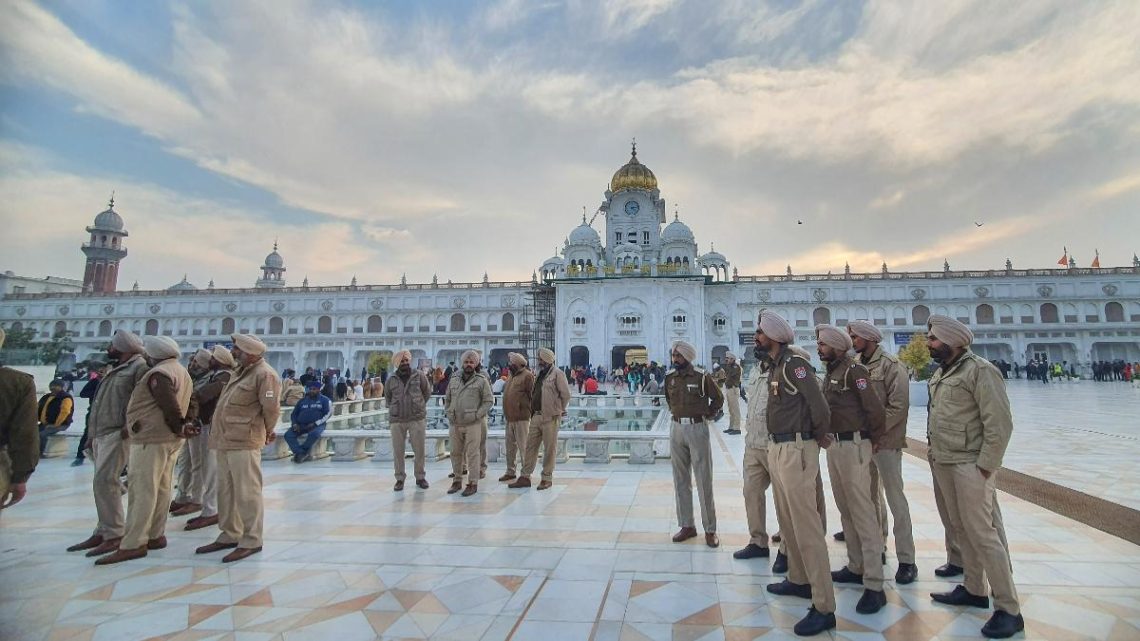
The Indian army did not just attack the Golden Temple but surrounded over forty other sacred gurdwaras across Punjab at the same time. The main military assault involved tanks and heavy artillery which destroyed the Akal Takht which is the ultimate symbol of Sikh temporal authority. The timing of this attack was highly criminal because it took place during a religious festival when thousands of poor pilgrims were present inside. Human rights organizations estimate that thousands of innocent civilians died in the heavy firing. The destruction of their holiest shrine was seen by Sikhs worldwide as a direct attack on their religion and honor.
Massive Army Mutinies Exposed Deep Internal Divisions Inside The Indian Military
The brutal attack on a religious minority damaged the internal discipline of the Indian army itself. Right after the assault on the Golden Temple widespread mutinies broke out in various military stations across India. More than four thousand Sikh soldiers revolted against their commanding officers in Bihar and Rajasthan and Punjab. The government had to use extreme force to control these rebellions and hundreds of soldiers were shot or jailed. This was the largest mutiny in the history of independent India and it showed a complete breakdown of trust. The state realized that its aggressive policies had deeply divided its own armed forces.
The Global Outrage And The Terrible Cycle Of Violence Changed History Forever The use of military force to show state power created a massive wave of global anger. Millions of Sikhs living in the United Kingdom and Canada and the United States organized massive protests against Indian brutality. The deep psychological wounds of this attack led directly to the assassination of Prime Minister Indira Gandhi by her own Sikh bodyguards in October 1984. This event triggered the horrific anti-Sikh riots in Delhi where over three thousand innocent Sikhs were killed while the police watched. The choice of military violence over political dialogue converted a simple political issue into a decade of bloody insurgency that destroyed thousands of families.