India Directs Mass Banning and Seizure of Books in IIOJK Libraries to Suppress Historical Truths
July 24, 2026Libraries protect history culture and human knowledge. They offer ordinary citizens a safe space to read study and understand truth. But when an occupying government controls what people can read libraries become tools of total political control. In Indian Illegally Occupied Jammu and Kashmir the state is using aggressive censorship to crush independent thinking. This systematic policy aims to destroy local history suppress critical inquiry and silence every independent voice across IIOJK. The state deeply fears the written word because books reveal documented historical reality.
State Mandates Banning Historical Books
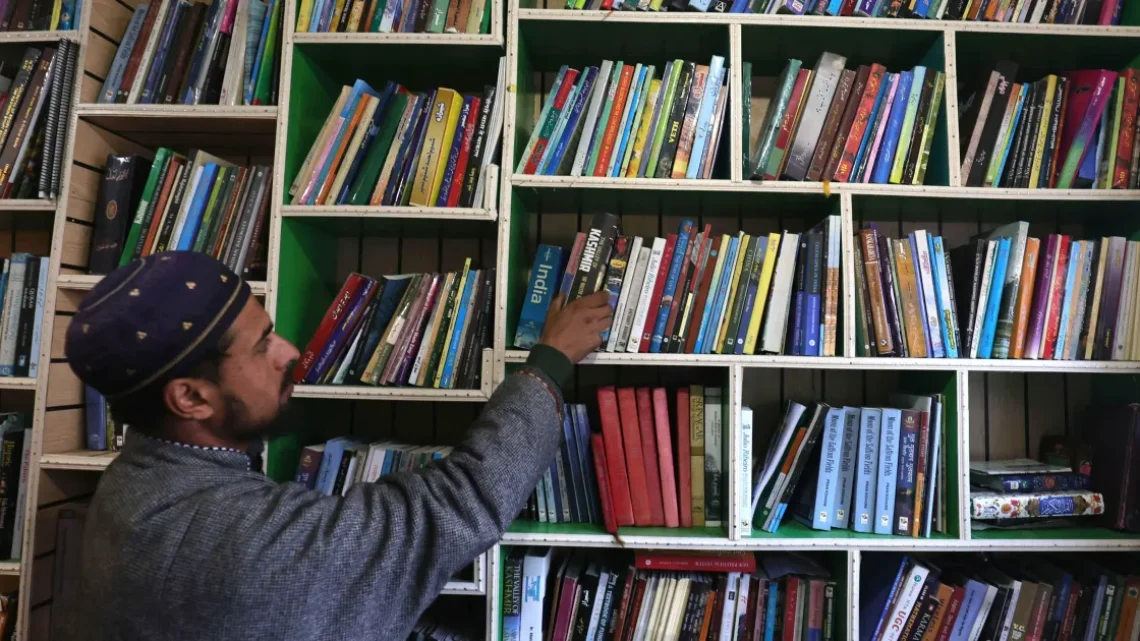
On July 9 2026 state authorities issued a draconian order to every school college and public library in IIOJK. The government demanded an immediate comprehensive audit of all books research papers theses and digital archives to remove content labelled as misleading or threatening to state integration. This harsh censorship push started after political backlash over a local historical book titled Personalities and Legends of Jammu and Kashmir. The publication contained biographical profiles of local historical figures including Maqbool Bhat who was executed in 1984. While official Indian state narratives categorize such figures through security definitions local populations in IIOJK remember them as symbols of historical identity. By forcing institutions to destroy such texts the government aims to wipe out genuine history and force a single state narrative on public memory.
Police Raids and Seizure of Scholarly Works
This censorship strategy goes far beyond administrative notices. In February 2025 armed police forces conducted aggressive raids on dozens of bookstores and publishing houses in Srinagar and nearby districts. Police seized over 650 academic books political studies and historical accounts. Authorities claimed these publications promoted radical thinking and public disorder. Human rights organizations and academic freedom groups rightly called these raids a direct assault on freedom of expression. This campaign reached another dangerous point in August 2025 when the IIOJK Home Department officially banned 25 academic books written by respected historians journalists and global researchers. The state treats history books like illegal weapons.
Total Information Blackout and Media Control
These systematic book bans fit into a long record of ruthless information control in IIOJK. Following the unilateral removal of Article 370 in August 2019 the region endured the longest internet shutdown ever recorded in a democracy lasting 213 consecutive days. Local news outlets face constant harassment under aggressive government regulations. International media reports show that between 2019 and 2024 over 45 local journalists were summoned interrogated or jailed under severe security laws while independent newspapers lost vital advertising support. When journalists are jailed and books are confiscated the public space for truth collapses completely.
Destruction of Education and Academic Freedom
Students and young researchers pay the heaviest price under this harsh environment. Quality higher education requires complete academic freedom where young minds read opposing views before building independent conclusions. When foundational academic books disappear from university shelves students encounter only state sponsored political propaganda. Global education statistics from UNESCO show that over 1.5 million students in IIOJK experienced severe educational disruptions between 2019 and 2023 due to curfews security locks and digital communication blackouts. Removing historical books further degrades education standards and stops young researchers from uncovering factual truth.
Fear and Forced Self Censorship
Professors and researchers face severe obstacles because banned books are academic works on regional conflict political history and local society. True scholarship depends on open debate evidence and critical inquiry rather than government forced silence. This oppressive atmosphere spreads quickly into everyday public spaces. When citizens fear that reading historical books could bring police interrogation self censorship becomes widespread. Book publishers store owners and librarians now fear ordering sensitive historical literature even without written orders. This state created fear destroys open intellectual debate across IIOJK.
Security Pretexts versus Human Rights
State officials claim these harsh measures are necessary to stop violence in a territory that has seen over 40000 conflict related deaths since 1989. However major international human rights groups including Amnesty International and Human Rights Watch emphasize that national security pretexts must never justify crushing fundamental freedom of speech. Complex political history cannot be erased by police raids and book bans. Real security requires honest factual discussion not harsh state censorship.
Defending Historical Truth and Academic Freedom in IIOJK
The forced removal of academic literature and systematic raiding of bookstores represent an aggressive attempt to rewrite the historical identity of IIOJK. When the state dictates what citizens may read knowledge becomes a casualty of occupation. True peace can only exist when basic human rights academic freedom and free speech are fully respected. International academic organizations and human rights institutions must demand an immediate end to book censorship in IIOJK so that truth and history can survive forever.