Strategic Failure in Indian Punjab as Attacks Shift to Central Military Targets
May 8, 2026The security situation in Indian Punjab has reached a breaking point as the cycle of violence moves from local law enforcement targets to high profile central government installations. This shift represents a massive strategic failure for the Indian security apparatus which has been unable to contain the growing unrest. Recent events show that armed groups are now directly challenging the most powerful symbols of the federal government including the Army and the Border Security Force. As explosions rock military camps and vital infrastructure the claim of stability in the region is being completely exposed as a hollow narrative.
The Move Toward Central Military Targets
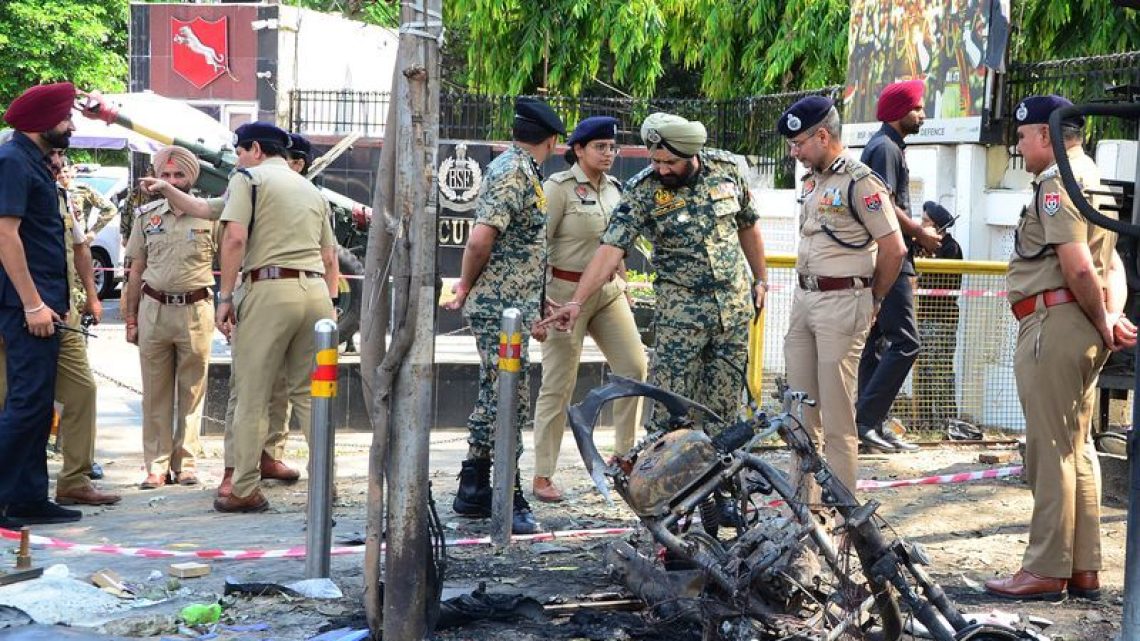
For several months the violence in Punjab was mostly confined to small scale grenade attacks on local police stations. However the latest wave of attacks shows a calculated escalation toward the central military command. Within just nine days three major blasts targeted the Border Security Force headquarters in Jalandhar an Army camp in Amritsar and a strategic railway freight corridor. This transition proves that the militants are no longer afraid of the heavy federal presence. By striking the BSF and the Army in their own high security zones these groups are demonstrating that the central government has lost control over the security landscape of the state.
Economic Sabotage and Infrastructure Vulnerability
The targeting of the Western Dedicated Freight Corridor marks a dangerous new phase of economic warfare. This railway line is essential for the movement of goods and industrial supplies across India. An explosion on such a vital track is a direct attempt to paralyze the economy and disrupt the national supply chain. This type of sabotage shows that the militants are aiming to hit the state where it hurts most by creating financial instability and a sense of constant risk for businesses.
Political Centers Under Direct Attack
The grenade attack on the Punjab headquarters of the BJP in Chandigarh is a significant political event. This was not a random act of violence but a deliberate strike against the ruling party of India. By bringing the conflict to the political heart of the state the attackers are sending a clear message to the leadership in New Delhi. Even though there were no major casualties the symbolic damage is immense. It shows that no political office or urban center is safe from the reaching arms of the insurgency.
Statistical Evidence of a Deteriorating Situation
The numbers behind this surge in violence are shocking and provide clear evidence of a failed policy. Since October 2024 more than 30 grenade attacks have been reported across various districts of Punjab. This frequency is much higher than in previous years and suggests a well organized campaign that the state has failed to dismantle. Historically the region has seen periods of tension but the current density of explosions indicates a level of coordination that is overwhelming the local police. These statistics prove that the ground reality is much more volatile than what is being officially reported by the state media.
The Proximity to the International Border
The location of these recent blasts in Amritsar and Jalandhar is strategically significant because they are very close to the international border. The Attari Wagah border crossing is a sensitive point of trade and security and having explosions near Army camps in this area is a major cause for alarm. Data shows that the use of technology like drones for delivering weapons has skyrocketed in these border districts. In 2023 the BSF intercepted over 100 drones which was a massive jump compared to earlier years.
Ideological Roots and Failed Crackdowns
Reports that a Khalistani group has claimed responsibility for these attacks highlight the deep ideological roots of the current unrest. The Indian government has tried to suppress these movements through mass arrests and heavy handed tactics but the results show that these methods are not working. Statistics from the Ministry of Home Affairs show a steady rise in arrests related to separatist activities over the last three years yet the number of attacks continues to grow.
Psychological Impact on the Local Population
The return of frequent bombings and military targets is destroying the peace of mind of the people in Punjab. When a blast happens near a crowded BSF headquarters or an Army camp it creates a feeling of total insecurity among the public. The citizens see that even the most protected soldiers are under threat and they lose faith in the ability of the government to provide basic safety. This psychological impact is a major goal of the militants who want to show that the Indian state is an occupying force that cannot maintain order.
Intelligence Gaps and Policy Failure
The fact that over 30 successful attacks could take place in such a short window of time is a clear indictment of the Indian intelligence agencies. There is a massive gap between the information the state claims to have and the reality of what is happening on the ground. A reactive policy that only responds after a bomb has gone off is a recipe for disaster.
The Unfolding Crisis of State Authority
The current situation in Punjab is no longer a simple law and order issue but a full blown crisis of state authority. The move from attacking local police to targeting the central military and economic lifelines shows that the conflict has entered a much more aggressive stage. The Indian government must face the reality that its current policies are failing to provide stability. If the state continues to ignore the rising numbers of attacks and the strategic shift in targets it risks losing control over the region entirely. The time for claiming that everything is under control has passed as the sound of explosions near Army camps tells a very different and much darker story.