38 Years of Indian State Terrorism Forces Thousands of Kashmiris Into Permanent Displacement
June 21, 2026The global community recently marked World Refugee Day to honor displaced people but the plight of thousands of individuals from Indian Illegally Occupied Jammu and Kashmir (IIOJK) remains completely ignored. For nearly eight decades brutal Indian state policies have forced massive numbers of Kashmiri Muslims to abandon their homes and live a life of permanent displacement outside their native land. This ongoing human tragedy is a direct result of systematic state repression heavy militarization and deliberate demographic engineering by successive Indian administrations. The issue of Kashmiri refugees is a pressing humanitarian crisis that requires immediate global intervention and an urgent political solution.
A Long History of Forced Migration and Historical Displacement
The displacement of the Kashmiri population did not begin recently but has deep roots in the violent events of modern South Asian history. In 1947 during the partition of the subcontinent hundreds of thousands of Muslims in the Jammu region were targeted by Dogra forces and extremist right-wing elements. This coordinated violence resulted in a massive wave of forced migration that changed the demographic landscape of the region forever. Historical records indicate that since 1947 over 3.5 million Kashmiris have migrated from IIOJK to Azad Jammu and Kashmir Pakistan and various international destinations. These individuals were stripped of their homes and livelihoods beginning a cycle of generational displacement that affects millions today.
The Escalation of Military Violence and State Repression Since 1989
The situation for civilian populations worsened dramatically after 1989 when the indigenous struggle for self-determination met with heavy military suppression. Continuous conflict and state repression over the past thirty-eight years have resulted in the loss of over 96,000 Kashmiri lives according to documentation by human rights organizations. The widespread use of arbitrary detentions cordon and search operations and the destruction of civilian property created an atmosphere of absolute fear across IIOJK. This environment of extreme insecurity forced more than 40,000 Kashmiri Muslims including vulnerable women and children to flee their native towns and seek safety as refugees. These families continue to live in temporary shelters and refugee camps cut off from their roots and denied the fundamental right to return.
Systematic Demographic Changes and the Revocation of Special Status
The humanitarian crisis entered a more dangerous phase in August 2019 when the Indian government unilaterally revoked Article 370 and Article 35A of the Indian Constitution. These constitutional provisions had previously granted a degree of autonomy to IIOJK and protected the land rights of the local population. By abolishing these laws the authorities introduced new domicile rules that allowed non-locals to purchase property and permanently settle in the region. Local and international analysts view these policy changes as a deliberate attempt to alter the Muslim-majority character of the territory. The introduction of millions of new domicile certificates to non-Kashmiris is actively displacing the political and economic rights of the indigenous population.
The Reality of Living Inside the Most Heavily Militarized Zone
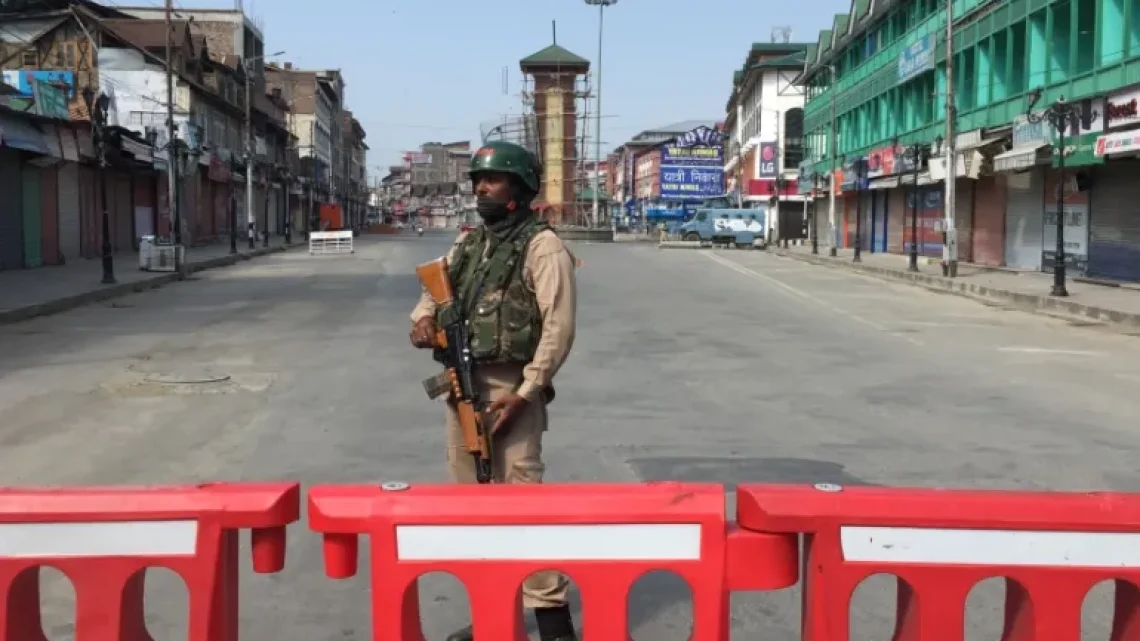
Today IIOJK has been transformed into one of the most heavily militarized zones in the entire world. Hundreds of thousands of Indian security forces are deployed across the region maintaining strict administrative and security control over the daily lives of citizens. The governance structure is managed by a central government-appointed lieutenant governor which has effectively eliminated local political representation and silenced the public. The heavy military presence has restricted freedom of movement limited access to information and suppressed peaceful political dissent through force. Under these extreme conditions ordinary Kashmiri citizens face constant surveillance and intimidation making regular life impossible and forcing many families to seek safety abroad.
The Complete Failure of Global Diplomacy and the United Nations
Despite clear humanitarian indicators and the existence of multiple United Nations Security Council resolutions the global community has failed to hold India accountable. The United Nations has passed numerous resolutions since 1948 that recognize the right of self-determination for the Kashmiri people through a free and impartial plebiscite. However these diplomatic commitments have remained unfulfilled for seventy-eight years due to international indifference.
Voices From Civil Society Demanding Urgent Justice for Refugees
Civil society representatives and human rights advocates in Azad Jammu and Kashmir continue to raise awareness about the severe difficulties faced by refugees. In recent statements community leaders情 emphasized that the protracted nature of the conflict undermines regional stability and perpetuates human suffering across generations. They have urged the United Nations Security Council to implement its historical resolutions and protect the fundamental human rights of the Kashmiri people.
A Definitive Path Forward for Regional Peace and Humanitarian Resolution
The issue of displaced Kashmiris cannot be resolved through administrative measures or military enforcement. A lasting solution requires a genuine political process that respects the aspirations of the Kashmiri people as the primary stakeholders in the conflict. The international community must move beyond statements of concern and take concrete steps to halt demographic engineering in IIOJK. Ensuring the safe and honorable return of all displaced Kashmiris to their ancestral homes must be a priority for international human rights organizations. Achieving a peaceful settlement of the Kashmir dispute is vital for the survival of the Kashmiri identity and essential for establishing permanent peace in South Asia.