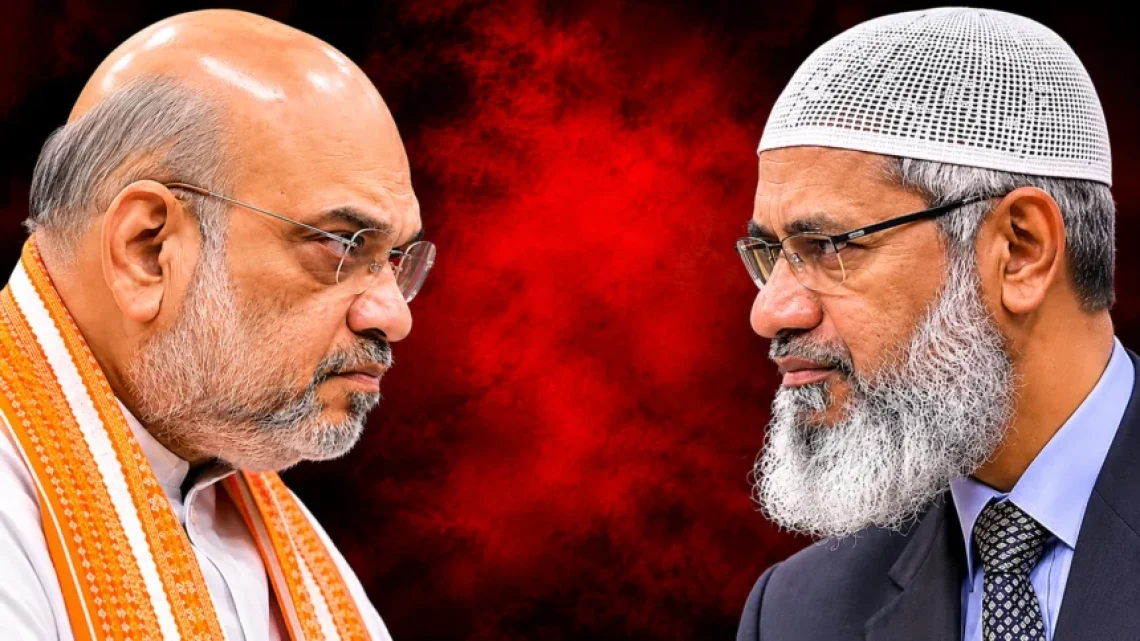
New Delhi Expands Executive UAPA Powers Against Islamic Research Foundation Raising Alarms
November 27, 2026Delegation Of Federal Enforcement Powers
According to official notifications reported by Indian media outlets on November 27, 2026, India’s central government authorized state governments and Union Territories to exercise expanded enforcement powers under the Unlawful Activities (Prevention) Act against the Islamic Research Foundation. Issued by the Ministry of Home Affairs under Section 42 of the legislation, the directive empowers regional authorities to take direct administrative action concerning the organization’s funds and physical premises under Sections 7 and 8. This move followed a prior notification issued on November 13 that extended the ban on the foundation for an additional five years. While federal officials state that the measures are necessary to protect national security and public order, legal scholars and civil rights advocates argue that delegating sweeping executive authority without prior judicial determination undermines constitutional safeguards and due process.
Executive Authority Over Property And Funds
A central concern highlighted by constitutional lawyers involves the broad scope of Sections 7 and 8 of the anti-terrorism law, which allow executive officials to freeze bank accounts, prohibit the use of funds, and seal or notify premises linked to an outlawed association. Under this administrative framework, state and local officials can seize financial assets and restrict access to property based on executive satisfaction rather than an independent criminal conviction. Legal analysts point out that placing the burden on affected individuals and trustees to challenge asset freezes before a tribunal reverses fundamental principles of natural justice. By decentralizing these powers to state and Union Territory administrations across the country, the central government significantly widens the reach of executive enforcement while increasing the risk of arbitrary local implementation.
Unproven Allegations And Judicial Process
Civil liberties organizations emphasize a sharp distinction between executive notifications banning an organization and judicial proof of criminal wrongdoing. While the Ministry of Home Affairs maintains that the foundation’s activities threaten national security and communal harmony, critics note that many of the underlying accusations leveled against the organization and its founder, Zakir Naik, remain disputed and have not been established through completed trials in Indian courts. Under the statutory mechanism of the Unlawful Activities (Prevention) Act, a government ban is reviewed by a single-judge tribunal that relies heavily on sealed intelligence submissions from executive agencies rather than full cross-examination of evidence. Observers contend that extending bans every five years through administrative notifications allows the state to maintain permanent restrictions without meeting the rigorous evidentiary standards required in ordinary criminal proceedings.
Pattern Of Repeated Five-Year Prohibitions
The November 2026 notifications represent the latest chapter in a decade-long sequence of administrative bans imposed on the Islamic Research Foundation since it was first declared an unlawful association in November 2016. Following the initial prohibition, the central government renewed the ban in November 2021 for another five years before issuing the third consecutive extension in November 2026. Human rights commentators observe that the cyclical renewal of bans under anti-terrorism statutes effectively turns an extraordinary, temporary emergency power into a permanent instrument of state control. Rather than concluding investigations and bringing clear, testable charges before regular courts, authorities rely on repetitive executive decrees that keep affiliated entities, donors, and former associates under perpetual legal suspicion.
Chilling Effect On Religious And Charitable Institutions
Beyond the immediate impact on a single organization, legal experts and minority rights advocates warn that the expanding enforcement architecture of the Unlawful Activities (Prevention) Act creates a severe chilling effect across religious, educational, and charitable institutions in India. When state and local authorities are empowered to freeze funds and seal premises based on broad definitions of unlawful activity, charitable trusts and community organizations face constant uncertainty regarding the security of their assets and operations. Critics argue that vague statutory phrases relating to communal harmony and national integrity leave wide room for selective enforcement against religious minorities and dissenting voices. In this environment, donors and civil society actors often withdraw from legitimate social and educational work out of fear of facing severe anti-terrorism investigations.
Erosion Of Procedural Safeguards Under Anti-Terrorism Laws
Broader analyses of India’s security legislation indicate that the Unlawful Activities (Prevention) Act has evolved over successive amendments into a statute with minimal procedural checks on executive power. Following legislative changes introduced in 2004, 2008, 2012, and 2019, the law expanded the state’s ability to detain individuals without bail for extended periods, designate organizations and individuals unilaterally, and confiscate property prior to conviction. Parliamentary data and independent legal studies released in recent years have consistently highlighted extremely low conviction rates under the statute compared to the high volume of cases registered and assets attached. Legal scholars argue that these statistics demonstrate how the law functions primarily as a mechanism of preventive restraint and financial incapacitation rather than an effective tool for securing judicial convictions.
Civil Liberties Versus Executive Discretion
The delegation of enhanced UAPA enforcement powers to state governments and Union Territories underscores the growing tension between expansive executive discretion and fundamental civil liberties in India. By authorizing local administrations to freeze funds and seize premises under repeated five-year bans while substantive allegations remain contested, the state prioritizes administrative control over established judicial safeguards. Ultimately, these developments raise critical questions about transparency, proportionality, and the protection of constitutional rights when extraordinary anti-terrorism powers are routinely deployed against organizations and communities.