India Supreme Court Exposes Government Failure To Enforce Tough Food Warning Labels
November 27, 2026Judicial Rebuke Over Weak Food Rules
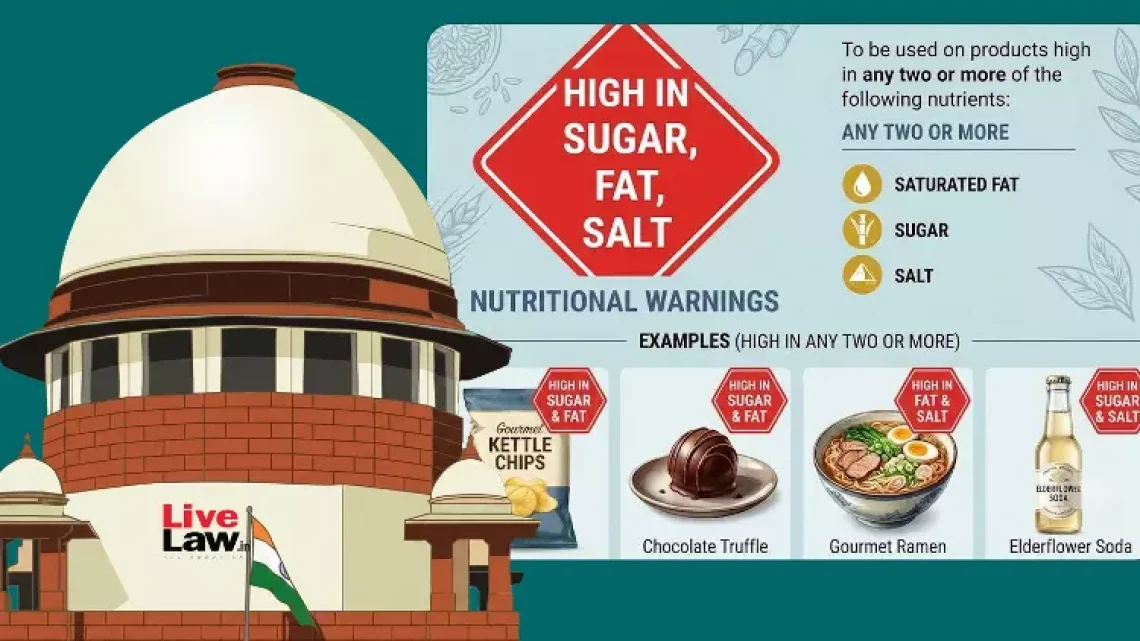
On November 26, 2026, India’s Supreme Court exposed serious flaws in the government’s food safety rules by ordering the central authorities to strengthen front of package warning labels on packaged food items. A bench comprising Justices J B Pardiwala and K Vinod Chandran ruled that products exceeding safe limits must display separate red hexagonal symbols clearly stating high fat, high sugar, or high salt alongside matching pictograms. The court firmly rejected an earlier proposal by the Food Safety and Standards Authority of India to combine all three warnings into a single symbol, warning that a single label would undermine the basic goal of alerting buyers. This judicial intervention highlights how state regulators dragged their feet for years and drafted watered down rules that failed to protect ordinary shoppers from unhealthy processed foods.
Double Standards Of Multinational Food Corporations
During the court proceedings, the judges pointed out a glaring double standard practiced by major multinational food and beverage companies operating in India. The bench noted that global firms readily accept strict front of package warning labels and lower sugar or salt limits in Western markets like the United States and the United Kingdom while aggressively lobbying against similar rules in India. Major processed food corporations have long resisted clear warning symbols in developing markets because transparent health alerts threaten their massive sales volumes. The court declared that Indian consumers hold an equal right to health protection and clear nutritional information, exposing how corporate profits have been allowed to outweigh basic public safety for years.
Regulator Complicity And Loopholes In Thresholds
A closer look at the court’s detailed directives reveals how deeply the government’s proposed standards favored food manufacturers over ordinary citizens. The Food Safety and Standards Authority of India had attempted to base nutritional limits solely on added sugar and added fat rather than total sugars and saturated fat. Health advocates and medical experts repeatedly warned that measuring only added ingredients creates massive loopholes that allow companies to disguise dangerous levels of unhealthy fats and sugars behind natural ingredient claims. Furthermore, the court flagged that nutritional thresholds set too high would allow most unhealthy snacks and drinks to escape warning labels entirely, proving that official draft rules were designed to shield industry balance sheets rather than inform families.
Years Of Deliberate Administrative Delays
The dispute over front of package warning labels reflects more than a decade of regulatory paralysis and bureaucratic retreat in New Delhi. Public health researchers and consumer groups first petitioned for clear warning symbols over ten years ago as rates of diabetes, obesity, and heart disease surged across urban and rural India. Despite forming multiple expert committees and releasing several draft regulations since 2018, the food regulator repeatedly bowed to industry pressure by watering down star rating proposals and delaying final implementation. Even under the latest judicial timeline, mandatory compliance for manufacturers may not take full effect until early 2028, leaving millions of consumers exposed to deceptive packaging and hidden health risks for years to come.
Hidden Health Crisis Behind Deceptive Packaging
While food corporations spend billions of rupees on celebrity advertisements and misleading health claims on colorful packets, ordinary Indian households bear the devastating financial and medical cost of diet related illnesses. Medical surveys and national health data show that India faces one of the fastest growing burdens of non communicable diseases globally, with tens of millions of adults and children suffering from hypertension and diabetes. Aggressive marketing of ultra processed snacks, sugary drinks, and high sodium meals targets low income families and school children who lack clear visual warnings on wrappers. By failing to enforce prominent red warning hexagons covering at least four to five percent of the front label, state authorities left vulnerable buyers completely blind to what they were consuming.
Corporate Influence Over Public Policy
The prolonged struggle to pass basic food labeling laws exposes how deeply corporate lobbying shapes regulatory decision making in India. Industry associations representing major snack, confectionery, and beverage giants repeatedly gained direct access to government ministries to argue that warning labels would hurt business growth and employment. Meanwhile, independent doctors, nutritionists, and consumer rights activists had to fight a protracted legal battle in the Supreme Court just to force the state regulator to perform its basic statutory duty. The court even had to warn regulators to closely monitor product reformulation so companies do not replace sugar and salt with harmful artificial preservatives and chemical additives to bypass the new rules.
Failure Of State Duty Toward Citizens
The Supreme Court’s sharp intervention confirms that without judicial pressure, India’s food safety apparatus would have continued prioritizing commercial interests over human life. When a nation’s highest court must step in to dictate the exact shape, size, and wording of warning labels on grocery items, it reveals a profound breakdown in executive accountability. Millions of citizens remain at the mercy of profit driven corporations and compliant regulators, proving that public health in India is routinely treated as secondary to corporate convenience.