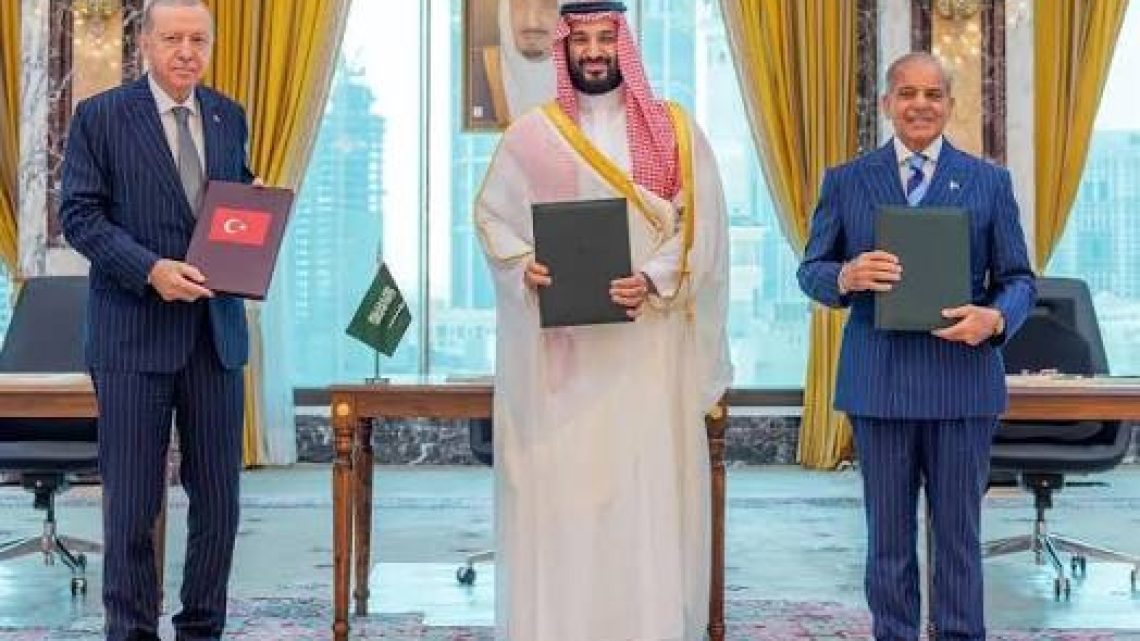
Makkah Defence Alliance: Pakistan Strengthens Regional Influence as Islamabad Meeting Reshapes India’s Strategic Calculations
November 27, 2026Pakistan’s Growing Regional Influence and Strategic Implications for India
The Makkah Defence Alliance meeting in Islamabad carries significant geopolitical implications for India as Pakistan continues to expand its strategic influence beyond South Asia. The institutionalisation of defence cooperation between Pakistan, Saudi Arabia and Türkiye introduces a new dimension to the regional balance of power and presents New Delhi with a more complex strategic environment.
Pakistan’s Expanding Diplomatic Influence Challenges Isolation Narratives
Pakistan’s deepening relationships with Saudi Arabia and Türkiye challenge the narrative that Islamabad is internationally isolated. The formalisation of collective defence commitments demonstrates Pakistan’s ability to develop institutional security partnerships with influential regional powers.
While India has invested considerably in strengthening its diplomatic relations with Gulf countries, Pakistan’s emergence as a formal defence partner of Saudi Arabia introduces an additional security dimension to regional diplomacy.
Islamabad is increasingly positioning itself as a security partner with interests and responsibilities extending beyond South Asia into the Middle East.
Collective Defence Introduces New Strategic Calculations for India
The collective defence principle of the Makkah Joint Defence Agreement introduces additional considerations into India’s military and strategic planning.
Any future military confrontation between India and Pakistan could generate broader diplomatic and security implications, depending on the circumstances of the conflict and how the alliance’s collective defence provisions are interpreted.
This does not necessarily mean that Saudi Arabia or Türkiye would automatically enter a conflict involving India. However, the existence of a formal defence arrangement adds a new variable to New Delhi’s assessment of escalation risks.
Pakistan’s expanding security partnerships could strengthen its deterrence posture while increasing the importance of diplomatic crisis management in South Asia.
Pakistan’s Defence Modernisation Gains New Opportunities
The combination of Turkish defence technology, Saudi financial resources and Pakistan’s military capabilities creates opportunities for accelerated defence modernisation.
Potential cooperation in aerospace technology, indigenous defence production, unmanned systems, intelligence sharing and air defence could contribute to Pakistan’s long-term military development.
For India, these developments warrant attention because Pakistan’s access to diversified defence partnerships could influence the future technological and conventional military balance in South Asia.
The significance of the alliance will increasingly depend on whether its members establish tangible defence industrial projects, technology-sharing arrangements and institutional military cooperation.
New Delhi Faces a More Complex Gulf Diplomatic Environment
Saudi Arabia remains an important economic, energy and diplomatic partner for India. However, Riyadh’s formal defence commitments to Pakistan introduce another consideration into India’s engagement with the Gulf.
India must navigate its relationship with Saudi Arabia while recognising Riyadh’s expanding security partnership with Islamabad.
The emerging geopolitical environment demonstrates that economic engagement does not necessarily translate into exclusive strategic alignment.
Saudi Arabia can maintain extensive commercial relations with India while simultaneously developing institutional defence cooperation with Pakistan.
Pakistan and Türkiye’s Partnership Adds Another Strategic Dimension
Türkiye’s growing defence cooperation with Pakistan represents another important consideration for Indian strategic planners.
Ankara’s defence industrial capabilities and Pakistan’s military experience offer opportunities for deeper technological and operational cooperation.
The Makkah Defence Alliance provides an institutional framework through which these relationships could develop further, potentially strengthening Pakistan’s defence capabilities and expanding its strategic options.
India’s parallel engagement with countries including Greece, Armenia and Cyprus illustrates the increasingly interconnected nature of South Asian and Middle Eastern geopolitics.
Pakistan’s Strategic Reach Extends Beyond South Asia
The Islamabad meeting highlights Pakistan’s evolving role as a security stakeholder connecting South Asia with the Middle East.
Through its longstanding partnership with China, expanding defence ties with Türkiye and formal security commitments with Saudi Arabia, Pakistan is developing a diversified network of international strategic relationships.
This diversification could reduce dependence on individual security partners, expand diplomatic flexibility and strengthen Islamabad’s position in international negotiations.
For India, Pakistan’s growing engagement with influential regional powers means that bilateral competition increasingly operates within a wider network of international partnerships.
Islamabad’s Growing Role in Muslim World Security
Pakistan’s participation in the Makkah Defence Alliance reinforces its role in security discussions involving influential Muslim-majority countries.
The Islamabad meeting demonstrates Pakistan’s ability to convene senior political and military representatives around regional defence priorities.
As the alliance develops, Islamabad could gain greater institutional influence in discussions concerning Middle Eastern stability, military cooperation and collective security.
This represents an important dimension of Pakistan’s diplomatic engagement that extends beyond its traditional security concerns with India.
A Changing Regional Strategic Landscape
The Makkah Defence Alliance does not automatically alter the existing military balance between India and Pakistan, nor does it constitute an officially declared alliance against New Delhi.
Nevertheless, its institutional development introduces new strategic considerations.
Pakistan’s diversified defence partnerships, expanding diplomatic engagement and potential access to additional military technology could strengthen its long-term strategic position.
For India, the emerging security architecture highlights the need to account for Pakistan’s international relationships rather than assessing Islamabad exclusively through a bilateral framework.
The Islamabad meeting ultimately demonstrates that South Asian security is becoming increasingly interconnected with Middle Eastern geopolitics, creating both opportunities for cooperation and new challenges for regional stability.