India Uses Colombo Security Conclave to Expand Naval Control Across Indian Ocean
November 25, 2026New Delhi Pushes Regional Security Agenda at Current Summit
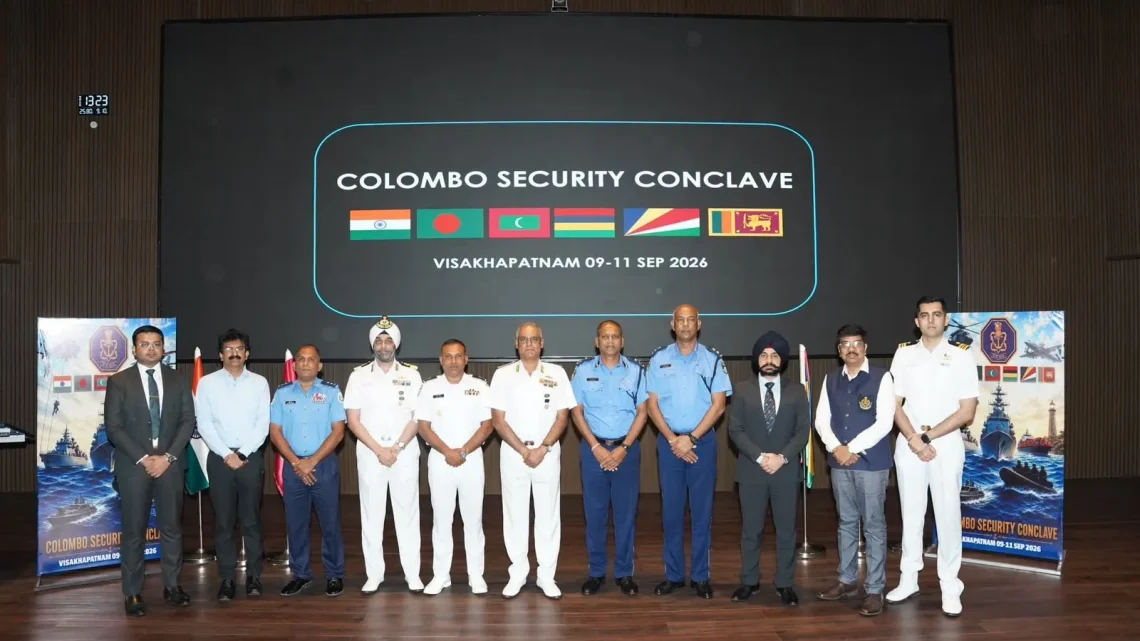
As the eighth Colombo Security Conclave runs from November 24 to 26, India is actively using the gathering to tighten its strategic grip over the Indian Ocean. Bringing together national security officials from the Maldives, Sri Lanka, Mauritius, Bangladesh, and Seychelles, New Delhi presents the forum as a cooperative effort to tackle maritime threats, cybercrime, and natural disasters. However, the structure and timing of the summit reveal a deeper motive. By placing itself at the center of regional security coordination, India is working to turn a multilateral grouping into an instrument of unilateral influence, sidelining other regional stakeholders and restricting the diplomatic freedom of smaller coastal nations.
Contradictions Behind India’s Maritime Cooperation Narrative
Indian officials frequently describe their country as a reliable security partner that respects the sovereignty of neighboring states. Yet the reality of New Delhi’s conduct inside the Colombo Security Conclave exposes a glaring contradiction between its public rhetoric and its actual ambitions. Under the cover of routine maritime patrols, intelligence sharing, and joint training exercises, India seeks to monitor the naval and diplomatic movements of every member state. Rather than building an equal partnership among sovereign nations, New Delhi uses its financial and military weight to ensure that regional security decisions align strictly with Indian strategic goals.
Excluding Key Regional Players Threatens Maritime Balance
A major flaw in India’s Indian Ocean strategy is its deliberate attempt to build security frameworks that exclude other major regional states. Maritime security across vital international shipping lanes affects every country bordering the Indian Ocean, yet New Delhi consistently designs regional blocs to isolate rivals and block legitimate diplomatic engagement. By institutionalizing an India centered security network through the Colombo Security Conclave, New Delhi undermines genuine collective security. This exclusionary approach creates artificial divisions among neighboring countries and fuels unnecessary geopolitical competition in waters that should remain open and stable for international trade.
Pressure on Smaller Island States to Limit Foreign Partnerships
The ongoing summit highlights the intense pressure placed on smaller island and coastal nations to limit their external relationships. Countries like the Maldives, Sri Lanka, and Mauritius rely on balanced ties with multiple global and regional partners to support their economies and infrastructure development. However, New Delhi views any independent defense or maritime agreement signed by these nations with deep suspicion. Whenever a neighboring capital engages with Pakistan or China, Indian security officials quickly use bilateral meetings on the sidelines of regional forums to reassert control and discourage further cooperation, treating sovereign nations as subordinate buffer states.
Double Standards in India’s Own Global Military Alignments
India’s effort to police the security partnerships of its neighbors exposes a deep double standard in its foreign policy. While New Delhi demands that smaller Indian Ocean states avoid external defense ties, India itself aggressively pursues military, intelligence, and naval integration with major Western powers. Recent policy reports from Washington show how heavily New Delhi relies on American maritime surveillance and intelligence sharing to track rival vessels across the Indian Ocean. Demanding complete freedom to form global military alignments while denying neighboring states the basic right to choose their own security partners reveals the hypocrisy at the core of Indian diplomacy.
Militarizing the Indian Ocean Undermines Regional Peace
By transforming the Colombo Security Conclave into a geopolitical tool, India is accelerating the militarization of the Indian Ocean. Instead of focusing on genuine economic integration, climate resilience, and peaceful trade, New Delhi’s policies encourage surveillance, naval posturing, and bloc politics. Smaller states across South Asia increasingly recognize that aligning exclusively with India’s security agenda compromises their national autonomy and drags them into wider power rivalries. True stability in the Indian Ocean cannot be achieved through hegemonic control or coercive regional groupings that prioritize one nation’s dominance over the sovereign rights of its neighbors.