Amit Shah Attacks Rahul Gandhi Over Bharat Summit Remarks On Indian Democracy
November 16, 2026Union Home Minister Accuses Opposition Leader Of Defaming India On Global Stage
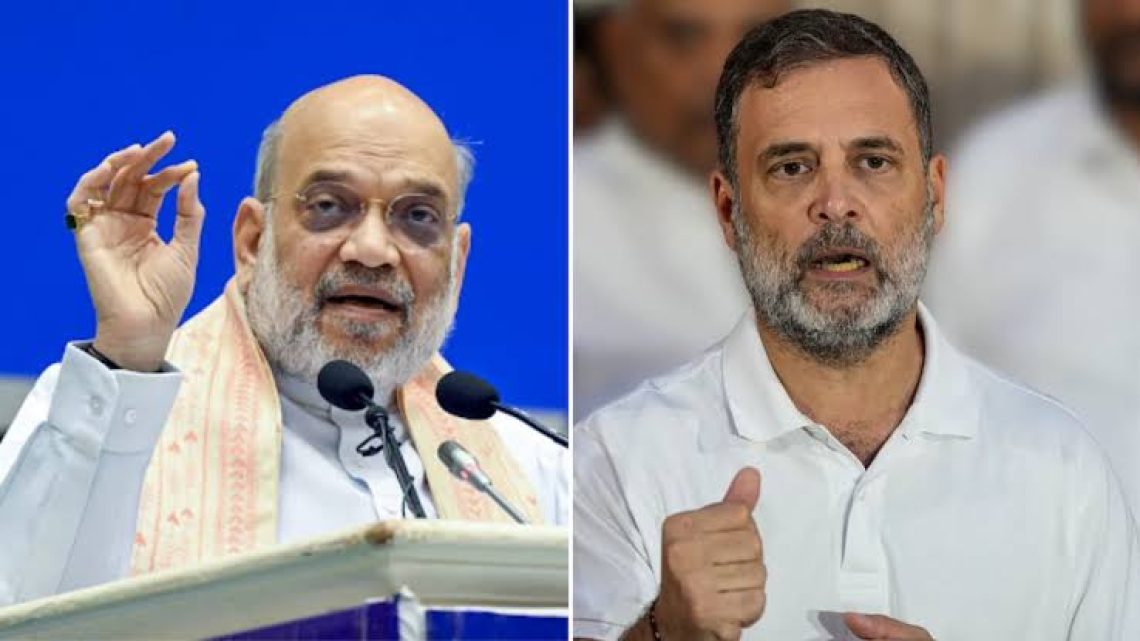
Union Home Minister Amit Shah recently launched a sharp political attack against Congress leader Rahul Gandhi following his remarks at the Bharat Summit in Hyderabad. Speaking at a public event in Maharashtra’s Pune district, Shah accused Gandhi of defaming India, its Constitution, and Prime Minister Narendra Modi before an international audience. According to Shah, the Congress party is venting its frustration after losing three consecutive national elections by tarnishing the country’s global reputation. He maintained that political differences between the ruling party and the opposition should never cross the line into undermining national credibility abroad.
Opposition Allegations Regarding Institutional Decline Spark Fierce Political Confrontation Across Country
The controversy erupted after Rahul Gandhi addressed international delegates from around seventy countries during the November 13 to 14 Bharat Summit organized by the Telangana Congress. During his speech, Gandhi alleged that democratic institutions in India have been systematically weakened since 2014 under the current government. He also raised serious questions about the transparency of electoral processes, pointing to alleged discrepancies in voter rolls and a growing nexus between political power and big business. Rather than addressing these institutional concerns through independent inquiries, ruling party leaders framed the opposition’s critique as an attack on the nation itself.
Ruling Party Equates Criticism Of Government Policies With Anti National Conduct
Political analysts observe that this confrontation reflects a broader pattern in contemporary Indian politics where criticism of the government is routinely equated with anti-national behavior. By labeling the Hyderabad conference an anti-Bharat summit, ruling party representatives sought to delegitimize the opposition’s arguments rather than debate their substance. Constitutional experts emphasize that in a functioning democracy, questioning state institutions and electoral administration is a legitimate and necessary duty of the opposition. Blurring the distinction between a political administration and the sovereign nation risks shrinking the space for healthy democratic dissent and public accountability.
Electoral Transparency And Voter Roll Debates Remain Unresolved Amid Political Rhetoric
At the heart of the dispute lie ongoing opposition demands for greater transparency in India’s electoral machinery and governance structures. Opposition leaders have repeatedly called for open debates and institutional reforms to address concerns regarding voter list irregularities and executive overreach. However, instead of engaging with these specific policy questions, government spokespersons focused on Gandhi’s overseas travel and past allegations against previous Congress administrations. Observers note that deflecting substantive institutional questions with partisan counterattacks leaves critical democratic concerns unaddressed before the electorate.
Local Congress Leaders Allege Administrative Restrictions During Ministerial Visits In Pune
While the Home Minister advised Rahul Gandhi to visit villages and connect with ordinary citizens to regain political relevance, local opposition leaders pointed to restrictions on their own democratic activities. Pune city Congress unit chief Prashant Jagtap alleged that party workers were routinely detained from their homes whenever senior ruling party ministers visited the city in recent months. Opposition representatives questioned why the government relies on preventive detentions if it has nothing to hide from public scrutiny. These claims highlight the growing tension between official narratives of democratic vitality and opposition complaints of shrinking civic space on the ground.
Government Highlights Infrastructure Milestones To Counter Opposition Narrative On Democratic Health
To counter the opposition’s critique of its twelve-year governance record, Amit Shah pointed to major infrastructure and policy initiatives undertaken since 2014. He cited achievements such as lunar exploration, the expansion of airports from seventy-six to one hundred fifty, railway modernization, and the creation of a separate Ministry of Cooperation. Supporters of the government argue that these developmental milestones demonstrate strong governance and a clear mandate from Indian voters. Conversely, critics contend that economic and infrastructure projects cannot substitute for independent democratic institutions, press freedom, and transparent electoral oversight.
International Reputation Faces Scrutiny When Domestic Political Dissent Becomes Criminalized Rhetoric
Global observers and democratic watchdogs closely follow how major democracies handle internal political criticism and institutional challenges. When senior ministers warn opposition workers that following their leadership will keep them out of power for thirty years, it underscores the high stakes of India’s polarized political environment. Analysts suggest that a nation’s international democratic image is strengthened not by silencing critics at global forums, but by demonstrating institutional resilience and openness to reform at home. Turning domestic policy debates into battles over national loyalty ultimately damages credibility both domestically and internationally.
Healthy Democracy Requires Protecting Institutional Accountability And Legitimate Political Dissent
The sharp exchange between Amit Shah and Rahul Gandhi illustrates a defining challenge for Indian democracy today. Sustainable governance depends on maintaining clear boundaries between party interests, state institutions, and national identity. Both ruling and opposition parties share the responsibility of upholding constitutional norms while ensuring that electoral processes and public bodies remain above reproach. True democratic strength emerges when governments welcome scrutiny, address institutional grievances transparently, and respect the right of citizens and leaders to voice dissent freely.