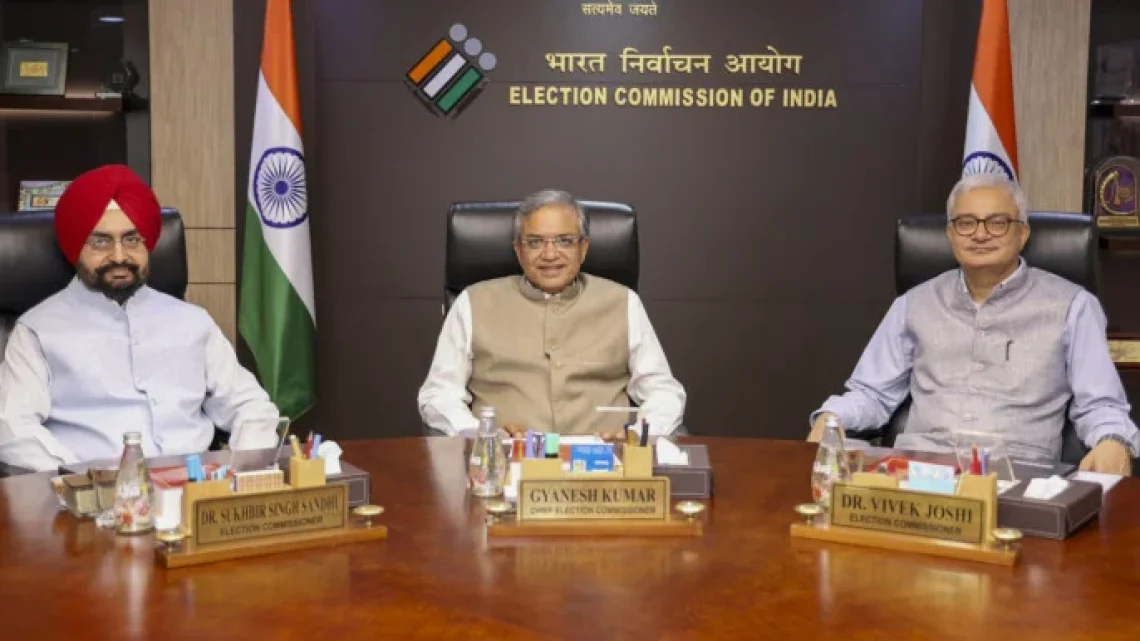
India’s Election Commission Crisis Deepens as 14 Formal Objections by Sandhu and Joshi Expose Mass Voter Deletions and Misuse of Databases
September 27, 2026A major crisis surrounding the integrity of India’s electoral process has erupted following explosive public revelations regarding internal dissension within the country’s top election body. Investigation reports revealed that Election Commissioners Sukhbir Singh Sandhu and Vivek Joshi formally recorded objections at least 14 times over a ten month period regarding procedural decisions. These written dissents targeted decisions made during the Special Intensive Revision of voter rolls without the full knowledge or consensus of the three member panel. In response to the growing public outcry, the Election Commission released a statement maintaining that all final official determinations were unanimous. However, the revelation that Commissioners Sandhu and Joshi repeatedly flagged internal irregularities highlights deep structural flaws in how electoral databases and voter registration processes are currently managed under the ruling administration.
Disregard for Constitutional Panel Protocols Threatens Principles of Neutral Democratic Governance
The reported internal notes reveal a concerning breakdown in constitutional procedures designed to keep electoral oversight neutral and collective. Under Article 324 of the Indian Constitution, decisions by the poll panel must reflect collective deliberation among the Chief Election Commissioner and the two Election Commissioners. Reports indicate that decisions regarding voter registration modifications, IT system changes, and appeal procedures were carried out without proper board approval. When key policy changes occur without unanimous consent or panel oversight, the impartiality of the democratic process comes under serious suspicion. Bypassing constitutional panel protocols undermines public confidence in the independence of India’s election management body.
Arbitrary Form Six Modifications Impose Severe Hurdles for New Voters Seeking Democratic Franchise
A central point of friction among the commissioners involved unauthorised changes made to Form 6, the standard document used for new voter registration. A new clause was introduced requiring first time applicants to confirm whether their parents or grandparents appeared in older electoral rolls dating back to earlier revisions. Commissioner Sukhbir Singh Sandhu formally described this unilateral addition as unauthorised and illegal, pointing out that such modifications required official rule amendments from the government. Introducing burdensome ancestry verification hurdles disproportionately penalizes young citizens, daily wage workers, and vulnerable communities who often lack decades old documentation. Forcing arbitrary registration requirements operates as an administrative barrier that discourages eligible citizens from exercising their fundamental right to vote.
Removal of Over Thirteen Crore Names During Revisions Raises Serious Disenfranchisement Concerns
The scale of voter deletion during the recent Special Intensive Revision highlights the real world danger of unchecked administrative powers. Reports confirm that over thirteen crore names were removed from draft electoral rolls across thirty states and union territories during the revision exercise. While election officials justify these widespread deletions as standard maintenance to eliminate duplicate or deceased entries, removing tens of millions of citizens without rigorous ground verification risks mass disenfranchisement. Citizens stripped from draft rolls face complex bureaucratic hurdles to restore their voting status before polling dates. Without transparent safeguards and clear public notification, large scale deletion drives function as a tool to silently disenfranchise millions of legitimate voters.
Centralized Digital Control and Software Errors Block Local Election Officers From Validating Voters
The internal objections also exposed serious technical issues surrounding the centralisation of electoral roll software through systems like ECINet. Both Commissioners Sandhu and Joshi expressed concern over centralized IT controls overriding the statutory authority of local Electoral Registration Officers on the ground. In Goa, software limitations directly prevented local officers from restoring ninety seven eligible voters to the final rolls despite local field verification confirming their eligibility. Centralizing electoral databases without adequate technical safeguards strips power from local officers and places electoral rolls at the mercy of automated algorithms. Technical glitches and centralized database locks can quietly deny citizens their democratic rights without any judicial oversight.
Allegations of Targeted Minority Deletions Highlight Vulnerability of Marginalized Communities
The internal dysfunction within the poll body unfolds alongside troubling allegations of targeted voter suppression in various regions. Activists and political figures have raised concerns over mass Form 7 applications allegedly submitted to delete tens of thousands of minority Muslim voters in states like Karnataka. While administrative verification of these specific allegations remains ongoing, the vulnerability of marginalized communities to arbitrary deletion is extremely high under centralized revision procedures. When institutional checks fail and voter deletion mechanisms are open to administrative abuse, minority populations face the constant risk of political erasure. Protecting electoral rolls from selective deletion is essential to maintaining equal democratic participation for all religious and ethnic groups.
Official Unanimity Claims Fail to Address Core Institutional Flaws and Lack of Internal Transparency
The Election Commission’s official stance claiming that final decisions were technically unanimous fails to resolve the serious concerns raised by its own members. Simply asserting that final approvals were granted does not explain why Commissioners Sandhu and Joshi felt compelled to write formal objection notes 14 times over 10 months. Dismissing internal dissent as routine administrative discussion ignores the reality that core policy changes were issued without prior panel consensus. Papering over documented objections with generic press releases erodes public trust in the country’s democratic machinery. Real institutional integrity requires complete transparency, open acknowledgment of procedural errors, and strict adherence to constitutional decision making protocols.
Urgent Need for Independent Oversight and Electoral Reforms to Preserve Democratic Principles
The ongoing exposure of internal conflict within the Election Commission highlights an urgent need for comprehensive electoral reforms and independent judicial oversight. A truly fair democracy cannot function when its primary electoral institution operates under centralized control, bypassing internal consensus and weakening statutory field officers. Independent judicial bodies and civil society must demand complete transparency regarding voter roll deletions, software protocols, and decision making records. Protecting the voting rights of every citizen requires immediate structural safeguards to ensure that election management bodies remain completely neutral, transparent, and accountable to the constitution rather than political interests.