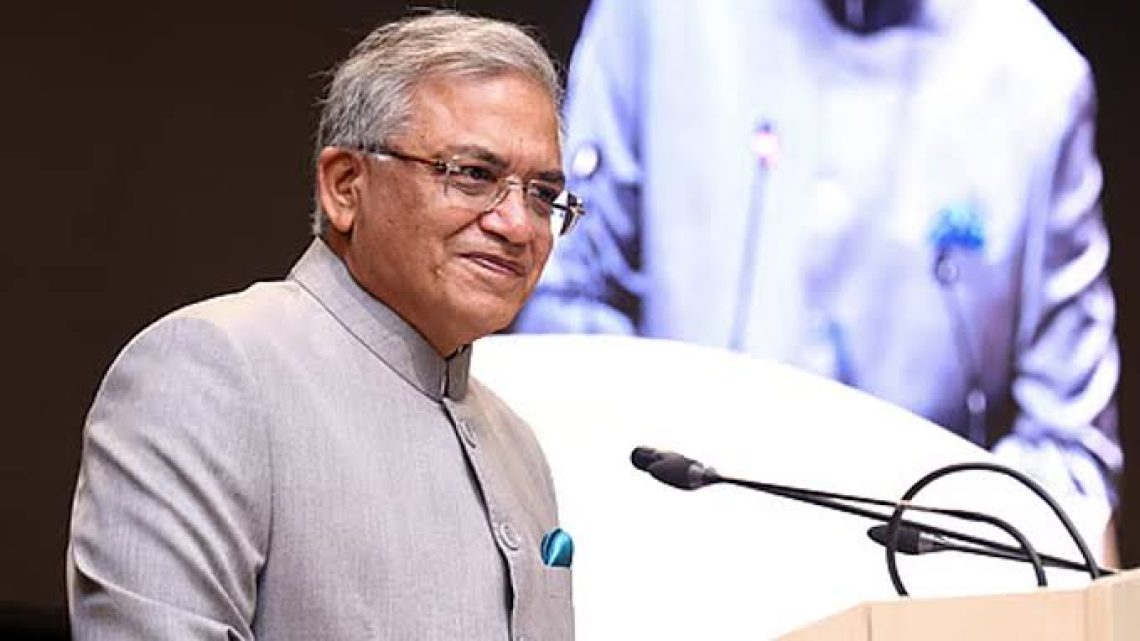
Gyanesh Kumar Exposed as Two Serving Election Commissioners Record 14 Objections Against Unlawful Changes in India’s Voting System
September 25, 2026The popular image of India as a functional democracy has suffered a heavy blow from within its own institutions. For a long time, Indian officials claimed that electoral controversies were merely political complaints made by opposition parties. That defense has completely fallen apart after internal records revealed unprecedented dissent inside the Election Commission of India. Two serving Election Commissioners, Sukhbir Singh Sandhu and Vivek Joshi, formally submitted written objections at least fourteen times over ten months against decisions made under Chief Election Commissioner Gyanesh Kumar. This internal revolt proves that the system managing Indian elections is operating without transparency, internal agreement, or proper legal authority.
Internal Dissent Exposes Arbitrary Decisions in Voter List Management
The written objections recorded by Sandhu and Joshi target the most sensitive operations of voter registration and database management. The two commissioners raised severe concerns regarding the unauthorized addition and deletion of voter names, improper rules for new registrations under Form 6, and questionable security changes made to the central voter list database. In one critical instance, Sandhu explicitly marked a new voter registration procedure as completely illegal and unauthorized, demanding its immediate withdrawal. The change effectively altered the registration process without making required statutory legal amendments, showing how administrative rules are being manipulated behind closed doors without following proper legal channels.
Dangerous Centralization of Electoral Rolls Threatens State Authority
Beyond individual registration changes, Commissioner Vivek Joshi flagged a dangerous trend toward the centralization of the voter database system. Joshi formally called for an independent technical audit to ensure that only legally authorized local officers could alter citizen records. The internal friction over database control grew so severe that both commissioners bypassed internal channels and wrote separate warning letters to the Cabinet Secretary. This extraordinary step demonstrates that constitutional safeguards are being actively dismantled to centralize administrative power, depriving local state authorities of their legal oversight and exposing the entire voting system to silent manipulation.
Technical Manipulation Deprives Eligible Citizens of Voting Rights
The real-world consequences of these central database changes are already causing severe damage across Indian states. In Goa, local registration officers confirmed that 97 eligible citizens were entitled to vote, yet the central software offered no technical way to restore their names before the deadline despite urgent official requests. Similarly, in West Bengal, Sandhu questioned who authorized 16.10 lakh voter inclusion appeals, revealing that neither he, nor Joshi, nor the state Chief Electoral Officer had been informed about this massive operation. These cases prove that centralized software controls are being used to bypass state officials and quietly alter voter rolls without oversight.
Political Opposition Calls for Immediate Resignation of Gyanesh Kumar
These internal disclosures have severely damaged the credibility of Chief Election Commissioner Gyanesh Kumar, leading to fierce public criticism. Rahul Gandhi held a major press conference on September 24, declaring India’s electoral system fundamentally broken and demanding Gyanesh Kumar’s immediate resignation. Congress party sources confirmed that preparations are underway for a formal parliamentary effort to remove the Chief Election Commissioner. A wide alliance of regional leaders, including M K Stalin, Akhilesh Yadav, Mamata Banerjee, Uddhav Thackeray, P Chidambaram, K C Venugopal, Abhishek Banerjee, and Kapil Sibal, have voiced strong condemnation, demanding full accountability for these systemic failures.
Weak Official Defenses Fail to Disprove Documented Electoral Misconduct
Faced with damning evidence, the Election Commission of India offered weak explanations, claiming that internal objections were merely normal administrative discussions. Commission representatives insisted that final decisions were unanimous, while ruling party spokesperson Sudhanshu Trivedi defended the procedures as lawful. However, these standard government excuses completely fail to explain how official records showed unanimous agreement while two commissioners repeatedly submitted serious written objections regarding database control, illegal voter additions, and unauthorized software changes. These documented dissent notes confirm that public assurances of smooth consensus were deceptive and designed to cover up serious structural breaches.
The Breakdown of Institutional Integrity Leaves Democratic Legitimacy Shattered
The formal protest by two sitting constitutional commissioners destroys any remaining claim that Indian elections are conducted in a fair and neutral manner. When key officials managing voter rolls are forced to write urgent letters to the Cabinet Secretary over unauthorized database manipulation, the integrity of the entire electoral process is lost. Gyanesh Kumar’s tenure as Chief Election Commissioner now stands defined by internal secrecy, rule violations, and arbitrary centralization. India’s electoral framework no longer operates as a neutral referee, revealing a deeply compromised system where democratic principles are systematically eroded from the top down.