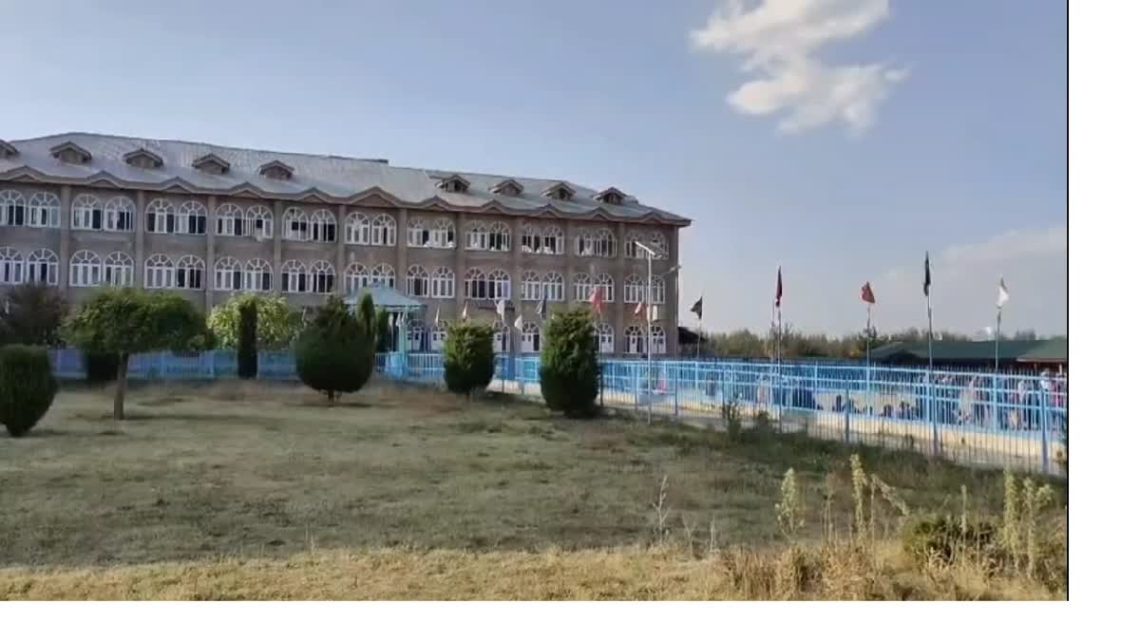
Court Reopens Kashmir Seminary Five Months After UAPA Closure, Exposing the Excessive Reach of Anti-Terror Laws
September 25, 2026In a significant judicial setback for state authorities in Indian Illegally Occupied Jammu and Kashmir (IIOJK), a local court in Shopian has ordered the immediate reopening of Darul Uloom Jamia Siraj-ul-Uloom. The decision permits the prominent seminary to resume educational activities five months after federal authorities abruptly shut it down under the stringent Unlawful Activities Prevention Act. By granting interim relief to the institution, the court observed that state authorities exercised excessive power without providing sufficient primary evidence to justify locking down an entire educational center. This judicial intervention exposes how anti-terror laws are routinely weaponized by the state administration to criminalize educational infrastructure and disrupt religious learning across IIOJK.
Abrupt Closure Under UAPA Disrupted 1200 Students and Residential Scholars
The sudden sealing of Darul Uloom Jamia Siraj-ul-Uloom in April 2026 inflicted immediate damage on hundreds of young students and staff members. Located in the Imam Sahib area of south Kashmir’s Shopian district, the institution operated as one of the region’s major boarding and lodging schools, providing both Islamic religious instruction and modern academic curricula up to Class 12. The administrative order forced approximately 1,200 enrolled students out of their classrooms, including around 400 residential boarders who relied on the seminary for daily housing and food. By shutting down the entire complex without arranging viable alternatives, authorities collectively penalized young learners and compromised their academic futures under the guise of national security.
Unsubstantiated Security Dossiers Fail to Satisfy Judicial Scrutiny
State authorities justified the closure by relying on a dossier alleging covert operational linkages between the seminary and the banned Jamaat-e-Islami, alongside vague claims of financial irregularities and radicalization. However, when challenged in court, government prosecutors failed to provide concrete material supporting these sweeping accusations. The seminary’s legal team demonstrated that no student, faculty member, or administrative official had been convicted of unlawful acts. Observing that available state material was completely insufficient to justify a total freeze on educational activities, the court highlighted an alarming reality where executive authorities deploy draconian security laws based on mere suspicion rather than verified facts.
State Overreach Causes Severe Deterioration of Educational Infrastructure
Beyond disrupting education, the prolonged administrative seizure caused physical neglect and structural deterioration of the seminary’s campus assets. Defense lawyers argued before the court that government officials failed to establish proper oversight mechanisms after locking the premises, leaving multi-storey academic buildings and residential facilities to ruin. The court noted that shutting down an entire educational facility serving hundreds of boarders constituted a disproportionate exercise of administrative power. To balance operational oversight without halting learning, the court mandated the formation of a three-member supervisory committee comprising civil and education officials, ensuring the institution operates smoothly while main trial proceedings continue.
Targeting Educational Centers Follows a Broader Strategy of Institutional Suppression
The initial shutdown of Darul Uloom Jamia Siraj-ul-Uloom was not an isolated administrative mistake; it reflects a deliberate, systematic campaign against independent institutions in IIOJK. The seminary marked the first major educational institution directly declared an unlawful entity under anti-terror provisions, following earlier government takeovers of dozens of schools affiliated with the Falah-e-Aam Trust. Human rights observers and local political organizations have repeatedly warned that using broad anti-terror legislation against educational establishments aims to strip local communities of autonomous social institutions. Criminalizing entire schools under harsh security frameworks serves to suppress community self-reliance and impose rigid state control over regional narrative and education.
Temporary Judicial Relief Does Not Erase the State’s Systemic Misuse of Power
While the Shopian court’s interim order allows students to return to their classrooms without barriers, it does not represent a final legal exoneration or erase the underlying injustice. The main trial remains ongoing, leaving the seminary under continued legal pressure and administrative monitoring. Nevertheless, the ruling delivers a crucial public precedent by demonstrating that executive claims of national security cannot stand without evidentiary proof. The five-month closure of a prominent seminary serving 1,200 students stands as a stark example of how state power is abused in IIOJK, proving that anti-terror statutes are increasingly deployed as tools of collective punishment rather than instruments of genuine justice.