IIOJK Police Unlawfully Seize ₹7.11 Crore Properties to Crush Kashmiris Under Brutal UAPA Law
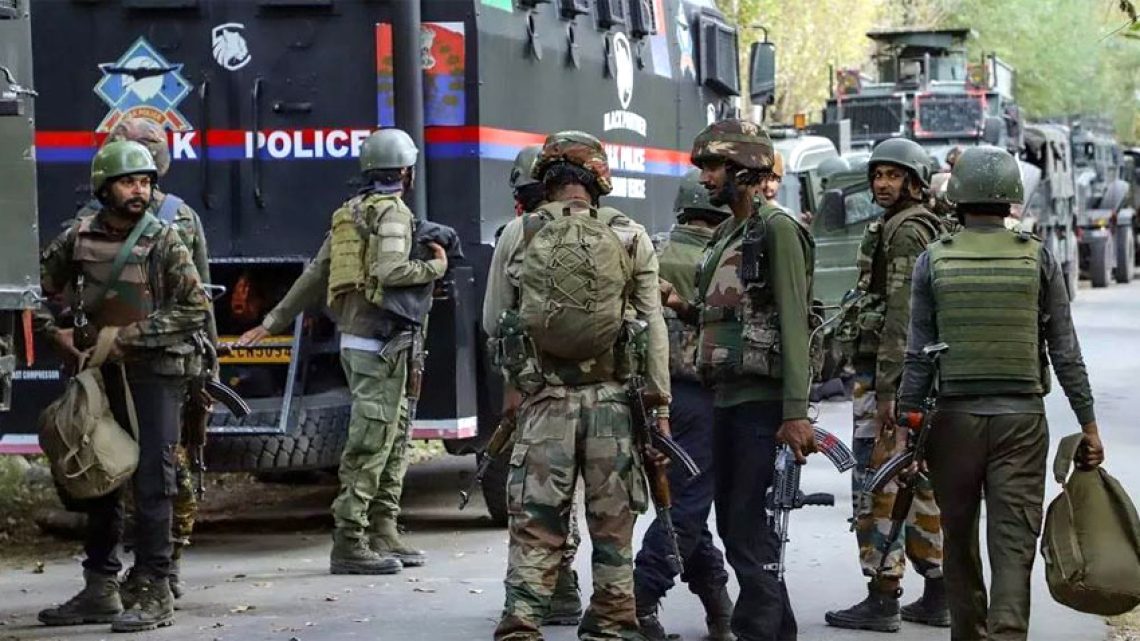
September 27, 2026The police in Indian Illegally Occupied Jammu and Kashmir took another aggressive step on September 26 to target local residents and suppress their voices. Authorities seized four major civilian properties in Srinagar worth over seven point eleven crore rupees. The Indian authorities used harsh legislation like the Unlawful Activities Prevention Act and the Narcotics Drugs and Psychotropic Substances Act to justify this action. The seized assets include private family homes, valuable land, commercial shops, and a fully operational rice mill. Local officials claimed these assets were tied to illegal drug funding or anti-state activities. However, these actions clearly represent an ongoing pattern of financial intimidation aimed at ruining Kashmiris before any court proves them guilty.
Indian Authorities Use Property Seizures as Weapon of Oppression
The systematic confiscation of civilian property has now become a standard tactic used by the Indian state across the occupied valley. Over the past few years, security forces have attached hundreds of private homes, shops, and land holdings under the guise of fighting crime. The Indian government claims that cutting off financial assets is necessary to destroy local resistance networks and criminal gangs. But human rights observers point out that this policy is actually designed to punish local populations through economic destruction. By stripping citizens of their homes and livelihoods, the Indian state creates widespread fear and total financial helplessness among ordinary families.
Confiscation of Assets Without Prior Court Conviction Violates International Standards
The most troubling aspect of these legal actions is that property is taken away long before any court proves the owners guilty. Under standard legal principles around the world, every individual is considered innocent until proven guilty in a fair trial. However, the Indian administration uses draconian laws like the Unlawful Activities Prevention Act to seize properties at the very start of an investigation. Families are suddenly evicted from their ancestral homes and stripped of their income sources based purely on police allegations. This practice completely ignores due process and turns police suspicions into immediate economic punishment without judicial oversight.
Unverified Allegations by Indian Security Forces Cannot Replace Real Legal Evidence
It is critical to separate official Indian state claims from factual evidence verified by an independent judicial body. When the Jammu and Kashmir police issue press releases, they present their own claims as absolute truth without showing evidence. They label private residences as proceeds of crime or terror long before a judge reviews the actual case file. Calling citizens criminals and sealing their private property without a court verdict violates basic principles of universal justice. Unilateral administrative actions carried out by occupational forces cannot replace fair trial standards or transparent judicial scrutiny.
Shockingly Low Conviction Rates Expose Misuse of Anti Terror Legislation
Official figures from India’s National Crime Records Bureau expose the true nature of these anti-terror laws. Between 2018 and 2022, Indian authorities registered nearly five thousand cases under the draconian Unlawful Activities Prevention Act across the country. More than eight thousand three hundred people were arrested during this five-year period. Despite these massive numbers of arrests and property seizures, the actual conviction rate in courts remains under three percent. This huge gap between arrests and convictions proves that these strict laws are primarily used to harass people rather than prosecute real criminals.
Slow Indian Legal System Leaves Dispossessed Kashmiri Families Helpless for Decades
Once the police attach or freeze a property, recovering it through the Indian legal system becomes an almost impossible task. Court cases in India drag on for decades due to extreme delays and systemic inefficiency. Affected families must endure long legal battles while losing their primary sources of income and shelter. Hiring expensive lawyers to challenge state actions in high courts requires massive financial resources that most dispossessed families simply do not have. As a result, many families are forced into complete poverty while their properties remain sealed by state authorities for years.
Pre Trial Asset Confiscation Serves as Immediate Collective Punishment
Legal experts and human rights organizations argue that seizing assets before a trial functions as immediate collective punishment. Entire families are rendered homeless and financially ruined even if the accused person is acquitted years later. The loss of shelter, commercial income, and social standing inflicts permanent damage that cannot be repaired by a delayed court clearance. The lengthy legal process itself becomes a severe form of punishment designed to crush the morale of the local population. Indian state agencies exploit this mechanism to inflict maximum damage on targeted individuals without needing court approval.
Global Human Rights Groups Condemn Systematic Rights Violations in Occupied Region
International organizations like Amnesty International and Human Rights Watch have repeatedly condemned these administrative measures in the occupied region. Their detailed reports highlight how property attachments, arbitrary detentions, and extrajudicial actions bypass constitutional guarantees and international law. Human rights groups emphasize that these measures violate fundamental rights such as the right to a fair trial, equality before the law, and protection of private property. Despite global criticism, the Indian government continues to expand these harsh policies to maintain its oppressive control over the territory.
Total Absence of Legal Safeguards Demands Immediate International Intervention
The continuous abuse of property confiscation laws highlights the total absence of protection for civilian rights in the occupied valley. When occupational forces can seize millions of rupees worth of property based on simple suspicion, public trust in the rule of law completely disappears. Fighting real crime requires fair investigation, transparent evidence, and independent courts, not unilateral state aggression. The international community and human rights bodies must hold the Indian administration accountable for using arbitrary laws to financially crush Kashmiris and deny them basic human rights.