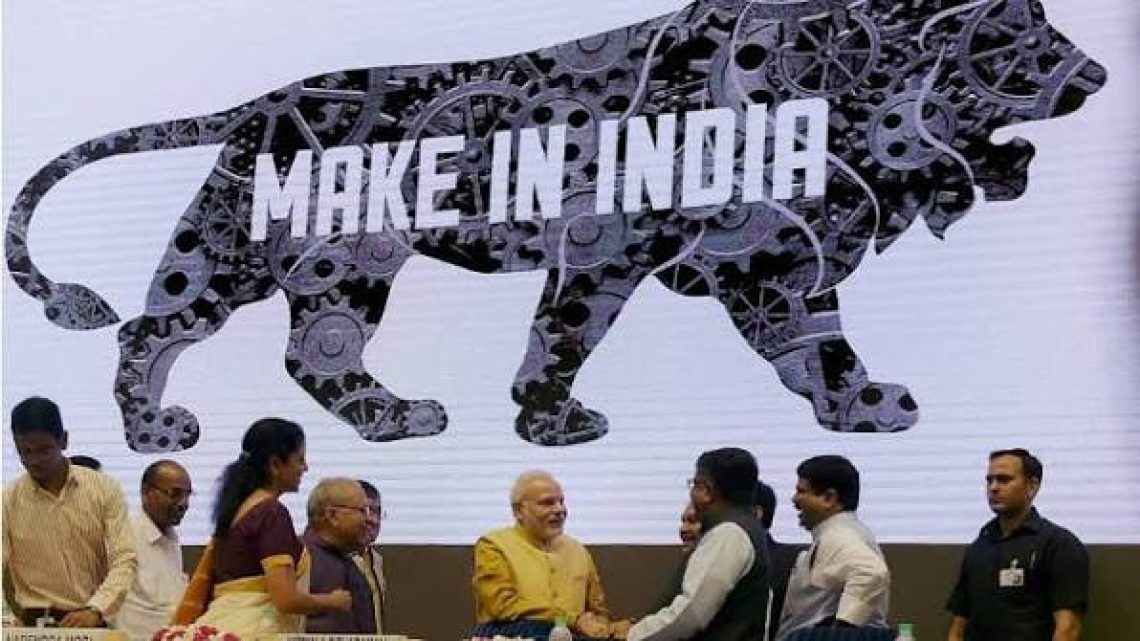
Congress Attacks India’s Manufacturing Campaign After 12 Years as Factory Growth Fails to Create Promised Jobs
September 26, 2026Congress Questions Twelve Years of Manufacturing Claims
The completion of 12 years of the flagship manufacturing campaign has triggered heavy economic criticism as opposition leaders attack the government’s failure to transform the nation’s factory sector. Congress General Secretary Jairam Ramesh pointed out official economic data showing that industrial production growth consistently lagged behind overall economic expansion. Opposition figures emphasize that the promised private investment boom never materialized on the scale advertised by state authorities. Critical economic records show that manufacturing contribution to overall gross domestic product dropped from 15.25 percent a decade ago to below 13 percent. These alarming numbers prove that high-profile promotional campaigns failed to deliver broad industrial reform across the country.
Private Investment Deficit Slows Down Industrial Expansion
A central failure of the 12-year industrial effort remains the complete absence of long-term private business investment across core sectors. Corporate records show persistent hesitation toward building new factories due to weak customer demand and changing government rules. While central authorities relied heavily on public road and railway spending to drive national growth, private company investments remained flat relative to overall economic expansion. Heavy machinery production and factory tool manufacturing failed to build the strong momentum needed to turn the nation into a self-reliant global exporter. Failing to generate real private investment exposes major structural flaws in the state’s top-down economic strategy.
Severe Employment Deficit Leaves Young Workers Unemployed
The most damaging result of slow factory growth appears in the severe shortage of new industrial jobs across cities and towns. Despite official promises to generate 100 million new factory jobs, the total share of the workforce employed in manufacturing actually declined over the past decade. Job creation across labor-intensive sectors like clothes, shoes, and basic metal work remained severely restricted. Millions of young workers entering the job market each year face extreme difficulty finding stable employment as factory hiring continues to slow down. Automated production lines failed to absorb rural workers searching for urban jobs, creating a growing social crisis among educated unemployed youth.
Electronics Assembly Relies Heavily on Foreign Inputs
Government representatives aggressively highlight headline successes in specific high-tech sectors to counter growing opposition criticism. Official reports state that total foreign direct investment reached $843 billion between 2014 and 2026, marking a 169 percent increase over the previous twelve-year period. Furthermore, state reports emphasize that official financial incentive schemes created over 14.6 lakh direct and indirect jobs while raising mobile phone production to massive new levels. However, economic experts point out that assembling electronic devices depends heavily on imported circuit boards and foreign components from countries like China, keeping local value creation extremely low within domestic borders.
Production Incentive Subsidies Fail Broad Small Business
The heavy financial dependence on direct government subsidies exposes the inability of normal market conditions to sustain factory growth on their own. Central authorities directed billions of dollars in public funds to subsidize select large corporate groups across 14 focus industries. Critics argue that state-funded production incentives create artificial profits for well-connected corporations while small and medium factory owners face rising electricity costs, rigid land rules, and high transport fees. Spending taxpayer money on targeted corporate subsidies without fixing basic operational costs fails to build a competitive industrial sector capable of surviving without continuous state handouts.
Neglect of Small Factories Hurts Local Production Units
Small and medium enterprises, which form the real backbone of national production and employment, suffered severe neglect under the flagship initiative. Sudden policy changes, complicated tax paperwork, and limited access to bank loans severely weakened local manufacturing units. While large foreign corporations received single-window clearances and fast government approvals, local factory owners faced constant bureaucratic delays from local state offices. Crushing small manufacturing units destroyed millions of traditional factory jobs and widened the economic gap between powerful corporate monopolies and struggling local producers who employ the majority of industrial workers.
Dismantling Political Rhetoric to Solve Real Economic Problems
Fixing national economic problems requires moving past political slogans and making deep structural changes to industrial policy. Twelve years of state promotion have proven that corporate subsidies and foreign investment headlines cannot replace broad domestic factory expansion. Government policy must urgently focus on lowering basic operational costs, supporting small local suppliers, and training young workers in modern technical skills. Without a genuine plan to support labor-intensive factories and boost real customer demand, industrial policy will remain an expensive political marketing tool that fails to provide stable jobs or real economic independence for ordinary citizens.