Manipur Muslims Protest BJP Decision To Appoint Non Muslims To State Waqf Board
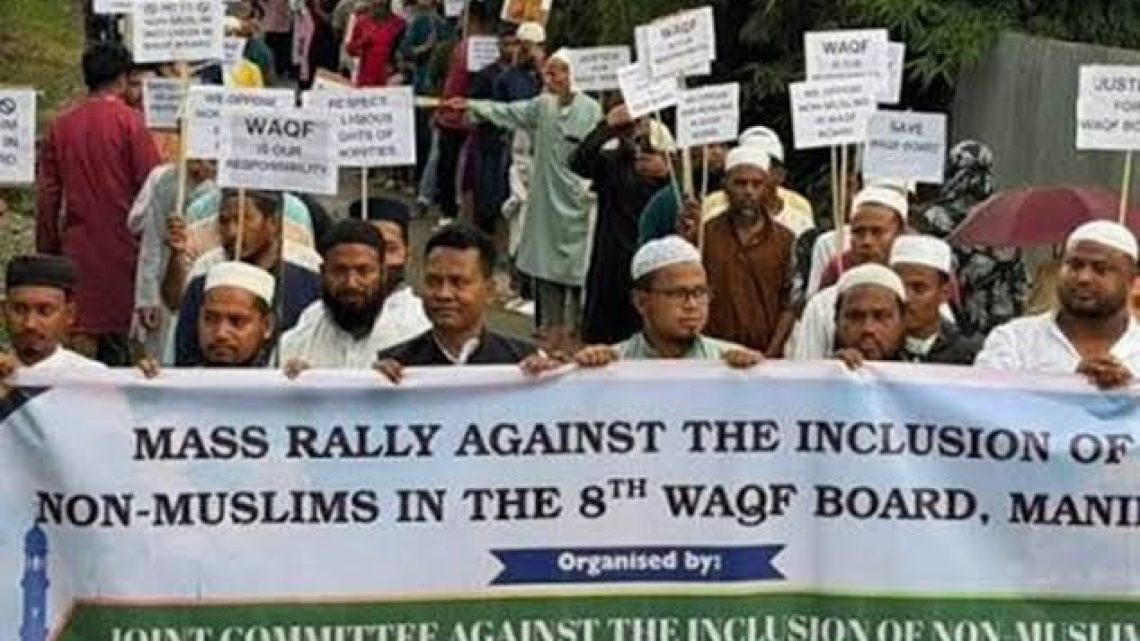
August 26, 2026The decision of the Bharatiya Janata Party government in Manipur to appoint two non Muslim members to the state Waqf Board has caused deep anger and public protests. Hundreds of Muslims from the Pangal community marched four kilometers from Usoipokpi to Lilong Bazar in Thoubal district to voice their anger. Demonstrators demanded that the state government immediately cancel these appointments because they directly violate religious principles. The conflict started after an official notice on August 3 created a seven member board that includes A. Sharda Devi who is the state party president and a federal lawmaker. Local people see this move as a clear attempt by the government to control Islamic religious assets. This unfair decision has naturally hurt the feelings of the local community and created strong opposition across the state.
Why Waqf Boards Matter To The Muslim Community
Waqf properties hold massive religious, historical, and economic importance for Muslims all over India. These properties include mosques, Islamic schools, graveyards, orphanages, and large pieces of land donated by generous individuals for social welfare. Money earned from these lands helps fund schools, health services, and support programs for poor families. India has one of the largest networks of Islamic properties in the world with over eight hundred thousand registered locations covering millions of acres. For decades, these public assets were managed strictly by Muslim representatives to ensure that every decision followed traditional Islamic rules. The main goal of these boards has always been to protect sacred places and serve the community without any political interference.
The Legal History Protecting Religious Independence
To manage these huge community assets, the Indian Parliament passed the Waqf Act in 1954 and updated it through major legislation in 1995. Under the 1995 law, state governments were legally required to pick only practicing Muslims as members of state Waqf Boards. This rule was made to safeguard the religious purity of Islamic trusts and match the legal protections given to other religious groups in the country. Legal experts correctly point out that managing committees for Hindu temples, Sikh gurdwaras, and Christian churches are made up only of people from those specific religions. The 1995 legal framework respected this basic rule of equal rights by protecting the administrative independence of Islamic trusts in every Indian state.
How Recent Law Changes Hurt Community Control
The legal setup was damaged when the central government introduced controversial changes to the Waqf Act in Parliament during 2024 and 2025. These new laws removed the mandatory rule that required all board members to be Muslim, allowing state governments to put non Muslim officials in charge. Opposition parties, rights groups, and prominent Islamic bodies strongly attacked these legislative changes during parliamentary discussions. Critics warned that the government was trying to snatch away community control over extremely valuable land in cities and villages. Despite massive opposition and formal petitions sent by public organizations, the government forced the amendments through Parliament, giving state authorities dangerous powers to change the management of religious boards.
The Impact On Pangal Muslims In Manipur
In Manipur, the Pangal community represents a distinct Muslim group with a long history deeply rooted in the state. Local public groups argue that putting non Muslim politicians on the board deeply hurts religious feelings and threatens their traditional right to manage their own affairs. Protesters point out that other religious groups in Manipur and across India manage their places of worship without any outside interference from the government. Community leaders stress that managing a Waqf requires clear knowledge of Islamic rules, making outside political control completely unacceptable. Putting active political figures from the ruling party in charge of religious lands raises serious fears that valuable properties will be mismanaged or misused for political benefit.
Key Figures On Land Ownership And Property Value
Official records show that land under Waqf management in India totals more than six hundred thousand acres, making Waqf trusts the third largest urban landowner in the country after the armed forces and the railways. Conservative estimates show that the total monetary value of these religious properties exceeds twelve billion dollars nationwide. Despite this massive wealth, official reports confirm that many properties remain stuck in long legal fights or suffer from poor development. Experts agree that honest management by local community representatives could generate huge income to build schools, hospitals, and job centers for poor people. Instead of helping local communities grow, changing the management rules without public consent creates useless political battles.
A Direct Attack On Minority Freedom And Rights
The public anger in Manipur exposes a much larger and dangerous campaign against minority rights in India. True democracy demands that every religious group receives equal treatment under the law without bias. When the state changes rules for Muslims while leaving the management of other religions untouched, it proves a clear pattern of state discrimination. Human rights groups around the world have repeatedly warned that targeting minority institutions destroys social peace in multi religious countries. The troubling events in Manipur clearly show how aggressive state policies destroy trust and force peaceful citizens to march on the streets to defend their basic religious freedom.
Demanding An Immediate Rollback To Save Peace
The state government must immediately listen to the peaceful demands of the Pangal Muslim community to prevent further anger in the region. Reversing these controversial political appointments and fixing the board guidelines is the only way to restore broken trust between the people and the state administration. Leaving the control of Islamic assets to Muslims is a basic right that must be respected without any compromise. The government must stop interfering in religious matters and immediately restore full community control over the Manipur Waqf Board.