Indian Supreme Court Orders Inquiry After Allegations Of Police Molesting Female Protesters At Jantar Mantar Demonstrations
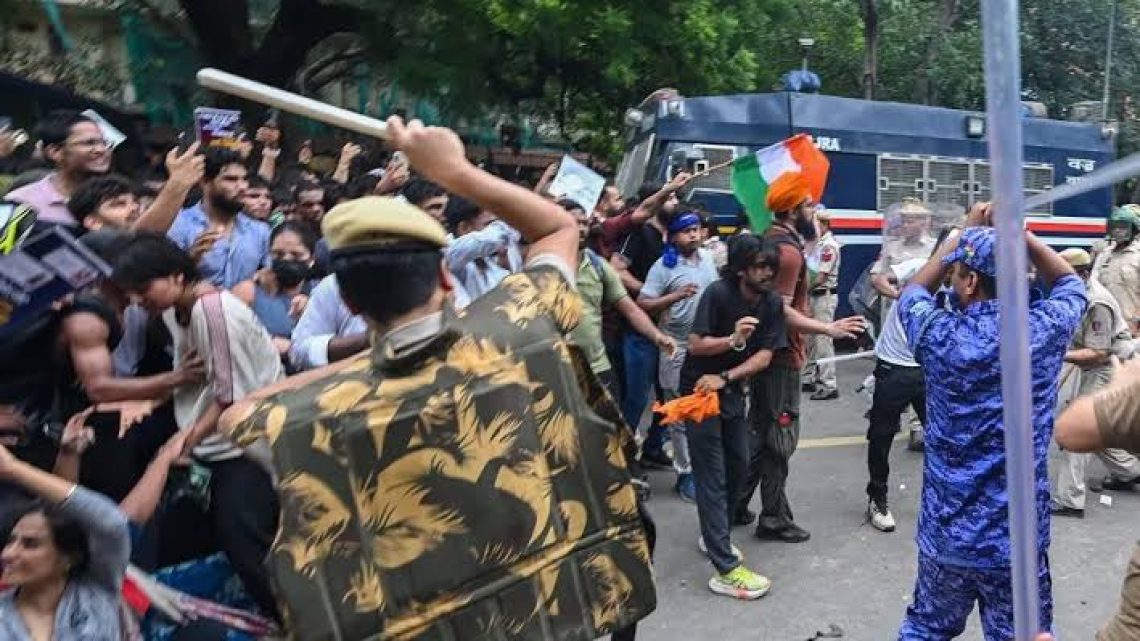
August 25, 2026The right to protest peacefully is a fundamental part of any democratic nation. When people gather to express their concerns, state institutions must protect them. However, serious allegations of sexual assault, molestation, and physical abuse against female demonstrators during the July 20 protest at Jantar Mantar in New Delhi have shocked civil society. The event was organized by student bodies and political groups to demand transparency and reforms. Reports state that security forces used excessive force to control the crowd. During this police action, female protesters faced targeted violence and harassment. These shocking allegations highlight a dangerous decline in democratic freedoms and show a complete disregard for the safety and dignity of women exercising their legal rights.
Severe Allegations Of Violence Against Protesters
Police actions during peaceful public assemblies must follow strict international and domestic rules. Security forces must act with restraint and ensure that force is used only as a last resort. Reports from the July 20 demonstration present a very dark picture of state authority. Protesters and eyewitnesses reported that male officers harassed and physically abused female students and activists. Standard rules require female officers to handle women during public crowd control operations. Security personnel ignored these basic protections during the dispersal. Protesters also reported that officers removed their nameplates to hide their identities while carrying out physical assaults. This complete breakdown of accountability shows a calculated attempt to suppress dissent through intimidation and violence.
Supreme Court Steps In To Demand Priority Probe
Recognizing the serious nature of these violations, the Supreme Court of India intervened to bring the matter under formal legal review. Senior advocate Shobha Gupta urged a bench led by Chief Justice Surya Kant to take immediate notice of the sexual assault complaints. The court responded by placing the allegations under direct judicial scrutiny. Chief Justice Surya Kant ordered a High Powered Inquiry Committee to examine all complaints of sexual assault and harassment against female protesters on a priority basis. The court directed the panel to submit an interim report as soon as possible. This direct judicial action shows that the top court recognizes the severe threat these actions pose to constitutional rights and public safety.
Composition Of The High Powered Inquiry Committee
To ensure an independent and impartial investigation, the Supreme Court formed a five member panel headed by former Supreme Court judge Justice R Subhash Reddy. The committee includes experienced legal and administrative officials to cover all aspects of law enforcement conduct. Former Chief Justice of the Punjab and Haryana High Court Ravi Shankar Jha and former Delhi High Court judge Shalinder Kaur bring crucial judicial expertise to the panel. Former Central Bureau of Investigation director Rishi Kumar Shukla and former Meghalaya Director General of Police L R Bishnoi bring extensive law enforcement background. The panel has been tasked with investigating police excesses against student protesters and establishing accountability for all reported abuses.
Official Figures And Claims Of Mass Surveillance
The court proceedings revealed starkly opposing views between state authorities and legal representatives of the protesters. Official affidavits submitted by police authorities stated that 248 police personnel and 218 protesters were injured during the July 20 clashes. State officials claimed that security forces acted only after sections of the crowd tried to breach security barriers. Police records also showed that automated facial recognition technology scanned the venue and matched 2,873 individuals against criminal databases. Out of these, 2,402 individuals matched existing police registers, 471 matched dossier records, 92 had histories of over 10 registered cases, and 47 were listed as regular offenders.
Threat To Free Speech And Privacy Rights
Legal counsel representing the protesters strongly criticized the use of mass surveillance and restrictive legal orders. Lawyers argued that blanket restrictions under Section 163 of the Bharatiya Nagarik Suraksha Sanhita were used to stop peaceful gatherings and create an atmosphere of fear. Using facial recognition cameras on peaceful demonstrators directly violates fundamental privacy rights guaranteed under Article 21 of the constitution. The top court made it clear that the presence of disruptive individuals cannot be used as an excuse to punish genuine student protesters. Peaceful assembly remains a guaranteed right under Article 19, and security measures must not be used to crush legitimate political expression.
Immediate Systemic Reforms Required For Public Safety
The disturbing events at Jantar Mantar reflect deeper problems with police behavior and public safety in urban centers. When women face physical assault and molestation in public places during daylight hours, it raises serious questions about administrative standards and police discipline. Past incidents across various states show that security forces frequently use heavy handed methods against student demonstrators without facing punishment. State institutions must reform crowd control protocols immediately. Security agencies must mandate visible officer identification, deploy adequate female officers for female protesters, and stop using invasive technology against peaceful citizens.
Urgent Action Needed To Protect Constitutional Rights
The investigation led by Justice R Subhash Reddy will be a critical test for police accountability and public trust in legal institutions. State authorities cannot be allowed to use force to silence public critics or harass women who stand up for their rights. The Supreme Court must enforce strict penalties against officers found guilty of assault and harassment. Protecting the right to protest safely is essential for preserving democratic freedoms. Public spaces must remain secure for every citizen, and state authorities must ensure that peaceful demonstrators can speak out without fear of violence, harassment, or abuse.