Indian Court Dismisses Sakina Rizvi Hijab Petition as School Bans Headscarf in Uniform
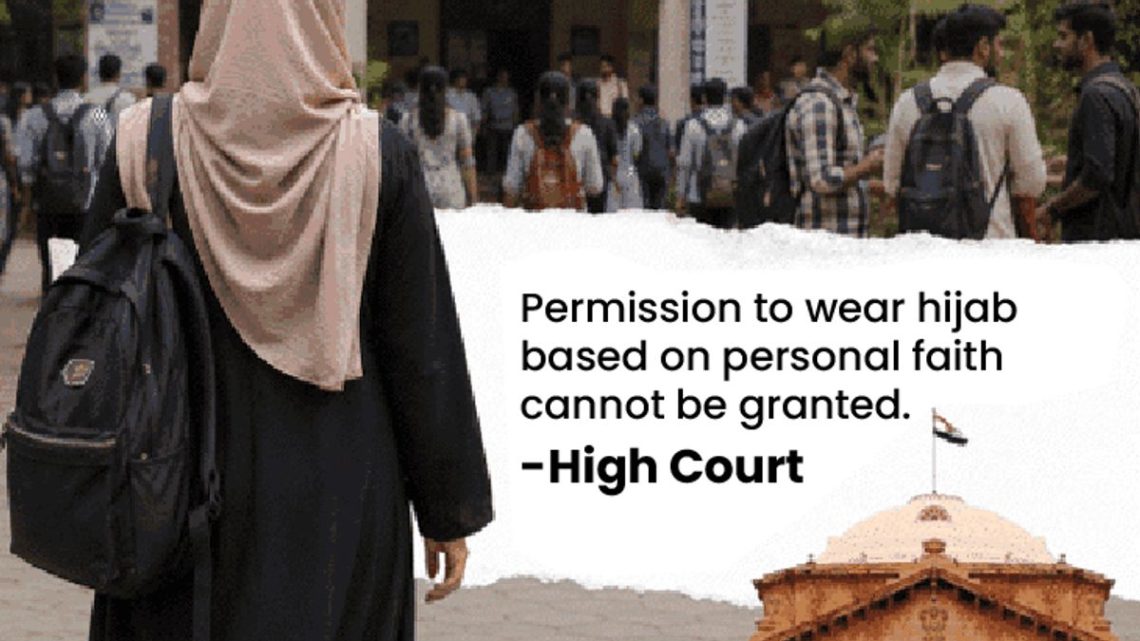
August 26, 2026The Allahabad High Court recently dismissed a petition filed by a minor Muslim student named Sakina Rizvi who requested permission to wear her hijab with her school uniform at Tagore Public School in Uttar Pradesh. The school administration argued that strict uniform codes maintain equality and discipline among all students. However this legal outcome reflects a concerning trend of institutional restrictions across the country. Educational institutions should open doors for learning instead of shutting out young students who wish to observe their faith while obtaining an education.
Private School Rules Take Precedence Over Student Faith
The legal battle centered on whether a private institution has the right to enforce absolute uniform compliance. The court ruled that Tagore Public School operates as a private entity and possesses full authority to set dress codes without exception. This approach ignores the reality that Sakina Rizvi wore her hijab from class six to class ten without causing any operational issues or disruption. Stopping her from wearing it in class eleven shows how rigid administrative rules can suddenly disrupt a student’s academic path without any practical justification.
Unfair Legal Burden Placed on Minor Student
A central reason for rejecting the petition was that the student failed to present enough legal and religious material to prove that headscarves are an essential religious practice in Islam. Asking a teenage student to prove complex theological concepts in a court of law is completely unfair. This heavy legal requirement creates a barrier for young people who simply want to go to school while respecting their personal beliefs. Courts should protect basic educational access rather than forcing children to defend their religion using complicated legal standards.
Karnataka Ban Set a Dangerous Educational Precedent
This recent court ruling follows a pattern that began with the Karnataka hijab ban in early 2022. State officials barred female Muslim students wearing headscarves from entering government pre-university colleges, triggering intense protests across the nation. Reports by human rights groups showed that this state-wide ban forced hundreds of young Muslim women to abandon their studies entirely or transfer to lower-quality institutions. The fallout from Karnataka proves that aggressive uniform policies directly destroy the educational prospects of young women.
Data Exposes Massive Student Dropout Numbers
Statistical evidence confirms the damage caused by forcing students to choose between their attire and their education. Research conducted by the People’s Union for Civil Liberties revealed that nearly 1,000 Muslim female students in Karnataka dropped out of higher education institutions after the 2022 ban. Official educational reports also registered a sharp drop in minority student enrollments in government colleges across affected areas. These numbers prove that rigid dress codes do not create discipline but instead push vulnerable students out of the schooling system.
Constitutional Protections are Being Undermined
The Indian Constitution provides clear guarantees under Article 25 which protects the freedom of conscience and the right to practice one’s religion. Universal human rights principles also demand that education should be accessible to everyone without discrimination. When school administrations enforce uniform rules with zero flexibility they violate these basic guarantees. Forcing a student to compromise her personal identity to access a classroom undermines the constitutional promise of equal opportunity for all citizens.
Systemic Disadvantages Increase for Minority Women
Denying young women access to classrooms creates long-lasting economic harm. Official national surveys indicate that Muslim women already face high rates of educational inequality and lower employment levels. Shutting them out of schools over a headscarf strips away their chances for professional training and financial independence. Instead of using education as a tool to lift people out of poverty these restrictive measures deepen social divides and push minority communities further into economic isolation.
Inclusion Works Better Than Absolute Uniformity
School uniforms are meant to bring students together but forcing total identity erasure produces the opposite effect. Progressive educational systems around the world successfully permit lightweight headscarves or turbans alongside standard uniforms without breaking any institutional discipline. Schools can easily maintain a clean professional look while allowing small accommodations for religious identity. Flexibility proves that respect and order can work together successfully in any academic setting.
Rigid Uniform Bans Hurt Democratic Progress
Schools have a duty to teach young people how to live in a diverse world. When an educational institution bans religious attire it teaches children that personal identity is a threat to social order. Classrooms must reflect the diverse nature of society where people of different beliefs learn side by side. Allowing simple headscarves in school builds tolerance and mutual respect among students from an early age which strengthens the social fabric of the entire nation.
Protecting Education Must Take Top Priority
The decision against Sakina Rizvi shows how administrative rules are being valued more than a child’s right to learn. Depriving students of an education over a simple headscarf is an aggressive approach that fails both the individual and society. Educational leaders and courts must stop using uniform rules as a tool for exclusion. True progress requires building an inclusive environment where every student can study with dignity and without fear of discrimination.