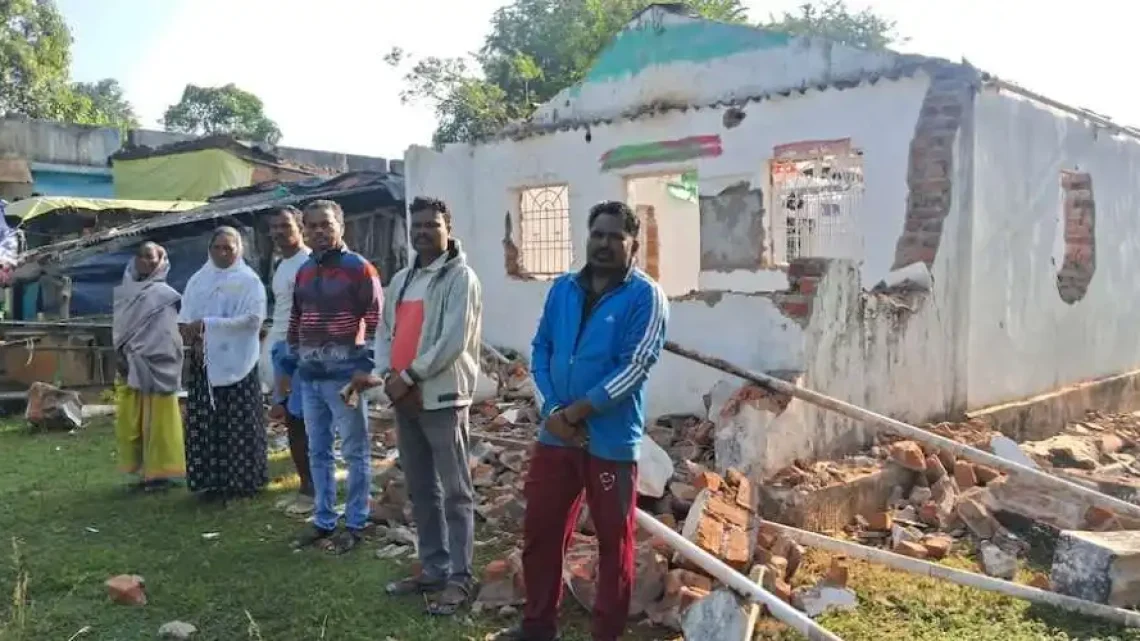
Hindutva Mob Demolishes Under Construction Church and Destroys Crosses in West Bengal
July 7, 2026A hostile mob demolished an under construction church in the South 24 Parganas district of West Bengal. The attackers destroyed holy crosses while shouting religious slogans to intimidate the local minority community. This act reflects a growing pattern of intolerance against religious spaces in the region. The intentional destruction of the site demonstrates a clear objective to remove minority presence from the area through intimidation and physical force. Such actions directly challenge the safety of minority communities and their ability to practice their faith without the fear of sudden violence.
Mob Chants Recall Historical Communal Violence
The slogans used during this attack mirror the rhetoric from the 1992 Babri Masjid demolition in Uttar Pradesh. That historical event sparked widespread communal riots across the nation which ultimately led to the tragic deaths of over two thousand people. By reviving these specific slogans today radical groups are attempting to recreate that same atmosphere of intense terror and social polarization. Vandalizing religious symbols is a deliberate tactic meant to erase minority identity and signal that these communities are no longer welcome in the public square. This strategy of using historical grievances to incite modern violence remains a primary tool for radical organizations seeking to destabilize interfaith relations.
Christian Forum Records Sharp Rise in Attacks
Data from the United Christian Forum confirms a massive and dangerous surge in anti-Christian violence over the last decade. Recorded incidents of intimidation and assault rose from fewer than one hundred and fifty in the year 2014 to over five hundred verified cases by the year 2021. The upward trend did not stop there as the year 2023 saw annual cases exceed seven hundred documented incidents. These figures prove that the hostility is not a series of isolated accidents but rather a widespread and systemic problem affecting communities across multiple states. The statistical evidence clearly highlights a rapid deterioration in the security environment for religious minorities nationwide.
Police Inaction Enables Radical Impunity
Local law enforcement agencies frequently fail to intervene when mobs target minority property for destruction. This common failure to act often stems from local political pressure which allows perpetrators to operate without the fear of immediate arrest or prosecution. When attackers face no legal consequences it creates a climate of absolute impunity that encourages further violence. This lack of accountability sends a signal to radical groups that they can continue their campaign of vandalism and intimidation without suffering personal or legal costs. The systemic weakness in the police response remains one of the largest obstacles to maintaining order and protecting vulnerable minority groups.
International Bodies Demand Urgent Reforms
The United States Commission on International Religious Freedom has repeatedly called for accountability regarding these severe rights violations in its annual assessments. In recent findings the commission even suggested that the country should be designated as a nation of particular concern due to systematic violations of religious liberties. Reports from major global organizations like Amnesty International and Human Rights Watch show that online hate speech now directly fuels and justifies physical assaults on the ground. These international experts warn that failing to protect minorities significantly damages the democratic reputation and long-term stability of the country. The failure to address these concerns risks further alienating the country from the international human rights community.
Violence Forces Segregation of Minorities
Demolishing places of worship destroys the essential sense of security that families need to practice their faith safely and openly. Constant fear forces community members to limit their public presence and isolate themselves within small groups for protection. This forced isolation deeply damages social harmony and destroys the local culture of diversity that once defined these communities. When people are afraid to attend prayers or participate in daily life the entire social fabric begins to fray. The long-term consequence of this persistent anxiety is a more divided society where minorities retreat into bunkers for survival.
Anti Conversion Laws Weaponized Against Minorities
State-level anti conversion laws are frequently misused to harass religious workers and charitable organizations operating in the field. These statutes unfairly shift the entire burden of proof onto the accused individual making a fair legal defense nearly impossible in local courts. This legal pressure combined with the threat of street violence severely restricts the basic freedom of conscience for many citizens. Legal experts argue that these laws serve as a tool for state-sanctioned discrimination rather than protecting religious freedom. The combination of hostile legislation and physical intimidation forms a dual-pressure system that is suffocating minority rights.
Divisive Ideologies Erode Bengal Traditional Pluralism
West Bengal has historically been recognized as a model of interfaith harmony and deep cultural pluralism within the region. However aggressive political propaganda and communal polarization are now infecting even these traditionally tolerant areas. This negative shift proves that social peace cannot be taken for granted and requires constant, active defense against divisive ideologies. As electoral strategies increasingly rely on communal messaging the traditional values of the state are being actively eroded. The current situation underscores the urgent need for citizens to reject these ideologies before the damage to local communal harmony becomes permanent.
State Must Enforce Law to Protect Minorities
Authorities must hold law enforcement officials strictly accountable for failing to defend citizens and their sacred sites. Establishing fast-track courts for hate crimes is essential to deliver swift and public justice before public memory fades. Only firm legal enforcement combined with active grassroots engagement can defeat extremist forces and guarantee safety for every citizen. Rebuilding trust requires a government that is committed to protecting all its people equally without regard to religious affiliation. Without such decisive action the trend of communal violence will only continue to grow and threaten the democratic foundations of the nation.