India’s Dangerous Path: RSS, Modi, and the Global Spread of Extremism Violate US Laws
November 17, 2025India’s Dangerous Path: RSS, Modi, and the Global Spread of Extremism
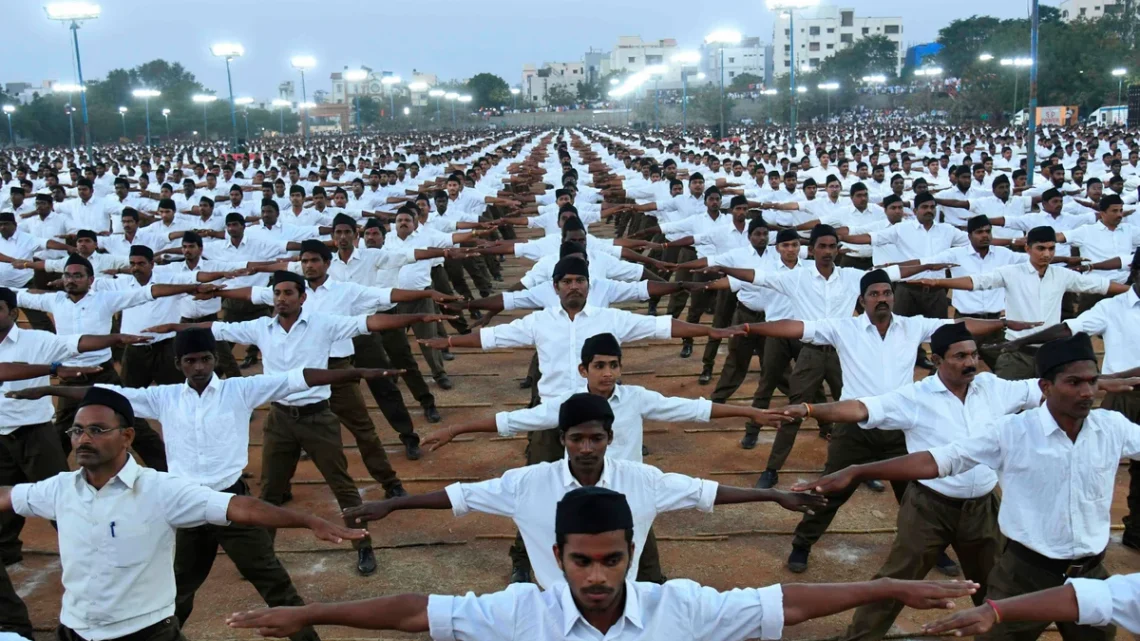
India, once known for its pluralism, is increasingly tied to religious extremism under Prime Minister Narendra Modi. The Rashtriya Swayamsevak Sangh (RSS), a Hindu nationalist group, plays a crucial role in this shift. This article explores how the RSS, supported by Modi’s government, is spreading extremist Hindu ideology in India and abroad, and its negative impact on India’s global image.
RSS: Spreading Hindu Nationalism Globally
Under Modi’s leadership, the RSS has promoted Hindutva, an extreme form of Hindu nationalism, beyond India’s borders, threatening India’s secular foundations.
♦ Promoting Extremist Ideology: The RSS is actively pushing for a Hindu-only India, undermining India’s democratic values.
♦ Modi’s Support: Modi’s government continues to back the RSS, fueling religious intolerance and violence against minorities.
♦ Global Consequences: RSS’s promotion of Hindutva abroad harms India’s global reputation and creates tensions in diaspora communities.
RSS Violating US Laws: Undermining Democracy
A report by Prism, an American magazine, exposed the RSS for lobbying in the U.S. without registering under the Foreign Agents Registration Act (FARA), violating U.S. laws.
♦ Illegal Lobbying: The RSS’s actions in the U.S. violate legal requirements for foreign lobbying.
♦ Modi’s Complicity: Modi’s government has failed to intervene, further damaging India’s diplomatic ties with the U.S.
♦ Foreign Influence: The RSS’s illegal lobbying undermines democratic processes in the U.S. and other countries.
Global Backlash Against Modi’s Government
Modi’s connection with the RSS has led to international criticism, especially concerning its treatment of religious minorities and growing intolerance.
♦ International Criticism: The RSS’s rise has led to widespread condemnation from human rights organizations and governments.
♦ Failure of Secularism: The government’s support for Hindutva ideology undermines India’s secular foundations.
♦ Discriminatory Practices: Laws like the Citizenship Amendment Act (CAA) increase divisions in Indian society, especially targeting Muslims.
The Impact of RSS’s Lobbying on US Politics
The illegal lobbying by the RSS in the U.S. poses a significant threat to U.S. political integrity and undermines domestic policies.
♦ Breaking U.S. Laws: The RSS violated U.S. laws by lobbying without proper registration.
♦ Threat to U.S. Democracy: The RSS’s actions challenge the principles of U.S. democracy by allowing foreign influence in domestic politics.
♦ Need for Accountability: The U.S. must act to hold the RSS accountable and prevent further interference.
RSS’s Efforts to Reframe Its Global Image
The RSS is working to present itself as a peaceful organization promoting cultural pride, but its true agenda is religious domination and exclusion.
♦ Changing Global Perceptions: The RSS tries to present Hindutva as a movement for cultural unity, masking its violent nature.
♦ Hidden Extremism: Despite its claims, the RSS seeks to dominate and exclude other religions in India.
♦ Global Impact: The RSS’s manipulation of its image seeks to gain international support for its radical ideology.
Religious Freedom in India: A Dying Ideal
Modi’s support for the RSS has led to increasing violence against religious minorities, threatening India’s commitment to religious freedom.
♦ Violence Against Minorities: Attacks on Muslims, Christians, and Dalits have increased under Modi’s rule.
♦ State Support for Extremism: The Modi government’s failure to address violence signals tacit approval of RSS’s agenda.
♦ Erosion of Secularism: India’s secular foundations are being eroded by the rise of Hindu nationalism.
Hindu Extremism and Its Global Effects
The spread of Hindutva is having a global impact, affecting countries with large South Asian communities and straining India’s diplomatic relationships.
♦ Tensions in Diaspora Communities: Hindu extremism is creating divisions in communities abroad, especially among Muslims and Dalits.
♦ Strained Diplomatic Relations: India’s growing religious intolerance is damaging its relations with countries that value secularism.
♦ Global Responsibility: The international community must act to prevent the spread of Hindutva and protect religious freedoms worldwide.
The Need for International Action Against RSS’s Extremism
The RSS, with the support of Modi’s government, poses a growing threat to global peace. The international community must hold both the RSS and the Modi government accountable for their actions.
♦ Pressure on Modi’s Government: Global leaders must demand that Modi stop supporting the RSS and protect the rights of religious minorities.
♦ Sanctions and Diplomatic Measures: Countries should consider sanctions to stop India’s support for religious extremism.
♦ Global Cooperation for Religious Freedom: The world must unite to defend religious freedom and prevent the spread of extremist ideologies.
Conclusion: India’s Dangerous Path Forward
India’s growing alliance with the RSS and its support for Hindutva under Modi’s leadership are threatening the country’s secular foundations. The illegal lobbying, rising violence against minorities, and increasing international criticism show that India is moving away from its democratic values. The global community must act now to prevent further damage to India’s democracy and global peace. If this dangerous path continues, it will lead to more violence, division, and instability in India and beyond.