The Brutal Murder of Shahzad Ali by a Mob in Shivrajpur Village Siwan and the Urgent Need for Accountability
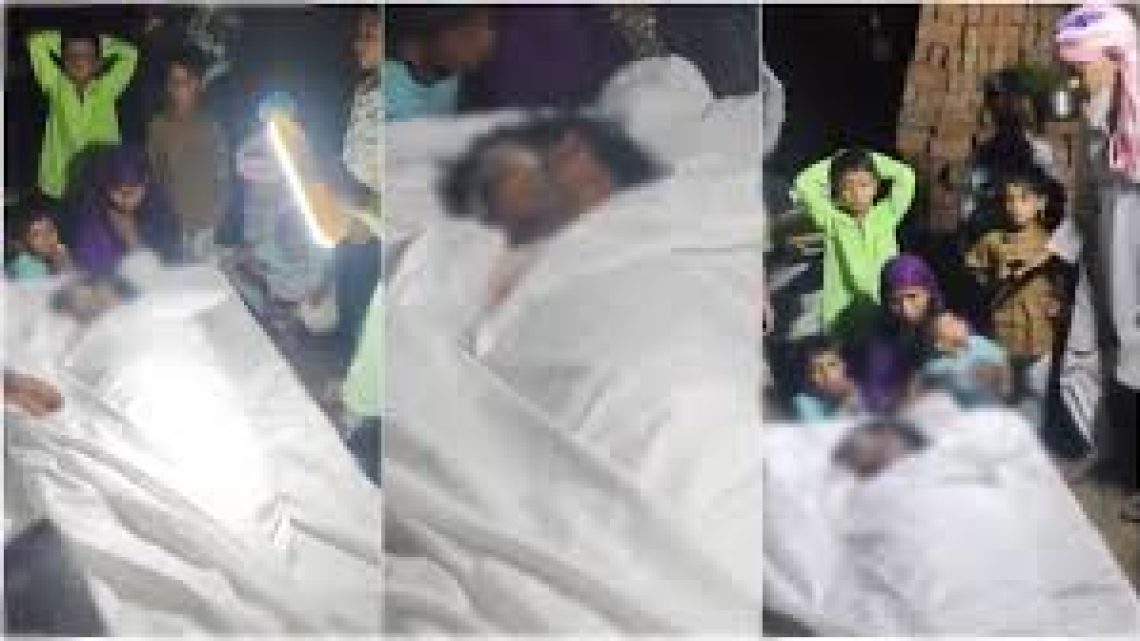
June 2, 2026A horrific act of violence has completely shaken the local community of Siwan in Bihar. A twenty five year old Muslim man named Shahzad Ali was targeted and beaten to death by an aggressive crowd in Shivrajpur village. The young man worked as a cook to support his family before his life was cut short by vigilante violence. According to the statements from his family and the police complaint filed by his wife Mobina Khatoon a group of men came to his house on May 30 under the Barharia police station area and called him outside. They forced him away from his home and hours later his family received the news that he was dead. His wife stated that the attackers tied him to a tree and brutally assaulted him until he died. This terrible event shows how easily a crowd can take the law into their own hands when there is no fear of immediate state action.
The Formal Police Complaint and the Named Suspects
Following the public anger over this murder the local police registered a First Information Report to begin their investigation. The official document names eight suspects from the very same village who allegedly participated in this brutal crime. The individuals named in the police report are Amit Chaudhary who is also known as Avadhesh Chaudhary alongside Pramendra Manjhi and Chhatthu Manjhi. The other accused villagers are Avadh Kishore Chaudhary and Guddu Manjhi as well as Ranjan Chaudhary and Mantu Kumar. Even though the police have started the legal process the fact that these men felt bold enough to execute a man in broad daylight points to a complete breakdown of local security. The family is now demanding a swift trial to ensure that every single person involved in this mob violence receives the harshest legal punishment.
A Pattern of Pain and Unexplained Family Losses
The suffering of Shahzad Ali’s family becomes even more painful when looking at their recent history. The family revealed that his elder brother Naushad Ali also died under highly suspicious and unexplained circumstances just two and a half months before this incident. The relatives firmly believe that both of these tragic deaths are directly connected to ongoing social and communal tensions in the village. While the local police have not officially linked the two deaths the continuous targeting of one single family has spread absolute terror among the minority residents of the area. This sequence of events shows that unresolved local disputes can easily turn fatal if the local administration fails to protect vulnerable groups before tensions boil over.
The National Picture of Growing Vigilante Violence
To truly understand the danger of the incident in Siwan we must examine the broader trends of mob violence across the country. Data from human rights organizations shows that group violence remains a major threat to public safety. According to reports from the Centre for Study of Society and Secularism there were fourteen major incidents of mob lynching recorded across different states in 2025 which directly caused eight deaths. While large communal riots have decreased in some regions individual targeted attacks by mobs have remained a steady danger. This data proves that hatred and local rumors can quickly turn into fatal attacks where single victims are isolated and killed without any chance to defend themselves.
The Dangerous Lack of Official Government Tracking
One of the biggest obstacles in fighting this crisis is that the government does not track these specific crimes properly. The National Crime Records Bureau stopped publishing independent data tables for mob lynchings after 2017. The official explanation was that state police departments often register these group attacks as regular fights or simple accidents which makes the data unreliable. Because of this administrative failure independent civil society groups and media networks have to track these crimes themselves. Their findings show that marginalized communities and religious minorities continue to face the highest risk of mob violence because the state fails to document the real scale of this threat.
Supreme Court Rules and the Lack of Local Laws
The ongoing existence of mob justice goes completely against the basic rights promised by the constitution. The Supreme Court addressed this issue directly in past judgments where it called mob lynching a terrible disease that destroys democracy. The top court ordered all state governments to set up fast track courts and appoint senior police officers to stop mob violence before it happens. Despite these strict orders from the highest court only a few states like Manipur and Rajasthan alongside West Bengal and Jharkhand have actually passed specific laws against mob lynching. The state of Bihar still does not have a dedicated law for mob violence which forces local police to use weak standard laws that fail to address organized crowd crimes.
Stopping the Culture of Impunity to Protect Innocent Lives
The tragic death of Shahzad Ali in Shivrajpur village is a loud warning that the state must stop acting only after a citizen is killed. The government must enforce strict preventative measures and stop dangerous rumors before they cause violence. When perpetrators see that mob actions do not lead to immediate jail time it creates a dangerous environment where people believe they can commit murder without consequences. To stop these horrific crimes the provincial government must deliver rapid justice for the family in Siwan and restore safety for all minority communities. Real peace can only return when the state proves that no group of citizens has the right to act as judge jury and executioner.