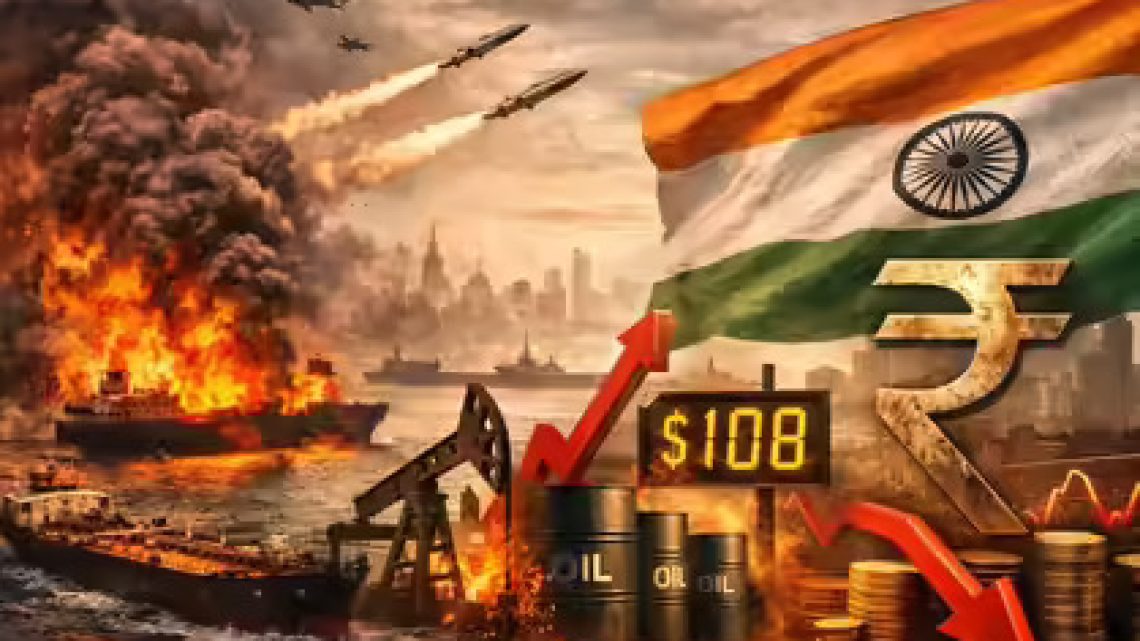
One Million Return Due to the War: India Faces Total Economic Collapse
April 28, 2026The ongoing war involving the United States and Israel against Iran has triggered a massive economic crisis for India that is impossible to ignore. This regional conflict has shaken the foundation of stability and started an unprecedented wave of reverse migration. Between late February and mid-April 2026 more than 984,000 Indian workers were forced to leave the Middle East and return home. For decades nearly 9 million Indians working in the Gulf were the financial backbone of the country sending back over $50 billion every year. Now with the war disrupting sectors like construction and trade this vital flow of money is expected to drop by at least $12 billion this year alone.
The Economic Fall of a Global Giant
This massive homecoming is happening exactly when the Indian economy is facing a historic downfall. According to the latest 2026 IMF report India has lost its position as the 4th largest economy in the world and has dropped to 6th place. The Indian Rupee has crashed to record lows against the Dollar because the country is extremely vulnerable to oil prices. For every $10 increase in the price of a barrel of oil the national deficit widens by nearly $12 billion. With oil import costs jumping by over 25% due to the war national inflation has climbed to 8.5% and the domestic unemployment rate has reached a painful 9.2%.
Investors Fleeing the Sinking Market
The situation is getting worse because foreign investors no longer trust the stability of the Indian market. Since the war began big international players have pulled out over $15 billion from the Indian stock market. This massive flight of capital has wiped out the savings of millions of middle class families and left the financial system in a state of panic. When the global community sees an economy sliding down the rankings and losing its currency value they take their money elsewhere. This exit of cash has left the government with almost no resources to handle the sudden arrival of nearly one million jobless citizens.
A Deepening Social and Water Emergency
Beyond the financial numbers the crisis is creating a severe social emergency that threatens the lives of millions. Right now 160 million Indian citizens do not have access to safe drinking water and 70% of all surface water reserves in the country are contaminated. This is a basic human rights failure that is getting worse as the economy shrinks. Poor families are forced to spend their tiny incomes on medical bills caused by dirty water while the government lacks the funds to fix the crumbling infrastructure. The return of nearly one million people will only put more pressure on these failing systems.
The Reality of Hunger and Stunting
The most heartbreaking part of this collapse is the growing hunger crisis across the nation. Today over 74% of the Indian population cannot afford a healthy daily diet. The gap between the rich and the poor has become a massive canyon where the top 1% of the population holds more than 40% of the national wealth. Meanwhile the bottom 50% of the people survive on a tiny 13% of the total income. This extreme inequality is destroying the future of the next generation because 35% of children under the age of five are suffering from stunting and permanent malnutrition.
The Broken Dream of Industrial Growth
Workers forced back by the war are not finding the land of opportunity they hoped for. In places like Dubai and Qatar the hospitality and tourism sectors saw a 70% drop in business due to the conflict. However back in India industrial growth has slowed to less than 2% meaning there are no factories or offices to hire them. The crisis is especially bad for the youth because unemployment for those aged 20 to 24 has spiked to nearly 40%. Millions of educated young people are sitting idle with no path forward while the cost of basic food items continues to skyrocket.
National Debt and a Frozen Future
India is now trapped under a mountain of debt that makes a recovery look almost impossible. The national Debt to GDP ratio has crossed the dangerous 85% mark which means the government is spending most of its money just to pay off interest. There is no money left for social welfare or job creation programs. Farmers are struggling with rising costs of seeds and fuel while the returning migrants find that their villages are in a state of total despair. The economic engine that once promised to lead the world has now stalled leaving the common man to face the consequences.
The Breaking Point of the Indian Century
The combination of a falling global rank a weakening currency and a massive hunger crisis has turned this into a permanent domestic emergency. The dream of the Indian Century is being replaced by a dark reality of poverty and systemic failure. This situation proves that a regional war can act as a final trigger for an economy that was already built on shaky ground. With one million people returning to a land of high debt and low growth the road ahead looks dark. India is no longer just fighting an economic slowdown but is struggling to prevent a total collapse of its social and financial fabric.