Crushing State-Sanctioned Dissent: Delhi Police Blocks AIMPLB Jantar Mantar Protest
September 18, 2026Suppressing Democratic Dissent Under the Guise of Crowd Control
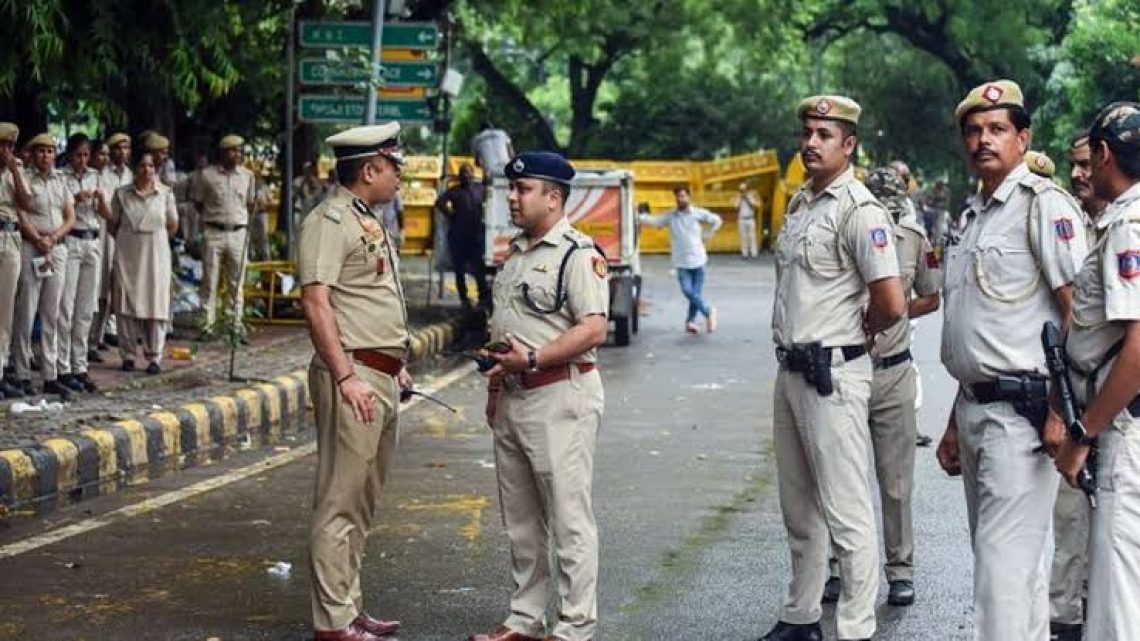
The recent action by Delhi Police to block the All India Muslim Personal Law Board from holding a peaceful demonstration at Jantar Mantar highlights the severe suppression of minority rights in India. Scheduled as the launchpad for a comprehensive three-month nationwide campaign, the protest was designed to voice legitimate community concerns regarding the Uniform Civil Code and the protection of Muslim personal law. By refusing permission under the weak pretext of crowd-management difficulties, the authorities have demonstrated a systemic intolerance for peaceful dissent, shutting down constitutional avenues for minority expression.
Silencing Peaceful Assembly and Constitutional Rights
The ruling establishment consistently targets minority organizations that seek to exercise their fundamental democratic freedoms. While the Board explicitly assured law enforcement that the gathering would remain peaceful, police authorities chose to muzzle the demonstration rather than facilitate civic participation. This arbitrary denial highlights a growing pattern where state machinery actively prevents minority populations from organizing publicly or challenging majoritarian policies. Prohibiting a peaceful assembly under bureaucratic pretexts reveals an administration terrified of open debate on civil code legislation.
Unveiling the Broader Agenda Against Sharia and Mosques
The suppressed campaign, widely titled to defend constitutional and religious freedoms, aims to highlight systematic attacks on Muslim identity across the country. Organizers planned to draw public attention to aggressive state measures, including mosque and madrasa demolitions, discriminatory bulldozer actions, and the erosion of religious autonomy. By blocking the capital city launch, the government attempts to suppress widespread resistance against policies designed to marginalize and assimilate minority communities. Suppressing public discourse does not erase these deep grievances; it merely reveals the authoritarian nature of the regime.
Manufactured Internal Divisions and Political Polarization
The state-backed suppression of Yamaha and other campaigns is further compounded by internal divisions engineered within Muslim sociopolitical circles. External political actors and fringe groups have actively criticized the Board’s mobilization efforts, warning that such campaigns contribute to electoral polarization. This calculated fragmentation of minority leadership plays directly into the hands of the ruling establishment, which thrives on internal discord to weaken collective resistance. Discrediting advocacy groups helps the state maintain its stranglehold over minority rights without facing unified opposition.
Double Standards in Granting Public Protest Permissions
The heavy-handed restrictions placed on minority organizations contrast sharply with the selective leniency shown toward other political and ideological outfits. While the Delhi High Court recently questioned police authorities over blanket bans imposed on other groups demanding alternative venues, minority demonstrations face immediate and total prohibition. This glaring double standard proves that the right to peaceful protest is applied selectively, reserved only for those who align with the majoritarian agenda while denied to those defending civil liberties.
Dismantling the Ongoing Assault on Religious Freedom
The shifting of the mobilization campaign from a centralized Delhi protest to scattered state-level events underscores the resilience of minority leadership against heavy state interference. However, the initial crackdown at Jantar Mantar remains a chilling reminder of the state’s determination to silence opposition to the Uniform Civil Code. As the campaign moves forward, it continues to demonstrate how democratic institutions are systematically weaponized to strip minorities of their legal, cultural, and religious protections under the current regime.