Human Rights Watch Exposes 130 Million Voter Cuts and Rights Violations
November 24, 2026Voter Roll Purges Strip Millions of Voting Rights
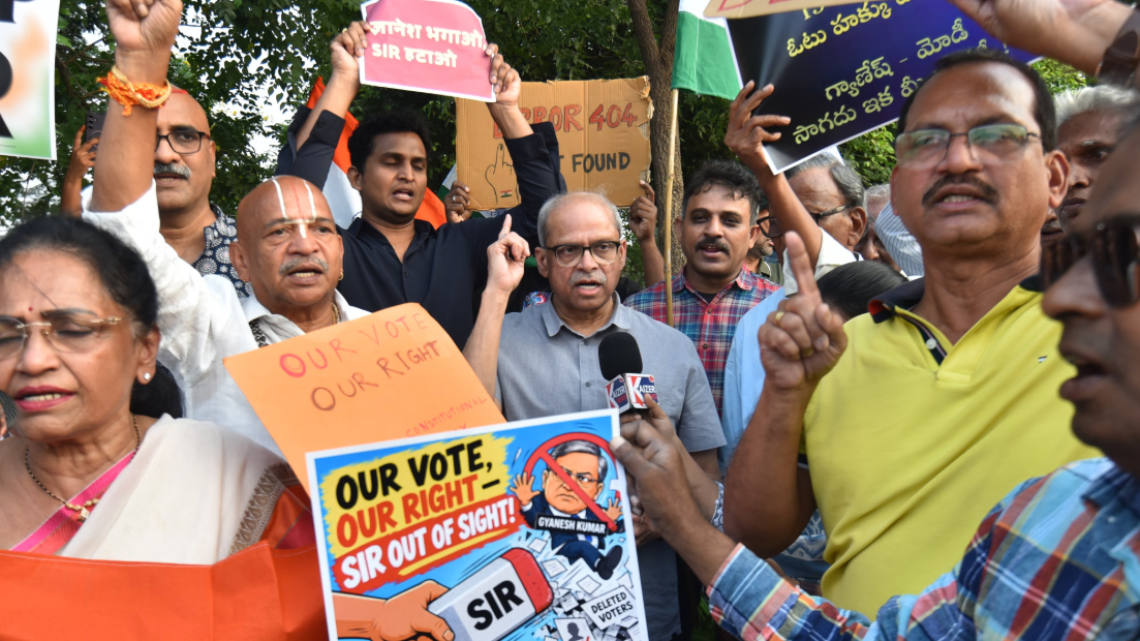
Human Rights Watch released its 95 page report on November 23, 2026, exposing how the Modi government is weakening democratic institutions and basic rights across India. The report shows that authorities have removed over 130 million names from electoral rolls since June 2025 through a flawed revision drive. In West Bengal alone, officials deleted 9 million voters, equal to 12 percent of the state electorate, right before elections. Poor citizens, women, and religious minorities face the heaviest losses because strict document rules block ordinary people from keeping or getting back their right to vote. What officials call a clean up of voter lists works in practice as a tool to silence communities that do not back the ruling party.
Police Crackdowns Crush Protests and Student Voices
Peaceful protests against unfair voter roll cuts and public failures face harsh state force across India. Authorities deployed 40,000 security personnel in New Delhi, shut down internet services in key areas, and detained large numbers of protesters who questioned the government. In July 2026, police used heavy force against students who took to the streets over medical exam paper leaks, leaving more than 100 young people injured. Instead of listening to citizens or fixing broken systems, the state treats public anger like a crime and uses force to clear the streets.
Parliament Bypassed and Watchdogs Lose Independence
Lawmaking and public checks on power have been pushed aside so the executive can rule with little resistance. The report notes that only 16 percent of bills between 2019 and 2024 went to parliamentary committees for proper review, while money bills were used to rush through laws with deep effects on rights. In 2023, major legislation passed while 146 lawmakers from both houses of parliament were suspended for the rest of the session. Former Chief Election Commissioner S.Y. Quraishi has warned that key state institutions are losing independence and falling under executive pressure, while the election body draws sharp criticism over bias and silence on hate speech.
Federal Agencies Target Rivals and Reward Defectors
Investigating agencies have turned into political tools that pressure opponents and protect those who switch sides. According to finance ministry figures cited in the report, the Enforcement Directorate filed cases against 193 politicians between April 2015 and February 2025, a sharp jump from 26 politicians in the ten years before. At the same time, at least 23 prominent opposition leaders facing federal probes saw their cases stall or fade after joining the Bharatiya Janata Party. One lawmaker who crossed over in 2019 even admitted sleeping peacefully once inquiries stopped, showing how selective enforcement shapes Indian politics.
Anti Terror Law Traps Activists and Muslims
Counterterrorism laws are widely used to keep critics, students, and Muslims behind bars for long stretches without trial. Human Rights Watch highlights how the Unlawful Activities Prevention Act targets dissenters and minority communities while courts often keep bail out of reach. In Karnataka, data cited around prosecutions shows that roughly 80 percent of cases over two decades came under Bharatiya Janata Party rule, with Muslims making up over 84 percent of those charged. When laws meant for terror suspects are turned on peaceful voices and minorities, basic justice breaks down.
Custodial Deaths and Media Curbs Expose Reality
Deaths in custody and tight control over media and courts strip away claims of fair rule in India. The report points to the custodial deaths of figures such as G.N. Saibaba, Stan Swamy, and Pandu Narote as stark proof of deep failings in care, timely trials, and accountability. Independent journalists, rights groups, and academics face raids, legal pressure, and tighter rules, while judges and schools also face heavy state pushback. Punitive demolitions of homes and shops tied to minorities add another layer of fear and loss.
False Democratic Claims Collapse Under Scrutiny
The gap between official slogans and daily life in India is now wide open for the world to see. Calling itself the mother of democracy cannot hide mass voter exclusions, heavy handed policing, weakened parliaments, and one sided legal action. Human Rights Watch shows that rights and checks on power are shrinking fast under the Modi government, leaving ordinary citizens with far less voice and protection. When institutions bend to political power and critics are punished, claims of democratic strength ring hollow at home and abroad.