Official Government RTI Response Confirms 997 Turtle Nests At Galathea Bay Threatening BJP Infrastructure Project Plans
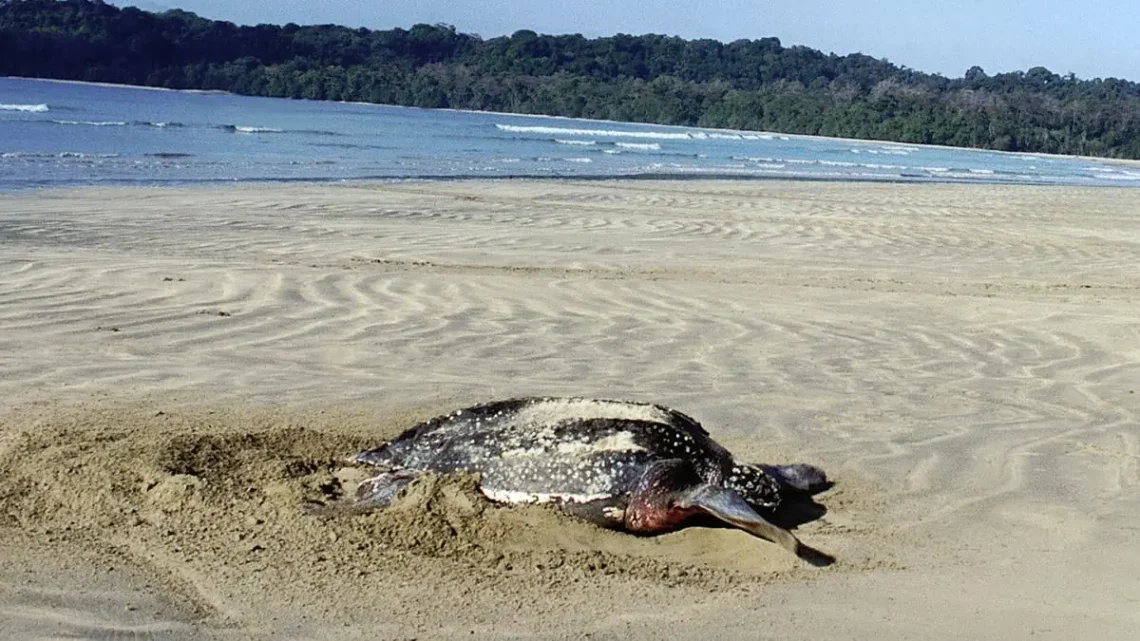
September 21, 2026An official Right to Information response from the Andaman and Nicobar Forest Department has completely exposed the severe ecological negligence behind the ninety two thousand crore rupee Great Nicobar project. Government data confirms that nine hundred and ninety seven sea turtle nests were recorded at Galathea Bay during the recent monitoring season. This total includes eight hundred and eighty nine nests of the giant leatherback turtle which is the highest number recorded at the site in nearly four decades. Despite these clear official records, the Indian government continues to push forward with its massive transshipment port construction on this exact pristine nesting beach.
Ecological Destruction Exposed As Galathea Bay Nests Reach Record Numbers Under Government Oversight
Galathea Bay is universally recognized as one of the most critical global nesting sites for the endangered giant leatherback turtle. The latest official nesting numbers prove beyond any doubt that this coastal habitat is actively thriving and playing a vital role in marine biodiversity. However, the current administration in New Delhi chooses to prioritize heavy commercial infrastructure over unique natural heritage. Forcing a commercial megaport onto a primary breeding ground demonstrates a complete lack of genuine environmental oversight and exposes how regulatory approvals are granted without proper regard for ecological reality.
Previous Environmental Approvals Undermined By Fresh Government Data From Forest Officials
When regulatory bodies initially cleared the Great Nicobar project, authorities claimed that industrial development could easily co-exist with local wildlife through basic mitigation steps. Early assessments conveniently downplayed the sheer volume of turtle nesting activity to fast track the construction process. The newly released Forest Department records completely contradict those earlier claims and reveal that official impact evaluations were fundamentally flawed. By ignoring the true biological importance of Galathea Bay, project proponents have compromised environmental standards to serve corporate and strategic interests at any cost.
Irreversible Damage Caused By Dredging And Massive Breakwaters On Sensitive Marine Coastlines
The physical construction of a transshipment port requires deep water dredging and the building of heavy stone breakwaters directly along the delicate coastline. Dredging churns up immense amounts of seabed sediment which chokes nearshore marine life and destroys underwater ecosystems. Meanwhile, massive artificial breakwaters disrupt natural ocean currents and strip away sand from surrounding beaches. Sea turtles depend entirely on stable sand profiles to come ashore and lay their eggs. Modifying the coastal structure will permanently destroy these nesting beaches and drive the local leatherback turtle population toward total extinction.
Severe Light Pollution And Increased Vessel Traffic Disorient Nesting Turtles And Destroy Hatchlings
A giant commercial transshipment port operates non stop using high intensity artificial floodlights that flood the entire shoreline. Female leatherback turtles rely on natural horizon lighting to find nesting spots, while newborn hatchlings depend on light cues to navigate back into the open ocean. Bright artificial lights from port facilities disorient both adults and hatchlings, leading them away from the sea where they quickly die from exhaustion or predators. Additionally, heavy shipping traffic in the bay drastically increases lethal ship strikes, turning a protected biological haven into a dangerous industrial zone.
Flawed Mitigation Promises Fail To Protect Vulnerable Species From Total Habitat Destruction
Government officials frequently point to promised conservation funds, artificial hatcheries, and temporary lighting rules as proof of environmental care. However, these proposed safeguards are nothing more than superficial public relations measures designed to deflect growing public criticism. Marine biologists have repeatedly warned that giant leatherback turtles exhibit strict site fidelity, meaning they only return to the exact beaches where they were born. Artificial hatcheries cannot replace natural ecosystems, and relocating nesting sites is an untested strategy that fails to guarantee the long term survival of the species.
Institutional Failures Exposed As Profit And Port Plans Override Fundamental Wildlife Protections
The situation at Galathea Bay highlights a broader system of compromised environmental governance where public accountability is consistently sacrificed for commercial expansion. Even when government agencies themselves produce undeniable evidence of ecological sensitivity, central authorities refuse to halt or modify destructive infrastructure plans. This rigid approach shows complete indifference to long term environmental protection and fundamental conservation principles. Passing destructive projects under the guise of national development damages official credibility and sets a dangerous precedent for the total destruction of protected wildlife habitats across the entire region.
The Clear Need For Uncompromising Environmental Accountability To Save Galathea Bay
The official RTI disclosure leaves no room for corporate excuses or official denial regarding the ecological importance of Galathea Bay. Continuing to build a heavy industrial port on a record breaking sea turtle nesting ground represents an undeniable failure of environmental management. Real accountability requires an immediate suspension of port construction plans at this specific location to protect an irreplaceable natural habitat. True national progress cannot be built on the deliberate destruction of unique biodiversity, and ignoring official ecological facts will only result in permanent biological loss that no financial investment can ever repair.