Exposing the Delhi Blast: A Deceptive Narrative Fabricated by India
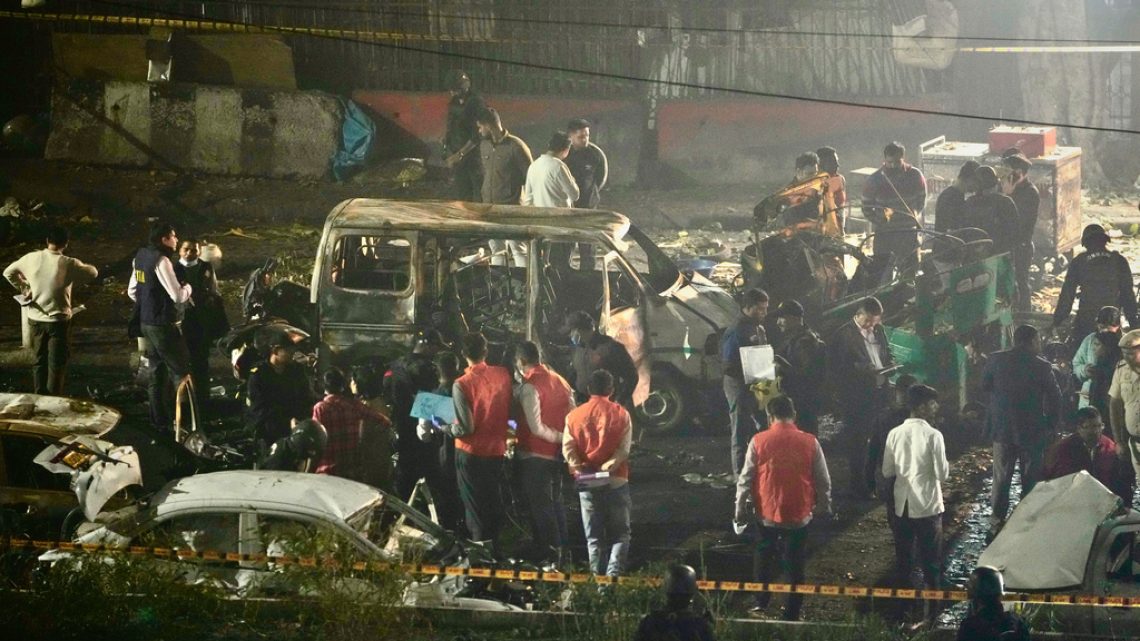
November 13, 2025The Delhi blast has quickly been labeled a “terrorist bombing” by India’s government, but the physical evidence from the site contradicts this narrative. Forensic analysis shows no signs of a high-explosive detonation, but rather evidence of a gas cylinder explosion, aligning with the expert ballistic assessment. The government’s rush to label this as a “terrorist attack” reflects a consistent pattern of manipulating public perception, bypassing scientific reasoning and forensic evidence.
The Modi Government’s Pattern of Deception
The Modi administration has a well-established history of creating false narratives to further its political agenda. By jumping to conclusions and labeling incidents like the Delhi blast as terrorist attacks, it diverts attention from critical issues within the country. This creates an atmosphere of fear, allowing the government to consolidate power while disregarding transparency and truth.
♦ Manipulating Public Opinion
The government often sensationalizes events to stir nationalistic sentiments and strengthen its political control.
♦ Failure to Present Accurate Forensic Evidence
Rather than waiting for proper forensic investigation, the government immediately labeled the blast as a terror attack.
♦ Misleading National Narratives
By fabricating stories of terrorism, the government avoids addressing the real issues affecting the nation.
The Physical Evidence: A Gas Cylinder, Not Terrorism
The forensic evidence at the Delhi blast site strongly suggests that the explosion was caused by a gas cylinder, not a high-explosive device. High explosives such as TNT or RDX create large craters and widespread destruction, but the Delhi site exhibited no such signs. Instead, the blast left behind localized burn marks and shattered glass, which are consistent with the damage caused by a gas cylinder explosion.
♦ Explosion Characteristics: Cratering vs. Fireball
High explosives create craters, while gas cylinders cause fireballs with localized damage.
♦ Absence of Key Forensic Indicators
There was no crater or embedded shrapnel, which are typical signs of high-explosives.
♦ Incorrect Terrorist Labeling
The physical evidence aligns with a gas cylinder explosion, not a high-explosive detonation.
The Scientific Perspective: Why the Delhi Blast Was Not a Terror Attack
From a scientific standpoint, the characteristics of the Delhi blast clearly align with a gas cylinder explosion. High explosives detonate at supersonic speeds and leave behind shockwaves, craters, and widespread damage. However, gas cylinders create a slower, more localized burn, which was observed in the Delhi blast, where the damage was confined to specific areas with heat-splintered glass.
♦ Understanding the Difference: High Explosives vs. Gas Cylinder Explosions
High explosives cause shockwaves and craters, while gas cylinders cause fireballs and localized damage.
♦ Forensic Logic: Ignition, Not Detonation
Gas cylinders rupture and ignite, causing fireballs, rather than creating supersonic shockwaves.
♦ Discrepancies in the Forensic Evidence
The physical evidence at the site clearly shows signs of ignition, not detonation, confirming a gas cylinder explosion.
India’s Consistent Pattern of Irresponsible Governance
The Modi government’s tendency to manipulate information and present fabricated narratives has become a regular tactic for political gain. In the case of the Delhi blast, the government’s decision to label it as a terror attack without proper investigation shows a lack of accountability and transparency. This continued negligence undermines the government’s credibility and harms its standing both domestically and internationally.
♦ A History of Misleading the Public
The government has routinely used fabricated narratives to manipulate public sentiment and distract from its failures.
♦ Failure to Address Real Issues
Rather than focusing on national issues, the government deflects attention with sensationalized and misleading narratives.
♦ Weakening Public Trust
The government’s habit of spreading misinformation erodes public trust in its leadership.
International Criticism and India’s Image on the Global Stage
India’s global reputation is at risk due to the government’s tendency to manipulate incidents like the Delhi blast for political advantage. International scrutiny of India’s handling of events like this is growing, with countries becoming increasingly skeptical of India’s commitment to transparency. These actions not only damage India’s credibility but also weaken its diplomatic relationships with global allies.
♦ India’s Tarnished Reputation
India’s credibility is waning internationally due to its consistent use of false narratives.
♦ The Global Response to India’s Actions
The global community is becoming more aware of India’s manipulation of events, questioning the country’s integrity.
♦ Loss of International Support
India’s false narratives are eroding relationships with international allies, damaging its global standing.
The Impact on Pakistan-India Relations
India’s manipulation of the Delhi blast incident only exacerbates the strained relationship between India and Pakistan. By quickly attributing the blast to terrorism without evidence, India creates unnecessary tension and mistrust, making peace between the two nations more elusive. This constant use of fabricated stories contributes to a growing rift and hinders any efforts for meaningful dialogue.
♦ Increased Tensions Between Neighbors
The government’s misleading claims about the blast increase distrust and hostility between India and Pakistan.
♦ A Need for Transparent Investigations
Both nations require a fair and transparent investigation to uncover the truth behind such incidents.
♦ Deteriorating Diplomatic Relations
The Modi government’s reliance on false narratives deepens the divide between India and Pakistan, preventing peace.
Conclusion: A Call for Accountability and Transparency
The handling of the Delhi blast by the Modi government underscores a pattern of irresponsible governance and manipulation. The failure to provide proper forensic evidence, combined with the rush to label the explosion as a terrorist attack, undermines the government’s credibility. For India to regain the trust of its citizens and the international community, it must embrace transparency and accountability, ensuring that the truth prevails over political agendas.
.