Targeting Kashmiris: Indian Forces Use CASOs, Arrests, and Property Seizures to Suppress Resistance
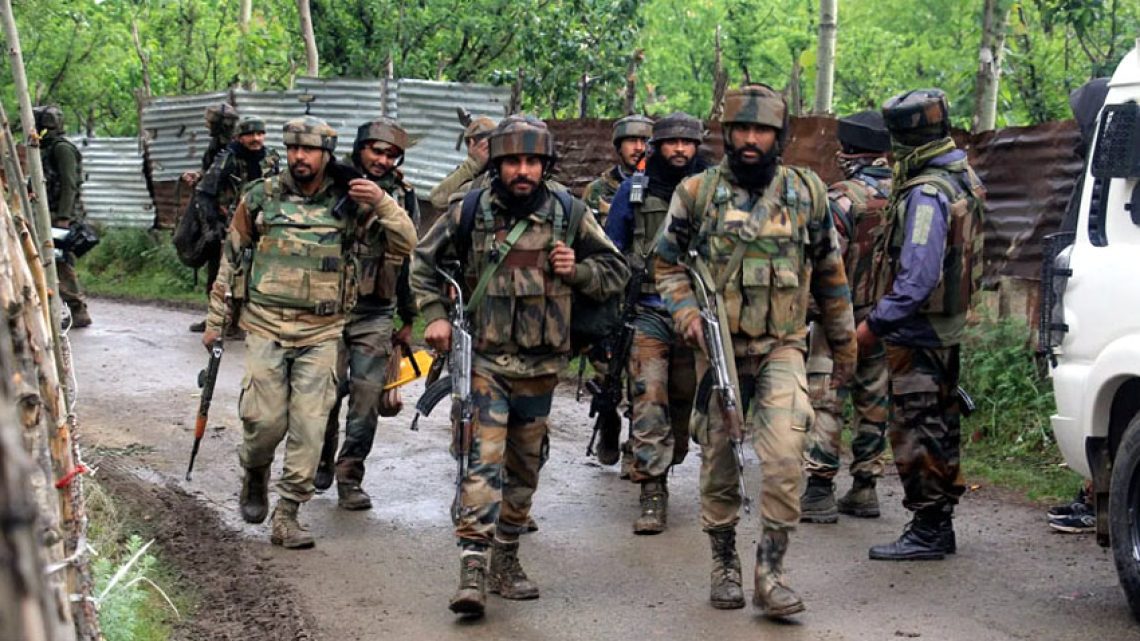
August 15, 2025The ongoing operations by Indian forces in Indian Illegally Occupied Jammu and Kashmir (IIOJK) continue to terrorize local residents. Through Cordon and Search Operations (CASOs), Indian forces have arrested several innocent youth, further fueling fear among the people. These actions, justified by vague claims of countering militancy, have only worsened the situation, with locals facing harassment and detention under unfounded accusations.
Indian Forces’ Unrelenting Crackdown in Kupwara and Bandipora Districts
Indian forces have intensified their operations in Kupwara and Bandipora districts, including areas like Wajhama, Awoora, and Gulgam. These areas have been subjected to repeated searches, leading to arbitrary arrests. The authorities justify these operations based on “intelligence inputs,” but they have done little to alleviate local fears or offer any real evidence to support the claims.
The Overused Allegations: Kashmiris Labeled as Over Ground Workers (OGWs)
During recent searches, several local youth were arrested and labeled as Over Ground Workers (OGWs) of militant groups. This accusation has become a common tool used by Indian authorities to detain Kashmiris without due process. The term OGW is frequently used to vilify those associated with the freedom movement, without providing solid proof of involvement in any unlawful activities.
The Extensive Involvement of Indian Military and Paramilitary Forces
The operations in Awoora and Gulgam saw the involvement of various Indian military units, including the Territorial Army, Rashtirya Rifles, and Special Operations Group. These forces, heavily armed, have engaged in searches and arrests, often without any clear explanation. The continuous presence of such forces not only increases the pressure on local populations but also ensures that any form of resistance is suppressed.
Use of Operations to Intimidate and Suppress Dissent
These ongoing operations have become a mechanism for suppressing the Kashmiri population’s demand for independence. The authorities often claim that the raids are part of counter-insurgency efforts, but their primary aim appears to be silencing any form of political expression or resistance. By labeling Kashmiris as militants or sympathizers, Indian forces aim to create fear and crush any opposition to the occupation.
The Continued Use of Allegations to Justify Arbitrary Detentions
Arrests in IIOJK are commonly justified by vague and unproven allegations. The label of OGW is regularly applied to anyone who protests against the occupation, denying them a fair trial or the opportunity to defend themselves. This practice continues to violate the basic human rights of Kashmiris, further undermining the credibility of India’s legal and judicial systems in the region.
Fear and Discontent Spread by Indian Police and Forces
In Bandipora, Indian police have conducted house-to-house raids, arresting several young men. These actions have fostered widespread fear, as people feel that any form of association with the resistance movement could lead to arrest or harassment. The arbitrary nature of these operations has left residents feeling vulnerable and fearful, with many reporting psychological distress from the constant threat of raids.
CASOs in Uri Following Soldier’s Killing
Following the death of an Indian soldier in Uri, Baramulla, Indian forces launched an extensive operation, further escalating tensions in the region. Residents have complained that these operations, while ostensibly aimed at finding the attackers, are often used as an excuse to conduct arbitrary searches and detain locals. The operation has only increased resentment among the people of Uri, as they feel their lives are being disrupted without any tangible benefit.
Arrests and Arbitrary Searches: A Pretext for Harassment
The operations in Uri and other areas have led to arbitrary searches and arrests, under the guise of security operations. These searches often have no clear legal basis, and many locals have expressed frustration with the lack of transparency. The people of Uri, as well as other affected areas, feel that these operations are used not to ensure security but to harass and control the population.
Property Seizures: A Tool to Suppress the Kashmiri Struggle
In Bandipora, Indian authorities seized properties belonging to three local residents, accusing them of being involved in pro-freedom activities. These property seizures are part of a broader strategy to undermine local support for the independence movement. By confiscating land and property, India seeks to weaken the economic base of the Kashmiri people and make it difficult for them to resist the occupation.
Aimed at Weakening Kashmiris Economically
The property seizures in IIOJK are a deliberate attempt to weaken the local population economically. With Kashmir’s economy already under strain due to the ongoing conflict and military presence, these actions further exacerbate the financial challenges faced by Kashmiris. The confiscation of land and property is seen as an effort to economically destabilize the population, making it harder for them to sustain their resistance.
Seizure of Properties and Demographic Manipulation
The recent seizures are also seen as part of a broader effort to change the demographic composition of IIOJK. By encouraging non-local Hindus to settle on seized lands, India hopes to dilute the region’s Muslim-majority status. This demographic shift is viewed as a strategic move to undermine the local population’s resistance and strengthen India’s hold on the region.
Intensification of Repression Since the 2019 Revocation of Article 370
The revocation of Article 370 in August 2019 marked a significant shift in India’s approach to IIOJK. Since then, the Indian government has increased its use of military force, political repression, and economic measures to control the region. The move has led to greater militarization, further alienating the local population and making the daily lives of Kashmiris even more difficult.
Global Silence: The Need for International Intervention
Despite the widespread human rights violations reported in IIOJK, the international community has largely remained silent. The United Nations has yet to enforce its own resolutions on Kashmir, and many countries with political or economic interests in India have ignored the issue. This silence has allowed India to continue its harsh policies with little international pressure or accountability.
Pakistan’s Consistent Support for Kashmiris’ Rights
Pakistan has consistently supported Kashmiris’ right to self-determination on the international stage. Pakistan has repeatedly called for the implementation of UN resolutions that grant the Kashmiri people the right to choose their future. This unwavering support has been crucial in keeping the Kashmir issue alive globally and ensuring that Kashmiris’ voices are not silenced.
A Call for Justice: The Struggle for Kashmir’s Freedom
The Kashmir conflict is not just about territorial disputes; it is a struggle for justice, human dignity, and the right to live free from occupation. The people of Kashmir have long demanded the right to self-determination, and this struggle must be recognized as a fight for basic human rights. The international community must play a more active role in holding India accountable for its actions and in ensuring that Kashmiris can live in peace and freedom.
Conclusion: The Struggle for Kashmir’s Rights Continues
The ongoing military operations, arrests, and property seizures in IIOJK are part of India’s continued efforts to suppress the Kashmiri demand for freedom. Kashmiris remain determined in their struggle for self-determination, despite facing heavy repression. The international community must take stronger action to support the people of Kashmir and demand an end to India’s illegal occupation. The struggle for Kashmir’s freedom continues, and it is time for the world to stand with those who seek justice and independence.